

Key Takeaways
Debt in Collections
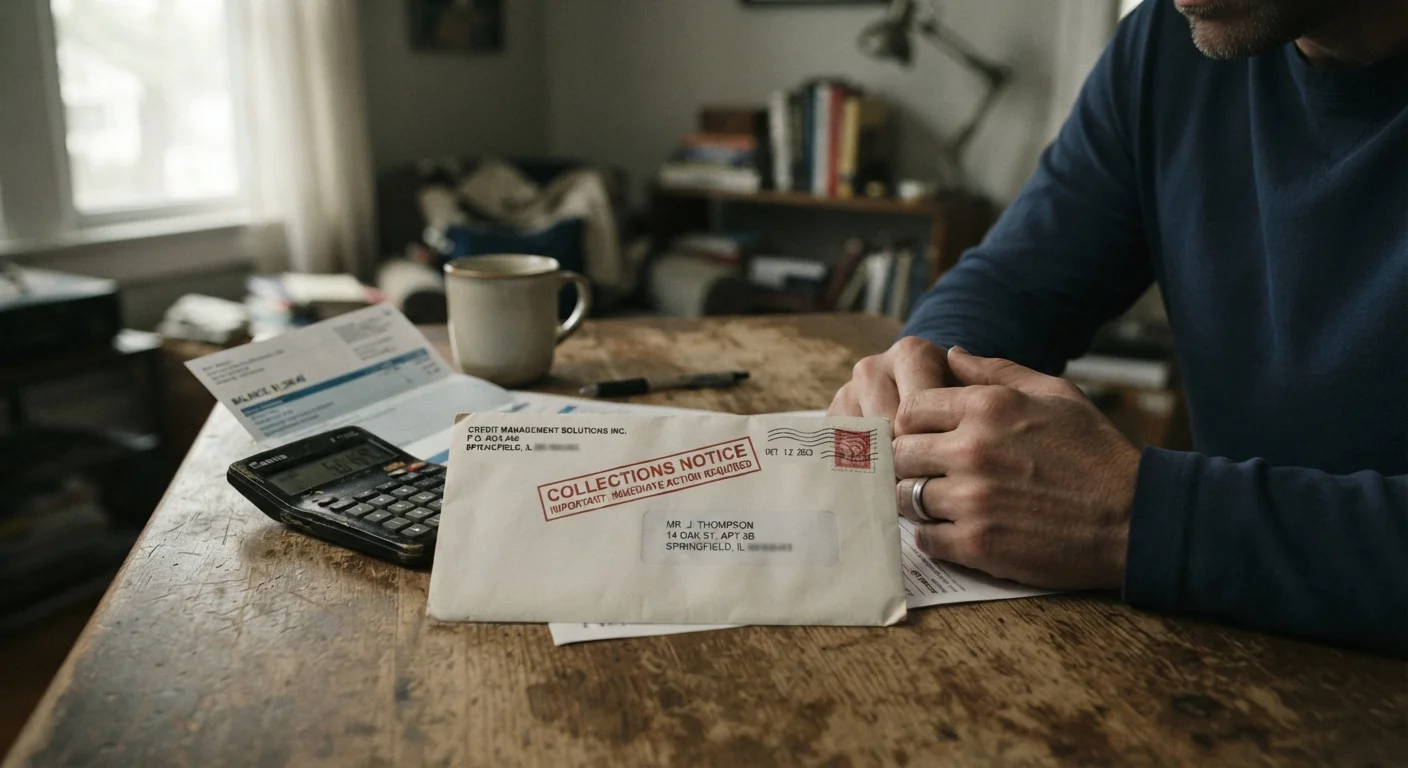
A debt 'in collections' is one that an original creditor — such as a bank, credit card issuer, or medical provider — has referred or sold to a third-party debt collector after the account remained unpaid for an extended period, typically 90 to 180 days past due. At that point, the original creditor may write the debt off as a loss (a 'charge-off') while still expecting repayment, either through its own collections department or through an outside collection agency. The debt itself does not disappear; it simply changes hands.
A charge-off is an accounting term reflecting the creditor's recognition of a probable loss — it does not legally forgive the debt or eliminate your obligation to repay it.
The Path From Missed Payment to Collections
The journey from a missed payment to a collections account follows a fairly predictable timeline, though specific timeframes vary by creditor and account type.
- Missed payment: Most creditors begin charging late fees after a grace period and report the delinquency to credit bureaus once you are 30 days past due.
- Escalating delinquency: Between 60 and 90 days past due, creditors typically intensify collection efforts and may close the account to new charges.
- Charge-off: Around the 120- to 180-day mark, many creditors record the debt as a charge-off. This is an internal accounting step — not debt forgiveness. The balance is still owed. See our glossary of common debt terms for a fuller explanation.
- Transfer or sale: The original creditor may place the account with an in-house collections team, assign it to a third-party agency (which collects on the creditor's behalf), or sell it outright to a debt buyer for a fraction of the balance.
Once a third-party collector is involved, a separate set of federal rules applies to how they can contact you and what they must tell you.
Original Creditors vs. Third-Party Collectors
The FDCPA applies specifically to third-party debt collectors — agencies and buyers that collect debts owed to someone else. Original creditors collecting their own debts are generally not covered by the FDCPA, though some state laws extend similar protections. Many large banks also have internal codes of conduct that mirror FDCPA standards.
Your Rights Under the FDCPA
The Fair Debt Collection Practices Act (FDCPA) is the primary federal law governing third-party debt collectors — not the original creditor, but the agencies and buyers who pursue debts after the fact. Key protections include:
- Verification rights: Within five days of first contact, a collector must send a written notice stating the amount owed, the creditor's name, and your right to dispute the debt. If you dispute it in writing within 30 days, the collector must pause collection activity and provide verification.
- Contact restrictions: Collectors generally cannot call before 8 a.m. or after 9 p.m. local time, contact you at work if you indicate it is inconvenient, or continue contacting you after you request in writing that they stop.
- Prohibition on harassment: Threatening violence, using obscene language, or making false statements about the debt are illegal under the FDCPA.
- Right to dispute: You can dispute the debt's validity or the amount. The collector must then verify it before continuing pursuit.
The Consumer Financial Protection Bureau (CFPB) and the Federal Trade Commission (FTC) both enforce these rules and accept consumer complaints. If you believe a collector has violated the law, filing a complaint or consulting a consumer law attorney are reasonable steps.
Always Dispute in Writing
If you want to dispute a debt or request that a collector stop contacting you, do it in writing and send the letter via certified mail with return receipt requested. This creates a dated record that the collector received your request — which matters if you ever need to file a complaint or take legal action.
General Options When a Debt Is in Collections
There is no single right approach — the best path depends on your financial situation, the size and age of the debt, and whether the amount is accurate. Here are the broad options to understand:
1. Pay the Full Balance
Paying in full resolves the debt legally and updates the account status. It does not erase the collection entry from your credit report, but it eliminates ongoing collection activity and potential legal action.
2. Negotiate a Settlement
Collectors — especially debt buyers who purchased your account at a discount — may accept less than the full amount. Settlements are typically lump-sum offers. Be aware that forgiven amounts may be reported to the IRS on a 1099-C form and could be considered taxable income. Always get a settlement agreement in writing before paying anything.
3. Set Up a Payment Plan
Some collectors will agree to structured payments. Confirm any plan in writing and keep records of every payment made.
4. Dispute an Inaccurate Debt
If the debt is not yours, the amount is wrong, or the account has already been paid, you have the right to dispute it — both with the collector and with the credit bureaus. The CFPB provides guidance on initiating formal disputes.
5. Do Nothing (With Awareness of the Risks)
If the debt is very old and the statute of limitations in your state has passed, a collector generally cannot obtain a court judgment against you. However, ignoring current, valid debts within the legal window carries real risks — including lawsuits, wage garnishment, or bank levies in some states.
If multiple debts are in collections simultaneously, you may also want to explore how debt consolidation works or, if things feel overwhelming, review signs your debt has become unmanageable.
~28%
Americans with debt in collections
According to Urban Institute research, roughly 28% of Americans with a credit file have had at least one debt in collections reported on their credit report.
7 years
Maximum credit report impact
Under the Fair Credit Reporting Act, a collection account can remain on a consumer's credit report for up to seven years from the original delinquency date.
$0.04–$0.14
Typical cents per dollar paid by debt buyers
Debt buyers frequently purchase charged-off consumer debt portfolios for a fraction of face value, which is why negotiated settlements are often possible.
Balancing Collections With Broader Financial Health
Dealing with a collections account while also trying to build financial stability is a genuine tension. Paying off a collection debt reduces legal and credit risk, but completely emptying any savings buffer can leave you exposed to the next unexpected expense — creating a cycle of new debt.
There is no universal formula. For many people, maintaining a small emergency cushion while making targeted payments on collection accounts is more sustainable than draining savings entirely. Our article on saving while in debt explores those trade-offs in detail.
Before making major decisions — especially if collectors are threatening legal action — consider reaching out to a nonprofit credit counseling agency accredited by the National Foundation for Credit Counseling (NFCC). These organizations offer free or low-cost guidance and can help you evaluate options without the pressure of a sales pitch.
This article is for general informational and educational purposes only and is not personalized financial, legal, or tax advice. Debt laws, statutes of limitations, and tax treatment vary by state and individual circumstance. Consult a qualified financial adviser, attorney, or tax professional for guidance specific to your situation.