

Key Takeaways
Why Car Batteries Fail Sooner Than They Should
A dead battery feels sudden, but the decline almost always builds gradually over months. Understanding what accelerates wear puts you in control - and helps you avoid the inconvenience of an unexpected no-start situation.
Most conventional lead-acid batteries (the standard type in gasoline-powered vehicles) are rated for roughly three to five years under normal use. AGM (Absorbed Glass Mat) batteries, common in newer vehicles with start-stop technology, can last somewhat longer. However, real-world conditions routinely shorten both.
The biggest culprits fall into three categories: thermal stress, charging patterns, and parasitic electrical draws. Each is manageable once you know what to look for. For context on how battery care fits into the broader picture of vehicle longevity, see our guide on routine maintenance that keeps a car running longer.
AGM vs. Conventional Lead-Acid Batteries
Many newer vehicles - particularly those with start-stop systems that shut the engine at red lights - use AGM (Absorbed Glass Mat) batteries. These handle deeper discharge cycles better than standard batteries, but they must be replaced with another AGM unit; substituting a conventional battery in an AGM-spec vehicle can shorten the replacement battery's life significantly. Check your owner's manual or ask your mechanic before purchasing a replacement.
The Habits and Conditions That Drain a Battery
Heat is a battery's most destructive enemy - more so than cold. High under-hood temperatures accelerate internal corrosion and cause electrolyte fluid to evaporate, permanently reducing capacity. Cold weather, by contrast, thickens the electrolyte and reduces the battery's ability to deliver current, which is why failures often surface on frigid mornings even though the damage began in summer.
Short trips are another major factor. When you drive for less than 15-20 minutes, the alternator (the component that recharges the battery while the engine runs) may not fully replenish what the starter motor drew. Repeated short trips gradually deplete the battery without ever giving it a full recovery cycle.
Parasitic draws - small but constant electrical loads when the car is off - are a frequently overlooked drain. A malfunctioning module, an interior light left on, or an aftermarket accessory wired improperly can pull enough current over 24-48 hours to fully discharge a battery.
Have your battery load-tested annually once it passes the two-year mark
A load test reveals actual capacity under real starting conditions, catching degradation before it becomes failure. Voltage alone is not a reliable indicator of remaining life. Annual testing from year two onward gives you time to replace a weakening battery on your schedule, not the battery's.
Minimize short-trip driving patterns when possible
Trips shorter than 15-20 minutes don't give the alternator enough run time to fully recharge what the starter motor consumed. Repeated short cycles gradually deplete stored energy and accelerate plate sulfation - a chemical process that permanently reduces capacity.
Inspect and clean battery terminals at least once a year
Corrosion on terminals creates electrical resistance that makes starting harder and can cause the alternator to work less efficiently. Left unchecked, heavy corrosion can mimic battery failure and cause intermittent electrical faults throughout the vehicle.
Use a battery maintainer for vehicles parked for more than two weeks
A battery left to self-discharge below about 50% charge for extended periods undergoes sulfation that cannot be reversed by normal alternator charging. A maintainer holds it at a stable, healthy charge state without risk of overcharging.
Turn off all accessories before shutting down the engine
Headlights, interior lighting, and infotainment systems left active after the engine stops draw directly from the battery with no alternator to compensate. Even brief oversights compound over time or can discharge the battery overnight.
How to Catch Decline Before You're Stranded
Battery health isn't visible to the naked eye, but there are reliable warning signs: slow engine cranking, dimming headlights under load, the battery or check-engine warning light, and electrical accessories behaving erratically.
The most reliable way to assess a battery's actual condition is a load test, which measures how well the battery delivers current under simulated starting conditions. Many auto parts stores and repair shops perform this test at no charge. Unlike a simple voltage check - which can show 12.6 volts on a battery that will fail under load - a load test reveals true capacity.
3-5 years
Typical car battery lifespan under normal use
AAA estimates most conventional lead-acid batteries last between three and five years, with climate and usage patterns determining where in that range a given battery falls.
~1 in 5
Vehicles with a weak or failing battery
AAA's vehicle research has found that roughly one in five vehicles brought in for service had a battery testing below full capacity, often with no visible symptoms yet apparent to the driver.
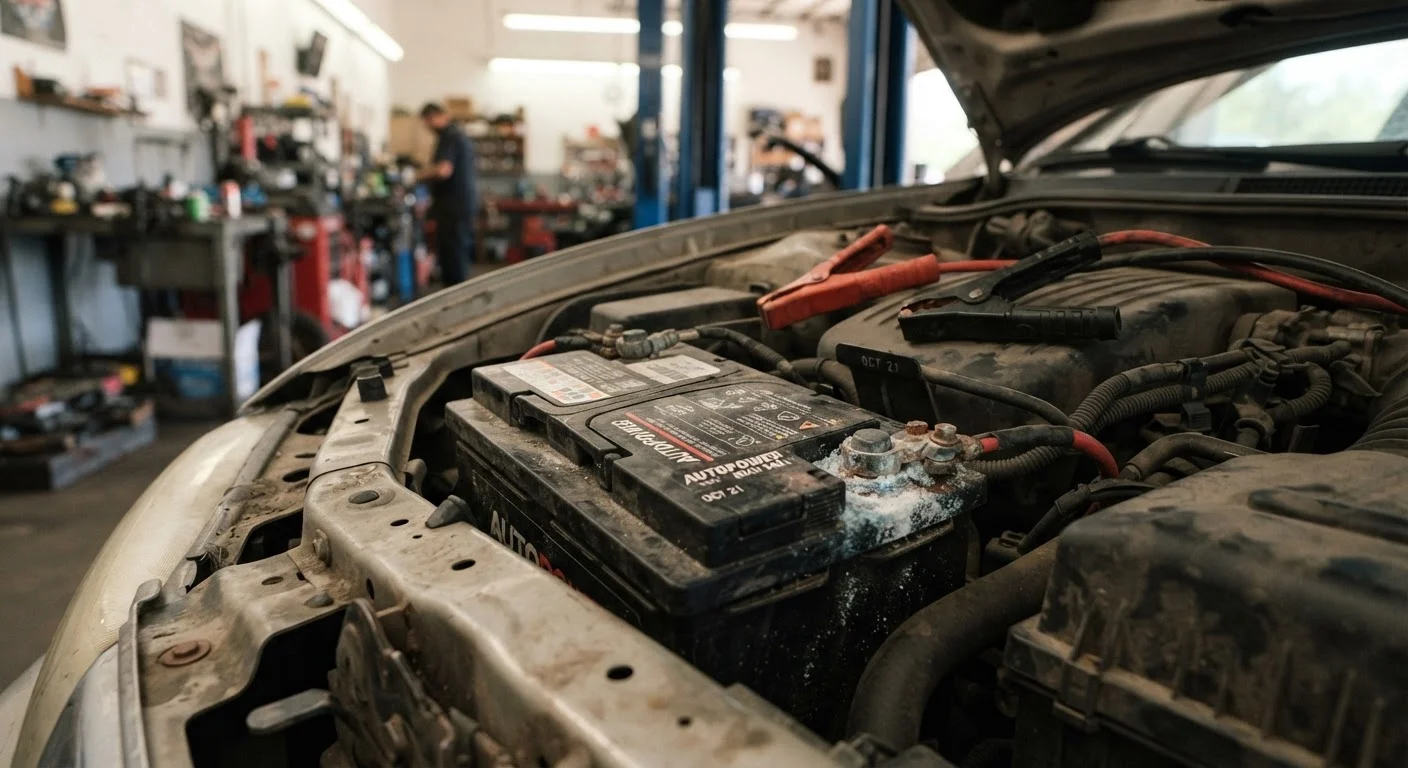
Terminal corrosion (the white or blue-green buildup around the cable connectors) increases electrical resistance and can mimic a weak battery. Cleaning corroded terminals with a wire brush and a baking soda solution often restores a reliable connection. If you're uncertain about doing this safely, a qualified mechanic can clean and inspect terminals as part of a routine service visit.
Battery decline is just one dimension of overall vehicle reliability. The factors that affect how long a car stays reliable - driving habits, climate, and maintenance consistency - all intersect here.
Practical Steps to Extend Battery Life
You don't need mechanical expertise to protect your battery. Most of the highest-impact habits are simple and cost nothing.
If you drive infrequently or leave a vehicle parked for extended periods, a battery maintainer (sometimes called a trickle charger) keeps the battery at an optimal charge state without overcharging it. This is especially worthwhile for seasonal vehicles.
Finally, ask your mechanic to inspect the alternator output during routine service. An alternator that is undercharging - delivering less than the standard 13.5-14.5 volt range - will slowly starve the battery even if the battery itself is healthy. Catching a weak alternator early is far less expensive than replacing both the alternator and a battery it has damaged.
Plan Battery Replacement Proactively
If a load test shows your battery is at or below 70% of rated capacity, consider replacing it soon rather than waiting for failure - even if it's still starting the car. Planning the replacement on your timeline is far less disruptive than an emergency. A failing battery also puts extra strain on the alternator, potentially creating a more expensive repair down the road.
This article is for general informational purposes only. Always consult a qualified mechanic for diagnosis, repair decisions, or any electrical work on your vehicle.