

Key Takeaways
Debt Consolidation
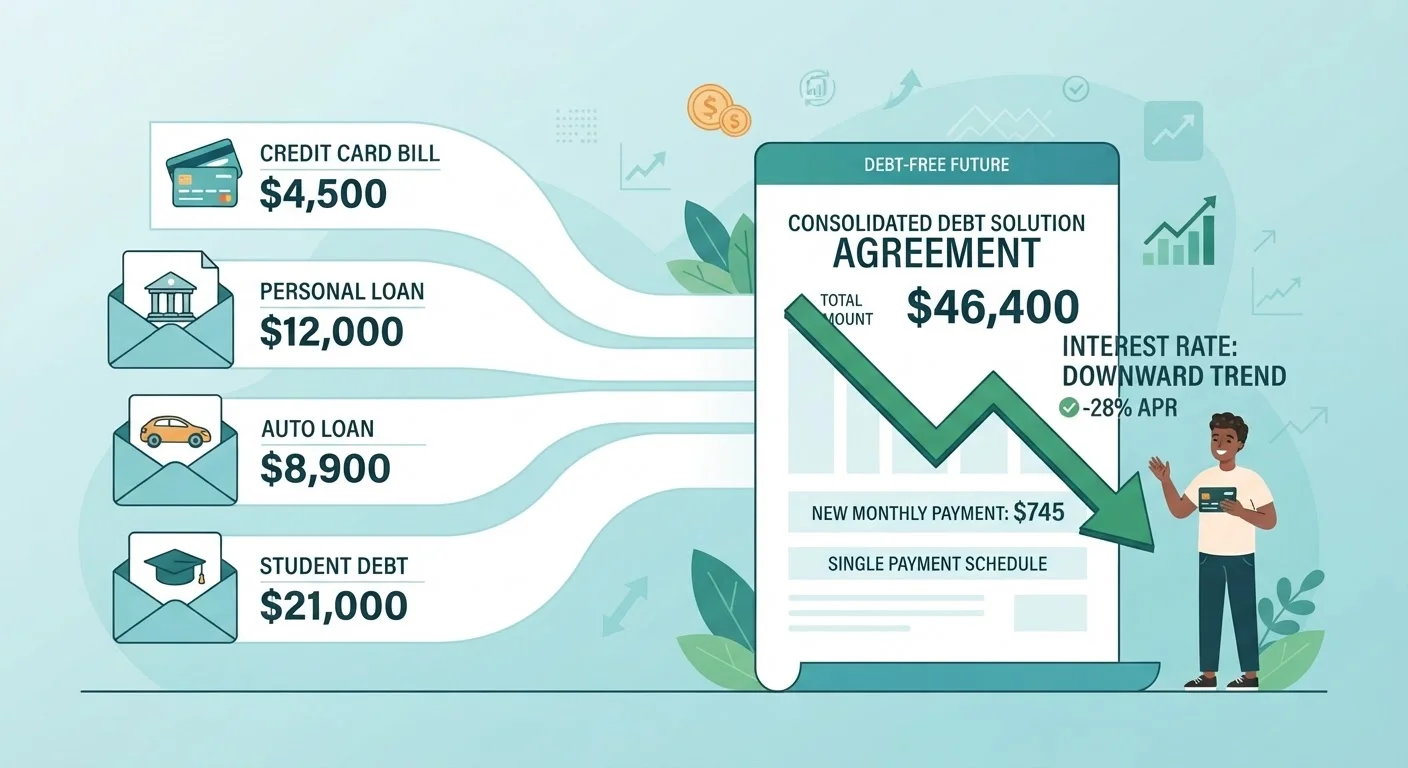
Debt consolidation is the process of combining multiple debts - such as credit card balances, medical bills, or personal loans - into a single new loan or payment arrangement. The goal is typically to secure a lower interest rate, reduce monthly payment complexity, or both. Instead of tracking several creditors and due dates, you manage one account.
Consolidation differs from debt settlement, which involves negotiating to pay less than the full amount owed and can have significant negative credit consequences.
What Debt Consolidation Actually Does
When you carry balances across several accounts - each with its own interest rate, minimum payment, and due date - managing them separately adds both cost and complexity. Debt consolidation addresses this by replacing those multiple obligations with a single new one.
Crucially, consolidation is a restructuring tool, not debt elimination. You still owe the same principal; what changes is the rate, term, and structure of repayment. If the new loan carries a lower interest rate than your existing debts, a larger share of each payment reduces the balance rather than feeding interest charges. That's the core financial argument for consolidation - and it's only compelling when the rate difference is meaningful.
For a deeper look at how interest accumulates when you only make minimum payments, see why minimum payments cost more than you think.
~$8,000
Average U.S. household credit card balance
According to Federal Reserve data, average revolving credit balances per household have remained in this range in recent years, illustrating the scale of debt many Americans manage simultaneously.
20%+
Average credit card APR in recent years
The Federal Reserve reports that average credit card interest rates have exceeded 20% in recent periods, making high-interest debt one of the most costly forms of consumer borrowing.
3%-5%
Typical balance transfer fee
Most balance transfer credit cards charge a fee of 3% to 5% of the transferred amount, which should be factored into any cost comparison with other consolidation options.
Common Methods of Consolidating Debt
There is no single consolidation product - several paths exist, each with different eligibility requirements, costs, and trade-offs.
Personal Consolidation Loans
An unsecured personal loan from a bank, credit union, or online lender pays off your existing debts, leaving you with one fixed monthly payment at a set interest rate. These loans work well when you have solid credit and can qualify for a rate lower than your current weighted average. Loan terms typically run two to seven years.
Balance Transfer Credit Cards
Some credit cards offer a 0% introductory APR on transferred balances for a promotional period - often 12 to 21 months. If you can pay off the balance before the promotional period ends, you can avoid interest entirely. Be aware that most cards charge a balance transfer fee (commonly 3%-5% of the transferred amount), and the standard rate that kicks in afterward can be high.
Home Equity Loans and HELOCs
Homeowners may borrow against their equity to consolidate debt, often at lower rates than unsecured products. However, this converts unsecured debt into debt secured by your home - meaning failure to repay puts your property at risk. This trade-off deserves careful consideration.
Debt Management Plans
Nonprofit credit counseling agencies can negotiate reduced interest rates with creditors and consolidate your payments into one monthly amount paid to the agency. This isn't a loan, so it doesn't require strong credit. There are typically modest monthly fees, and you'll agree to close enrolled accounts during the plan.
Check Your Rate Before You Commit
Many lenders offer prequalification with a soft credit inquiry, which does not affect your credit score. Use this to compare offers and estimate your potential rate before formally applying. Shopping multiple lenders within a short window minimizes the credit impact of hard inquiries.
When Consolidation Makes Sense - and When It Doesn't
Debt consolidation is a practical tool in specific circumstances, not a universal solution. The right conditions make the difference between a strategy that saves money and one that simply reorganizes it.
Situations Where It Can Help
- You qualify for a meaningfully lower rate. If your credit cards carry 22%-28% APR and you can secure a personal loan at 12%, consolidation reduces total interest paid over time.
- You're overwhelmed by multiple due dates. Streamlining into one payment reduces the risk of missed payments and late fees.
- Your income is stable. Committing to a new loan term requires confidence that your cash flow can support consistent payments.
Situations Where It May Not Help
- The new rate isn't much lower. Minimal rate differences may not offset loan origination fees or balance transfer costs.
- You haven't addressed the spending that created the debt. Consolidating without changing habits can lead to running up new balances while still repaying the consolidation loan.
- You're close to paying off existing debt. Extending repayment into a longer loan term may cost more in total interest even at a lower rate.
If you're weighing consolidation against other repayment strategies, the snowball and avalanche methods offer structured alternatives that don't require a new loan. And if you're also trying to build savings while carrying debt, balancing savings and debt repayment explores how to approach both goals simultaneously.
“Consolidation can be a powerful tool, but it works only if you treat the symptom and the cause. The loan restructures the debt; only behavioral change prevents it from returning.”
— Consumer Financial Protection Bureau, U.S. government agency providing consumer financial education and guidance
Key Risks to Understand Before You Consolidate
Consolidation carries real risks that deserve honest attention before you commit.
Extending your repayment timeline may lower your monthly payment but increase total interest paid - especially if you stretch a two-year debt into a five-year loan. Always compare total cost, not just the monthly figure.
There's also the risk of accumulating new balances on the credit cards you just paid off. Keeping those accounts open with zero balances can help your credit utilization ratio, but it also tempts additional spending. A clear budget helps guard against this - the budgeting basics hub covers foundational strategies for tracking spending and staying on plan.
Fees matter too. Origination fees on personal loans, balance transfer fees, and closing costs on home equity products all reduce the net benefit of consolidation. Factor these into your comparison before deciding.
Finally, if your debt level is already severe - you're struggling to cover minimums, or borrowing to meet basic expenses - consolidation alone may not be sufficient. Recognizing signs of unmanageable debt can help you identify when professional credit counseling or other options may be more appropriate than a new loan.
This article is for general informational and educational purposes only and does not constitute personalized financial, tax, or legal advice. Consult a qualified, licensed financial professional before making decisions about your specific situation.