

Key Takeaways
Summary
24 items · 45-90 minutes on-site, plus time to review vehicle history and arrange a mechanic inspection
Why This Checklist Matters Before You Buy
Buying a used vehicle is one of the larger purchases most households make, yet many buyers spend less than 30 minutes looking the car over before committing. That's a risk worth avoiding. Hidden rust, undisclosed accident damage, worn brakes, and failing transmissions can cost thousands of dollars to repair - expenses that don't show up in the sticker price.
This checklist gives you a structured, systematic way to evaluate any used vehicle before you hand over money. It covers what you can assess yourself and flags where a qualified mechanic's eyes are non-negotiable. Use it alongside a vehicle history report (available from services like Carfax or AutoCheck) - the report and the physical inspection each catch things the other misses.
Once you've found a vehicle that clears these checks, your next step is protecting it properly. See our guide on comparing auto insurance coverage to understand what policy factors matter most before you commit.
Vehicle History Report
Reveals accident history, title status, odometer rollbacks, and prior ownership - essential context before any physical inspection.
OBD-II Code Reader
Plug-in diagnostic tool that reads stored and pending fault codes from the vehicle's onboard computer, revealing issues the dashboard may not yet display.
Flashlight or Phone Torch
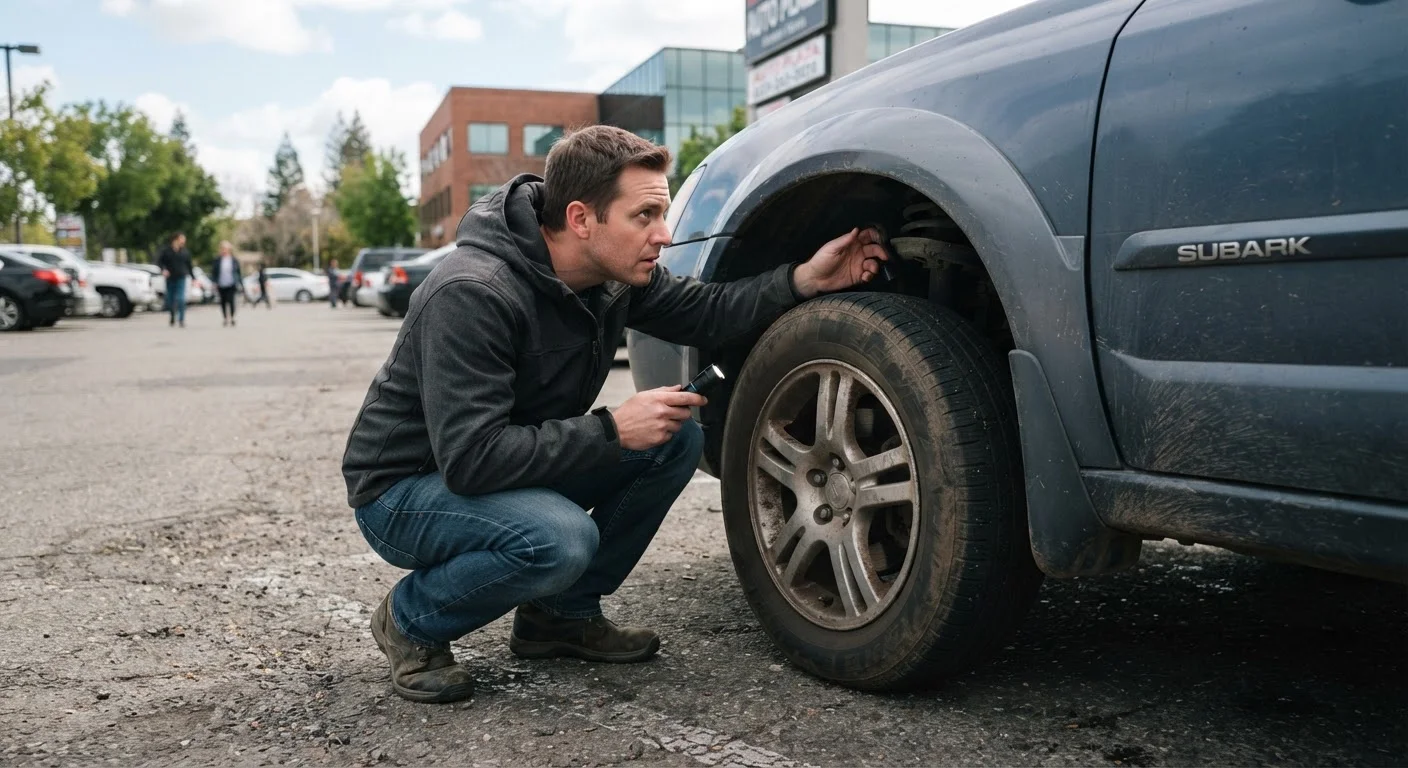
Needed to inspect dark areas including under the hood, inside wheel wells, and beneath the vehicle.
Tire Tread Depth Gauge
Accurately measures remaining tire tread to assess whether replacement is imminent.
Licensed Pre-Purchase Inspector (Mechanic)
A qualified mechanic performs a professional inspection of mechanical systems, suspension, and undercarriage - catching issues beyond a layperson's ability to assess.
Magnet (small)
Detects body filler (Bondo) used to conceal prior accident damage - a magnet won't stick to filler the way it does to bare metal.
The Full Pre-Purchase Inspection Checklist
Work through these groups in order. Do the exterior and interior checks yourself, then bring in a mechanic for the mechanical and undercarriage portions. Never skip the test drive - many problems only reveal themselves under load or at speed.
Before You Arrive
Exterior Inspection
Interior Inspection
Under the Hood
Test Drive
Always Get a Professional Mechanic Inspection
This checklist covers what a careful, informed buyer can evaluate independently - but it does not replace a professional mechanical assessment. Many serious problems, including those with transmissions, brake hydraulics, and vehicle frames, require lift access and trained eyes to identify. Budget for a licensed mechanic's pre-purchase inspection as a non-negotiable step, not an optional extra. The cost is small relative to the potential repair bills you may avoid.
Even a vehicle that passes every item on this checklist can have hidden problems. A licensed mechanic's pre-purchase inspection (PPI) - typically costing $100-$200 at an independent shop - is one of the highest-value steps you can take. If a seller refuses to allow a mechanic inspection, treat that as a significant red flag.
Be equally careful at the dealership itself. Common dealership pitfalls - including add-on fees and rolled-in loan costs - can shift the true price considerably after your inspection is done.
Pressure to Skip Inspection Is a Red Flag
If a seller or dealer pressures you to decide quickly, claims an inspection 'isn't necessary,' or refuses to allow a third-party mechanic to look at the vehicle, pause. Legitimate sellers generally welcome scrutiny because it builds buyer confidence. Resistance to inspection is one of the clearest warning signs that something may be wrong with the vehicle.
Title Status Can Affect Insurance and Resale
A vehicle with a salvage, rebuilt, or flood title may be significantly harder to insure and harder to resell. Some insurers won't write comprehensive or collision coverage on these vehicles. Always verify title status in the history report and understand the implications before proceeding - consult a licensed insurance agent with questions about coverage eligibility.