

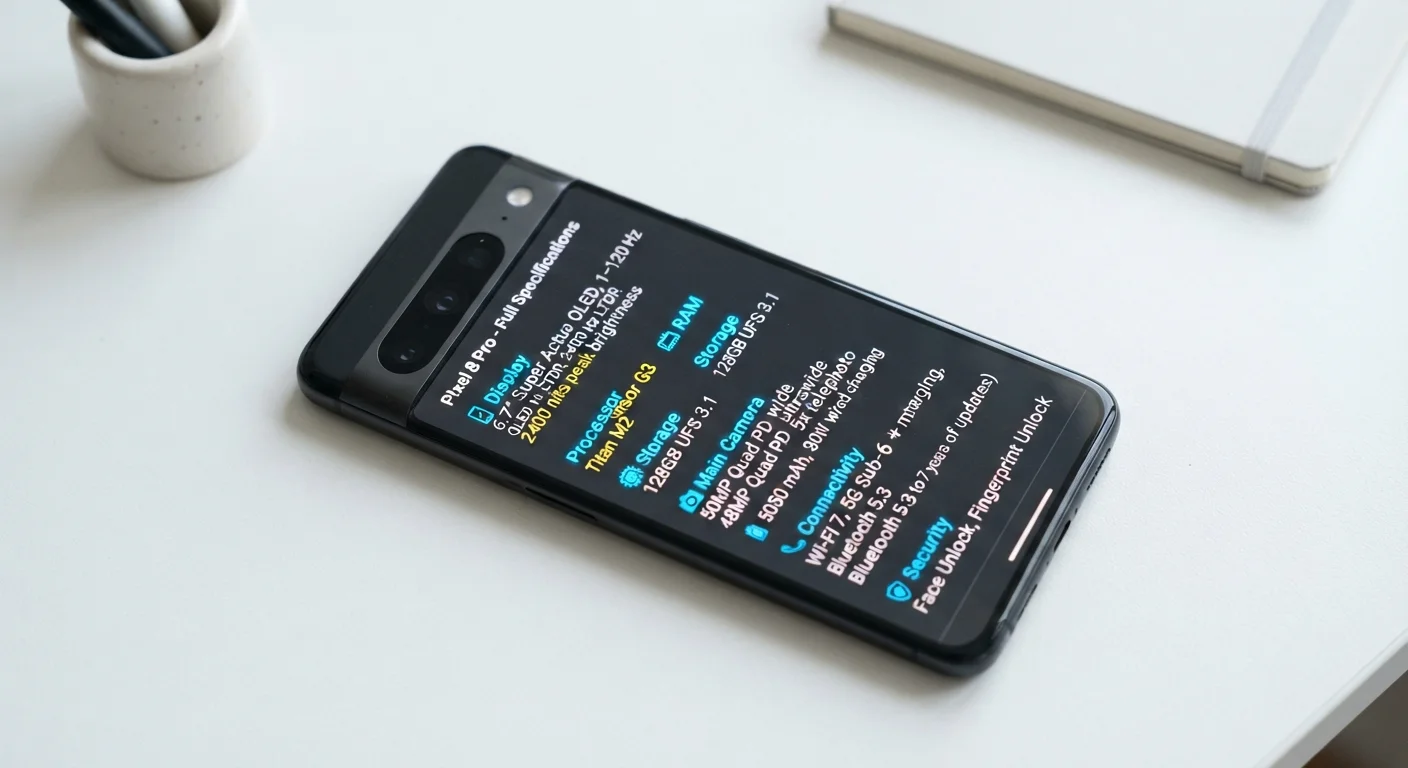
| Typical flagship RAM | 8-16 GB |
| Common base storage options | 128 GB or 256 GB |
| Standard display refresh rate | 60 Hz (budget) to 144 Hz (flagship) |
| Highest common IP rating | IP68 |
| Average smartphone battery capacity | 4,000-5,000 mAh |
| Typical main camera aperture range | f/1.5 - f/2.4 |
Why Spec Sheets Feel So Confusing
Buying or comparing smartphones often means wading through a list of abbreviations, numbers, and brand-specific terms that read like a hardware engineering document. The good news: you don't need to understand every number - you just need to know what each spec is actually measuring in everyday terms.
This glossary covers the terms that appear most frequently on spec sheets, in reviews, and in store descriptions. For a broader look at how smartphones and tablets fit into daily life, see our complete smartphone and tablet guide.
| Typical flagship RAM | 8-16 GB |
| Common base storage options | 128 GB or 256 GB |
| Standard display refresh rate | 60 Hz (budget) to 144 Hz (flagship) |
| Highest common IP rating | IP68 |
| Average smartphone battery capacity | 4,000-5,000 mAh |
| Typical main camera aperture range | f/1.5 - f/2.4 |
Core Specs Defined in Plain English
The terms below cover the categories most likely to influence how a phone feels to use day-to-day. Think of each as answering a practical question: How fast? How long? How good in low light?
For context on how these same concepts apply to laptops and desktops, our PC specs explainer covers RAM, CPU, and storage from a computing angle.
How to Use These Specs When Comparing Phones
Once you understand what each term measures, the next step is knowing which specs actually matter for your habits. A few practical principles:
- Heavy social media or multitasking users benefit from more RAM (8 GB+) and a higher refresh rate (90-120 Hz) for fluid scrolling.
- Frequent photographers should look at aperture, sensor size descriptions, and optical zoom - not just megapixel count, which is often less important than lens quality.
- Travelers and outdoor users will want a high IP rating and strong battery capacity (4,500 mAh+).
- Budget-conscious buyers can safely prioritize storage and battery over flagship processor specs for everyday tasks like calls, messaging, and light browsing.
Specs Don't Tell the Whole Story
A higher number isn't always better in practice. A phone with 12 GB of RAM but poor software optimization can feel slower than a well-tuned device with 8 GB. Real-world performance depends on how hardware and software work together - not any single spec in isolation.
Connectivity specs like 5G also matter more for some users than others. Learn what 5G actually changes before deciding whether it's worth paying for. And if you're setting up a broader home tech ecosystem, our smart home terminology glossary applies the same plain-English approach to connected home devices.