

Key Takeaways
Higher sale price closer to retail market value
Private buyers typically pay more than dealers because they're purchasing for personal use, not for resale at a profit. The difference can range from a few hundred to several thousand dollars depending on vehicle type and condition.
Full control over pricing and negotiation
You set the asking price, choose which offers to accept, and aren't locked into a single appraisal. Taking time to research comparable listings gives you a realistic pricing anchor.
No dependency on a dealership's schedule or inventory needs
Dealers may undervalue a vehicle that doesn't fit their current lot needs. Private sales let market demand - not a dealer's inventory position - drive the offer.
Significant time and effort required
Creating a compelling listing, responding to inquiries, and scheduling test drives can consume hours or weeks. Vehicles priced above market value may sit unsold for extended periods.
Buyer vetting and safety considerations
Meeting strangers for test drives carries personal safety risks. Best practice is to meet in public locations and bring someone with you; some police departments offer parking lots for private-sale meetings.
Payment fraud risk
Cashier's check scams and fraudulent payment apps are documented risks in private vehicle transactions. Accepting only verified funds - such as cash or a confirmed wire transfer - is strongly advisable.
Title and paperwork handled entirely by you
You're responsible for completing the title transfer, bill of sale, odometer disclosure, and any state-required inspection certificates. Errors can create legal liability after the sale.
Our Verdict
Private sales generally deliver more money in your pocket, but that premium comes with real effort - managing listings, vetting buyers, and handling paperwork. Trade-ins are faster and simpler, and the tax offset on a new purchase can partially close the price gap. Neither option is universally better; the right choice depends on how much your time is worth, how urgently you need to sell, and what your vehicle is realistically worth.
Owners who have time to manage the process and want to maximize proceeds will benefit most from a private sale; those prioritizing speed or buying a replacement vehicle at a dealership often find the trade-in route the better practical fit.
The Core Trade-Off: Money vs. Convenience
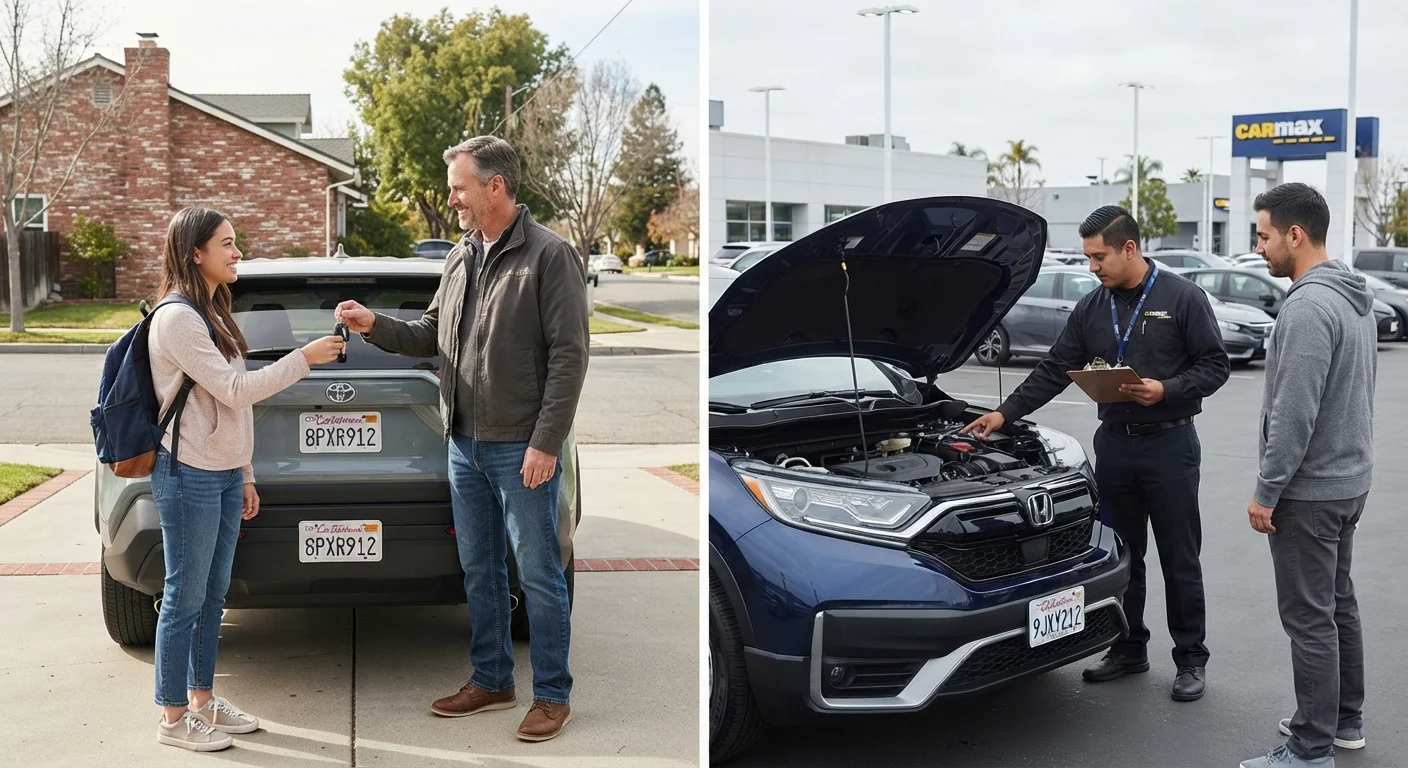
When it's time to move on from a vehicle, owners face two primary options: sell it privately to another individual, or trade it in at a dealership. The financial gap between the two is real - private-party values consistently run higher than typical trade-in offers, sometimes by several thousand dollars depending on the vehicle's age, condition, and market demand. That difference exists because a dealer needs room to recondition the car, cover overhead, and turn a profit on resale.
But framing this purely as a money question undersells the other variables. Time, effort, personal safety considerations, and your next-vehicle plans all belong in the equation. Understanding the full cost picture of your next vehicle can also influence which exit path makes more financial sense right now.
Selling Privately: What You Actually Gain and Give Up
The biggest advantage of a private sale is straightforward: you set the price and negotiate directly with buyers, typically landing closer to the vehicle's retail market value rather than a wholesale estimate.
Higher sale price closer to retail market value
Private buyers typically pay more than dealers because they're purchasing for personal use, not for resale at a profit. The difference can range from a few hundred to several thousand dollars depending on vehicle type and condition.
Full control over pricing and negotiation
You set the asking price, choose which offers to accept, and aren't locked into a single appraisal. Taking time to research comparable listings gives you a realistic pricing anchor.
No dependency on a dealership's schedule or inventory needs
Dealers may undervalue a vehicle that doesn't fit their current lot needs. Private sales let market demand - not a dealer's inventory position - drive the offer.
The costs, however, aren't zero. You'll need to photograph and list the vehicle, respond to inquiries, screen potential buyers, arrange test drives - ideally in a public place - and handle the title transfer, bill of sale, and any lien release if a loan is still outstanding. Depending on your state, you may also be responsible for a smog check or safety inspection. Fraud attempts targeting private sellers exist, so understanding payment risks (cashier's check scams, for example) is important before you list.
Significant time and effort required
Creating a compelling listing, responding to inquiries, and scheduling test drives can consume hours or weeks. Vehicles priced above market value may sit unsold for extended periods.
Buyer vetting and safety considerations
Meeting strangers for test drives carries personal safety risks. Best practice is to meet in public locations and bring someone with you; some police departments offer parking lots for private-sale meetings.
Payment fraud risk
Cashier's check scams and fraudulent payment apps are documented risks in private vehicle transactions. Accepting only verified funds - such as cash or a confirmed wire transfer - is strongly advisable.
Title and paperwork handled entirely by you
You're responsible for completing the title transfer, bill of sale, odometer disclosure, and any state-required inspection certificates. Errors can create legal liability after the sale.
Private sales also tend to take longer. A vehicle priced accurately may sell in days; one priced optimistically could sit for weeks. If you're buying a replacement simultaneously, coordinating timing between an incoming purchase and an outgoing private sale adds complexity.
Trading In: The Real Value of Simplicity
A trade-in condenses the whole process to a single transaction. The dealer assesses your vehicle, makes an offer, and applies the amount directly toward your next purchase - or issues a check if you're not buying there. No listings, no strangers in your driveway, no waiting.
$1,000-$3,000+
Typical private sale premium over trade-in
Industry analysts and consumer automotive resources consistently show private-party values running meaningfully above wholesale trade-in offers, varying by vehicle age and condition.
Most U.S. states
States offering trade-in sales tax credit
A majority of states allow buyers to deduct trade-in value from the taxable purchase price of a new vehicle, reducing the effective sales tax owed at the point of sale.
One frequently overlooked factor is the sales tax offset. In most U.S. states, you pay sales tax only on the difference between a new vehicle's purchase price and your trade-in value. On a $30,000 purchase with a $10,000 trade-in, you're taxed on $20,000 rather than the full amount. At a 7% tax rate, that's a $700 saving - real money that partially offsets the lower offer you accepted. Verify your state's specific rules before assuming this applies, as policies vary.
Trade-in offers can also be negotiated. Getting independent appraisals from multiple sources before visiting a dealership gives you leverage. If you're financing through the dealer, review the full deal structure carefully - dealer financing and direct lending work very differently, and it's worth understanding both before signing.
Get Multiple Appraisals Before You Decide
No single source defines what your vehicle is worth. Published market guides, independent dealership appraisals, and online instant-offer tools each reflect different buyer pools and pricing assumptions. Gathering two or three estimates before committing to either a private sale price or a trade-in offer puts you in a much stronger negotiating position and helps you assess whether the gap between the two routes is actually significant for your specific vehicle.
Factors That Should Drive Your Decision
A few practical questions help clarify which route fits your situation:
- Vehicle condition: Clean, well-maintained cars with service records perform best in private sales. Mechanically troubled or high-mileage vehicles often receive harsh private-market scrutiny; dealers may absorb them more readily at auction-level pricing anyway.
- Outstanding loan: If you still owe money on the vehicle, a private sale requires coordinating a lien release with your lender - manageable, but an added step. Dealers handle this routinely.
- Timeline: Relocating, separating from a lease end, or buying a replacement vehicle imminently? Trade-ins eliminate timeline risk.
- Your state's tax rules: Confirm whether your state offers a trade-in sales tax credit. Not all do.
Before committing to any path, check your vehicle's value across multiple sources - published market guides and independent appraisals give you a realistic floor. And if you're heading to a dealership either way, being informed about the full transaction protects you; common dealership pitfalls are easier to avoid when you know what to watch for.
This article is for general informational purposes only and does not constitute financial or legal advice. Tax rules vary by state; consult a qualified professional or your state's motor vehicle authority for guidance specific to your situation.