

Key Takeaways
What the Claims Process Actually Looks Like
Filing an auto insurance claim for the first time can feel overwhelming, especially when you are dealing with the stress of an accident. The good news is that the process follows a predictable sequence - and understanding each stage helps you avoid missteps that could delay your payout or reduce what you receive.
For a broader foundation on how auto insurance works, including coverage types and state requirements, see our guide to auto insurance in the US. And if your current coverage left you underprotected, common auto insurance decisions that tend to backfire is worth reviewing before your next renewal.
What you will need
Smartphone with camera
Photograph vehicle damage, license plates, road conditions, and the overall scene.
Auto insurance policy documents
Confirm your coverage types, deductible amounts, and the insurer's claims contact information.
Pen and notepad (or notes app)
Record driver details, witness names, and officer badge numbers at the scene.
Police report number
Provides an official record of the incident that your insurer will typically request.
Repair shop estimates
Independent repair quotes help you evaluate the adjuster's damage assessment.
Ensure Safety and Call 911 if Needed
Before anything else, check yourself and all passengers for injuries. If anyone is hurt, call 911 immediately. Move vehicles out of active traffic lanes if it is safe to do so. Turn on hazard lights and, if available, place road flares or warning triangles behind the vehicle.
Even in minor accidents, calling the police creates an official report - a document your insurer will likely request. In some states, police are only dispatched to accidents involving injury or significant property damage, so check local rules if officers do not respond.
Collect and Exchange Information
Exchange the following with all other involved drivers:
- Full name, address, and phone number
- Driver's license number and state
- License plate number
- Insurance company name and policy number
- Vehicle make, model, and year
Also note the names and contact details of any witnesses. If officers respond, record the responding officer's name and badge number and ask how to obtain the official report.
Document the Scene Thoroughly
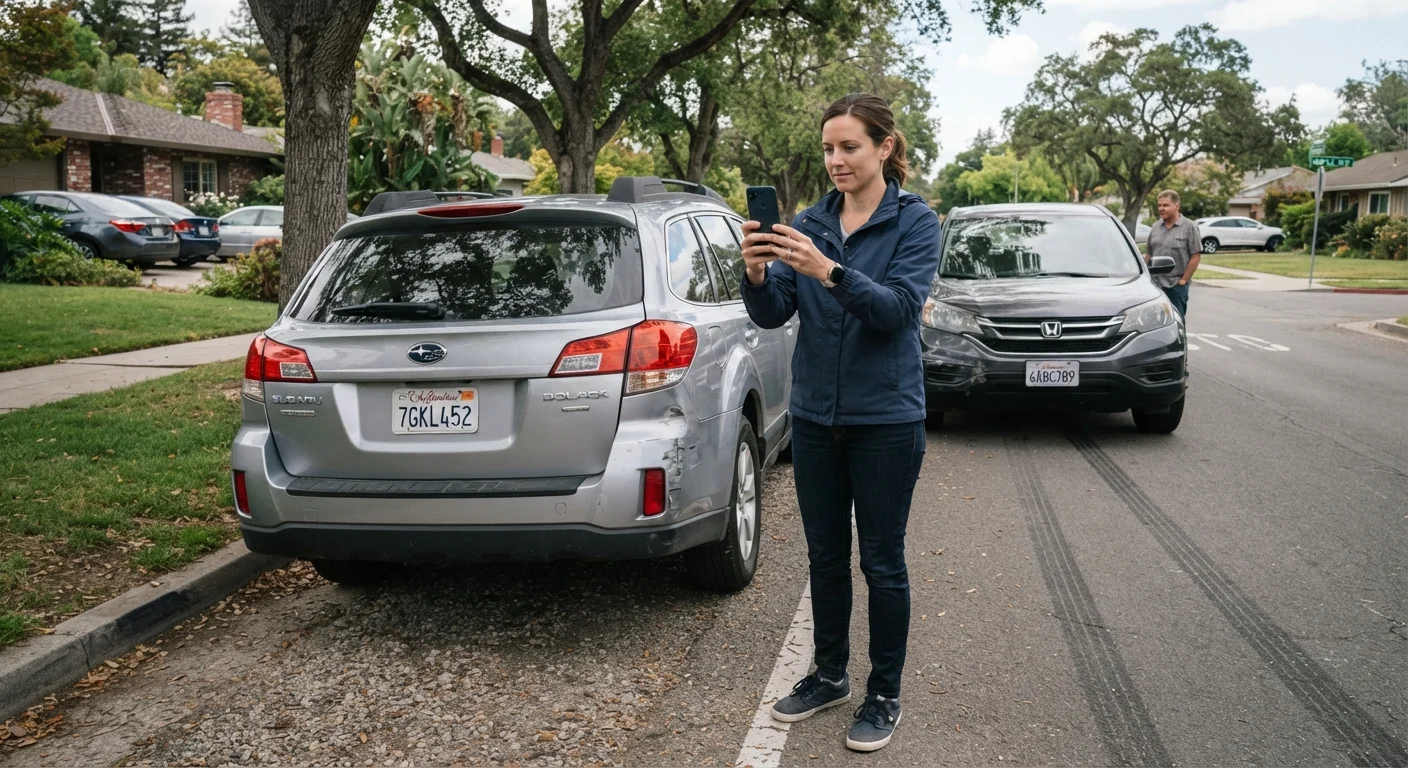
Photograph everything before vehicles are moved if it is safe to do so. Useful shots include:
- All vehicles involved, from multiple angles
- Close-ups of all visible damage
- Road conditions, skid marks, signage, and traffic signals
- Any injuries (with consent where applicable)
- The wider scene showing how vehicles came to rest
Video walkarounds can capture context that still photos miss. The more evidence you preserve, the more accurately an adjuster can reconstruct what happened.
Notify Your Insurance Company
Contact your insurer's claims line as soon as possible - ideally the same day. You can usually reach them by phone, mobile app, or their website. Provide the facts: date, time, location, a description of what happened, and the other party's information. Avoid speculating about fault or describing injuries in definitive terms before you have been evaluated by a medical professional.
Your insurer will open a claim file and assign a claim number. Write this down - you will need it for all future communications.
Work With the Claims Adjuster
Your insurer will assign a claims adjuster to evaluate the damage and determine what your policy covers. The adjuster may inspect the vehicle in person or request that you submit photos through an app. They will produce a repair estimate based on their assessment.
You are not required to use a repair shop selected by the insurer in most states, though insurers sometimes have preferred networks. Getting an independent estimate can help you gauge whether the adjuster's figure is reasonable. For more on what your policy actually covers in this process, see how to read your car insurance policy.
Understand Your Settlement and Deductible
Once the adjuster finalizes the claim, your insurer will issue a settlement offer. Your deductible - the amount you agreed to pay out of pocket when you purchased the policy - is subtracted from the total payout. For example, if repairs cost $4,000 and your deductible is $500, you would receive $3,500.
If your vehicle is declared a total loss (repair costs exceed the car's actual cash value), the insurer will offer a payout based on market value rather than repair cost. Review this figure carefully; you may be able to challenge it with comparable vehicle listings.
Dispute or Appeal if Necessary
If you believe the settlement offer is unfair, you have options. Start by asking your adjuster to explain the calculation in writing. You can then request a re-inspection, submit additional documentation, or ask for an appraisal process if your policy includes one.
If you cannot resolve the dispute directly, your state's insurance commissioner's office handles consumer complaints and can sometimes facilitate resolution. Filing a complaint is free and does not require an attorney. Consider consulting a licensed public adjuster or attorney for complex disputes involving significant sums.
After the Claim: What Comes Next
Once your claim is settled, there are a few housekeeping matters worth addressing. First, confirm with your insurer that repairs were completed to their satisfaction if they are paying a shop directly. Second, check your policy to understand whether the claim will affect your premium at renewal - not all claims trigger a rate increase, but at-fault accidents typically do.
Never Admit Fault at the Scene
Avoid saying 'I'm sorry' or accepting blame at the accident scene, even casually. Fault is a legal and insurance determination made after reviewing all evidence. Statements made on the spot can be used against you during the claims process and may affect how liability is assigned.
Late Reporting Can Jeopardize Your Claim
Most auto insurance policies include a clause requiring 'prompt' or 'timely' reporting of accidents. Waiting days or weeks to notify your insurer - even if the damage seems minor - can give them grounds to reduce or deny your claim. Check your policy language and report as soon as it is safe to do so.
Keep a Claims Folder From Day One
Create a dedicated folder - physical or digital - to store photos, the police report number, all correspondence with your insurer, and any repair estimates. Organized records make it much easier to follow up, dispute decisions, or escalate a complaint to your state insurance commissioner if needed.
It is also a smart time to review your overall coverage. An accident can reveal gaps - perhaps your limits were lower than you realized, or you lacked rental reimbursement coverage. Keeping your policy current over time is one of the most practical things you can do as a driver. For a deeper look at what to evaluate when comparing policies, shopping for auto insurance: what to compare walks through coverage limits, exclusions, and service factors worth weighing.
This article provides general information about the auto insurance claims process and is not legal or financial advice. Coverage terms, claim procedures, and regulatory requirements vary by insurer and state. Always consult your actual policy documents and speak with a licensed insurance professional about your specific situation.