

Key Takeaways
What an EOB Actually Is
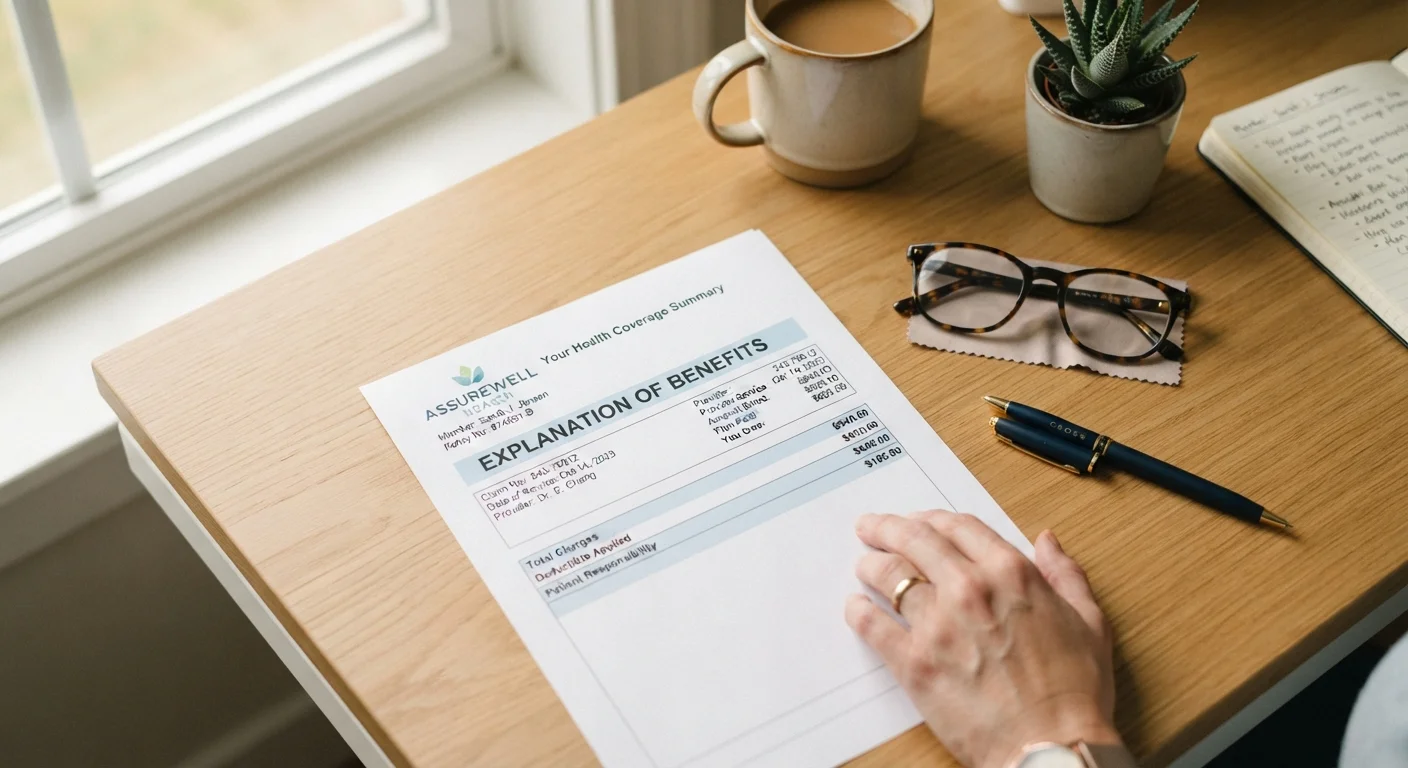
An Explanation of Benefits (EOB) is a statement your health insurer sends after processing a medical claim. It explains what the provider billed, what your plan allowed, what the insurer paid, and what - if anything - you may owe the provider. It is not a bill, and you should not pay anything based solely on an EOB until you receive an actual invoice from your provider.
Understanding your EOB is a practical extension of understanding your overall coverage. If you are newer to how health plans work, our plain-language health insurance overview is a useful starting point before diving in here.
EOBs Are Your Paper Trail
Retain every EOB for at least one full plan year. They serve as your record that a claim was processed, which is invaluable if a billing dispute arises. Digital storage - a dedicated folder in cloud storage or email - makes retrieval straightforward.
The Core Fields on Every EOB
Layouts vary by insurer, but every EOB includes the same essential columns. Here is what each one means:
- Service date: The date the care was provided. Verify this matches your actual visit.
- Provider name: The doctor, lab, or facility that submitted the claim.
- Billed amount (or charged amount): What the provider charged. This figure is almost never what anyone actually pays.
- Allowed amount (or negotiated rate): The rate your insurer has contracted with in-network providers. This is the ceiling on what counts toward your cost-sharing calculations.
- Plan paid: What your insurer paid directly to the provider.
- Your responsibility: The portion you owe, broken down into deductible, copay, and coinsurance amounts.
- Adjustment / Discount: The difference between the billed amount and the allowed amount - the amount written off because of the negotiated contract.
To understand how your deductible, copay, and coinsurance figures interact with each other, see our guide on how deductibles, copays, and coinsurance work together.
Step-by-Step: Working Through Your EOB
Follow these steps each time an EOB arrives - ideally before you receive or pay any provider invoice.
Confirm your personal and plan information
Check the member name, member ID, and group number at the top of the EOB against your insurance card. A mismatch can indicate a filing error that will affect how the claim is paid.
Verify the service date and provider
Match the service date and provider name to your own records. If you see a date or provider you do not recognize, contact your insurer before doing anything else - this can occasionally indicate a billing error or, in rare cases, a fraud concern.
Read the allowed amount, not the billed amount
The billed amount often looks alarming, but it is rarely relevant to what you will actually pay. Focus on the allowed amount - that is the figure your cost-sharing is calculated from when you use an in-network provider.
Check how the plan applied your deductible and coinsurance
Your EOB will show how much of your deductible has been applied to this claim and your running year-to-date total. Use this to track your progress toward both your deductible and your annual out-of-pocket maximum.
Review any denial or reduction explanation
If coverage was denied or a charge was reduced, the EOB includes a remark code or plain-language explanation. Look this up - your insurer's website usually has a code glossary. Common reasons include services requiring prior authorization that was not obtained, or services deemed not medically necessary under plan terms.
Wait for the provider's bill before paying
Once you understand what your EOB says you owe, wait for the provider's invoice. The amount on the provider bill should match the your responsibility figure on your EOB. If the two numbers differ, contact the provider's billing office before paying anything.
When Something Looks Wrong
EOB errors happen. Common issues include duplicate charges, incorrect procedure codes, services billed to the wrong plan year, or a claim processed as out-of-network when the provider is actually in-network. If any field looks off:
- Compare the EOB to your provider's itemized bill and your appointment records.
- Call your insurer's member services line - the number is printed on your insurance card and on the EOB itself.
- Ask the provider's billing department to verify the codes submitted.
- If a claim was denied and you believe it should have been covered, request a formal appeal in writing. Insurers are required to provide an appeals process under federal law.
You Have the Right to Appeal Denials
Federal law requires health insurers to provide both an internal appeals process and access to external review by an independent organization. If your claim is denied or your covered amount seems incorrect, request an appeal in writing within the timeframe specified on your EOB - deadlines typically range from 30 to 180 days. Missing the deadline can forfeit your right to challenge the decision.
This article is for general informational purposes only and does not constitute personalized insurance, financial, or legal advice. Coverage terms, exclusions, and appeal processes vary by plan and state. Always consult your plan documents and, where needed, a licensed insurance professional.