

Key Takeaways
Diversification
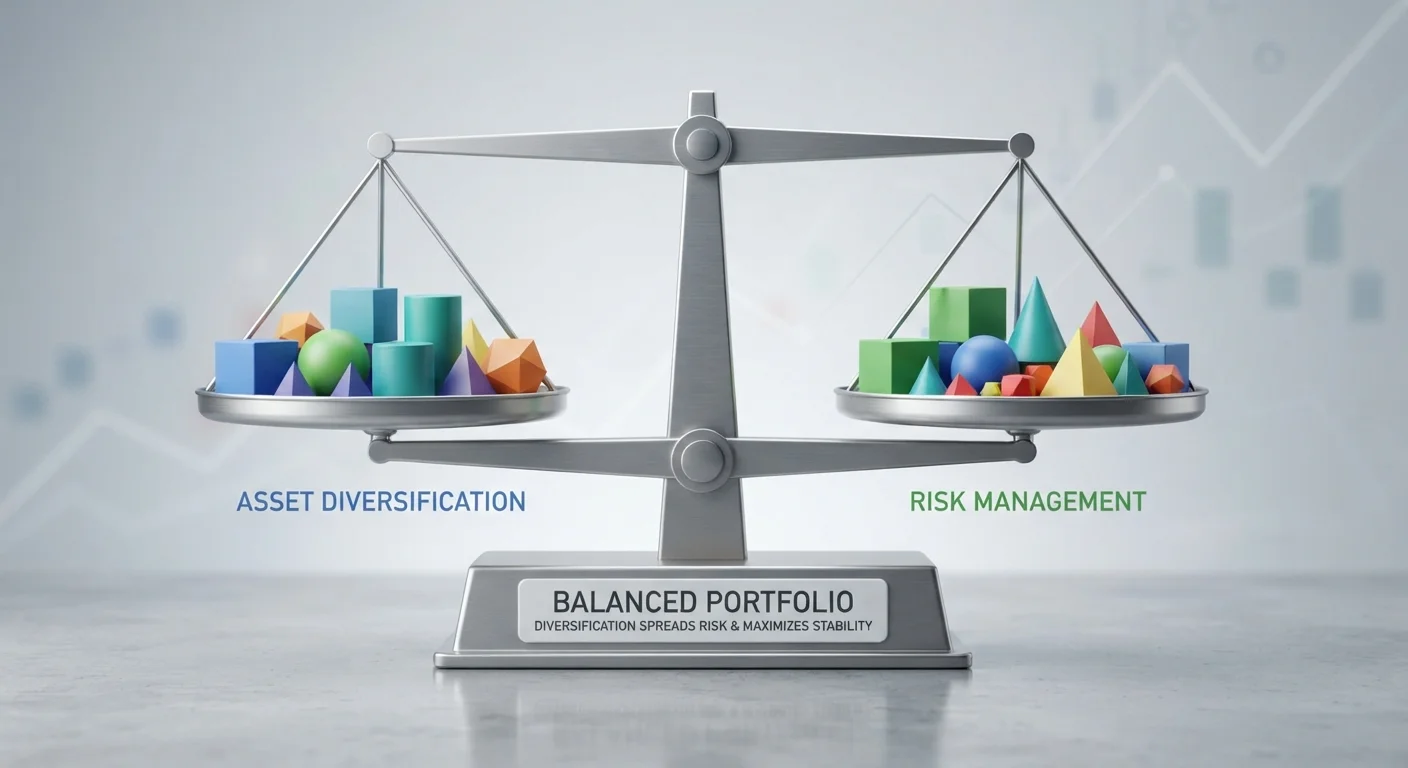
Diversification is the practice of spreading your investments across different types of assets, industries, or geographies so that a loss in one area doesn't devastate your entire portfolio. The core idea is simple: if your money is in many different places, a single bad event is less likely to wipe everything out. Think of it as not putting all your eggs in one basket.
In portfolio theory, diversification works because assets with low or negative correlations tend not to move in the same direction at the same time, which smooths out overall portfolio volatility.
The Problem Diversification Solves
Imagine putting your entire savings into shares of a single company. If that company reports fraud, loses a major contract, or simply falls out of favor, your portfolio could lose half its value overnight through no fault of your own financial planning. This is called concentration risk - and it's exactly what diversification is designed to reduce.
When you start investing, you're accepting that your money will fluctuate in value. The question isn't whether to take on risk - it's whether to take on smart, manageable risk. Spreading capital across multiple investments means one failure becomes a setback, not a catastrophe.
Start Simple, Then Build Complexity
You don't need a complex portfolio to diversify effectively. A broad stock index fund paired with a bond fund gives most investors meaningful spread across thousands of securities. As your savings grow, you can layer in international exposure or other asset classes. Complexity should serve your goals - not signal sophistication.
What Diversification Actually Protects Against
Diversification specifically reduces unsystematic risk - also called specific risk or idiosyncratic risk. This is the risk tied to a particular company, sector, or region. Examples include:
- A pharmaceutical company's drug failing clinical trials
- An airline industry shock caused by a fuel crisis
- A regional bank collapsing due to local economic conditions
By holding assets that don't move in lockstep, you reduce exposure to these targeted shocks. Understanding the core building blocks of a portfolio - stocks, bonds, and funds - shows how differently these assets can behave under the same economic conditions.
~20-30
Stocks needed to reduce most unsystematic risk
Academic research in portfolio theory suggests that holding 20-30 uncorrelated stocks captures the majority of diversification benefits within equities.
~50%
U.S. investors' share of global market cap
The U.S. represents roughly half of global equity market capitalization, meaning U.S.-only portfolios miss significant international diversification potential.
What diversification cannot protect against is systematic risk - market-wide events like recessions, financial crises, or global pandemics that drag down nearly all asset classes simultaneously. No amount of diversification fully shields a portfolio from a broad economic contraction.
Correlation Is the Key Variable
Diversification works best when your holdings have low correlation - meaning they don't all react the same way to the same events. During certain crises, correlations between asset classes can spike, temporarily reducing the protection diversification normally provides. This is why diversification is a long-term strategy, not a short-term shield.
Common Misconceptions About Diversification
One of the most frequent mistakes investors make is confusing quantity with quality. Owning 50 technology stocks is not meaningfully diversified - all 50 positions would likely fall together if the tech sector declined. True diversification requires variety in type, not just number.
Another misconception is that diversification is only for large portfolios. In reality, a simple two-fund portfolio - one holding domestic stocks and one holding bonds - already provides meaningful spread for someone just starting out. Common investing myths often discourage people from starting, when in fact diversification tools are widely accessible.
“Diversification is the only free lunch in investing.”
— Harry Markowitz, Nobel Prize-winning economist and pioneer of Modern Portfolio Theory
Your risk tolerance also shapes how you diversify. A younger investor with decades ahead may lean heavily toward equities; someone nearing retirement typically shifts toward bonds and cash equivalents to reduce volatility. Diversification isn't a single formula - it's a framework shaped by individual circumstances.
Practical Ways Diversification Shows Up in Real Portfolios
For everyday investors, diversification is often built in through common vehicles:
- Index funds: Automatically hold hundreds or thousands of securities in a single purchase, tracking a broad market index.
- Target-date funds: Common in 401(k) plans, these automatically adjust their mix of stocks and bonds as the investor ages.
- Bond allocations: Bonds tend to behave differently than stocks, especially during equity market downturns, providing a cushion.
- International exposure: Holding some assets outside the U.S. reduces dependence on a single country's economy.
No strategy guarantees a specific outcome. Past performance of any diversification approach does not guarantee future results. This article provides general financial information and is not personalized financial advice - consult a qualified financial professional for guidance suited to your situation.
This article is for informational and educational purposes only and does not constitute personalized financial or investment advice. All investing involves risk, including potential loss of principal. Consult a licensed financial adviser before making investment decisions.