

Key Takeaways
Why At-Home Grooming Matters
Professional grooming appointments - typically scheduled every four to eight weeks depending on breed and coat type - are an important part of your pet's care. But a lot happens between those visits. Coats accumulate debris, nails continue to grow, and ears can develop wax buildup or early signs of irritation. Regular at-home grooming sessions fill that gap and offer an additional benefit: they give you a consistent, close-up view of your pet's body, making it easier to spot changes that warrant veterinary attention.
The tasks described in this guide are appropriate for most healthy adult dogs and cats when performed correctly and with the right tools. They are not a replacement for professional grooming or veterinary care - they are a complement to both.
What you will need
If you are building out a broader daily habit routine, the same principle of consistent, attentive observation applies across many care contexts. The daily habits that support long-term pet wellness guide covers nutrition, exercise, and behavioral monitoring alongside grooming basics.
Make Grooming a Positive Routine
Introduce grooming gradually, particularly with puppies and kittens, pairing each session with calm praise and small rewards. Short, positive sessions repeated consistently are far more effective than infrequent lengthy ones. A pet that tolerates grooming at home is easier and safer for professional groomers to work with, too.
What to Do - and What to Leave to Professionals
Understanding your limits is as important as mastering the tasks themselves. At-home grooming is appropriate for coat brushing and deshedding, outer ear inspection and light cleaning, nail tip trimming, paw pad checks, and basic eye and dental hygiene. These are low-risk tasks when done carefully with proper tools.
Slicker brush or deshedding tool
Removes loose fur, debris, and minor tangles from the coat without damaging the skin.
Fine-toothed comb
Works through remaining tangles and checks for fleas or skin irregularities after brushing.
Pet nail clippers (scissor or guillotine style)
Trims nail tips to a safe length, reducing the risk of snagging, splitting, or overgrowth.
Nail grinder (rotary tool)
Smooths nail edges after clipping and is often preferred for dogs sensitive to clippers.
Veterinarian-approved ear cleaning solution
Softens and loosens debris in the outer ear canal for safe, gentle removal.
Styptic powder
Stops minor bleeding quickly if a nail quick is accidentally nicked during trimming.
Tasks that should remain with a licensed groomer or veterinarian include expressing anal glands, removing severe mats close to the skin, deep ear canal flushing, and any grooming needed when skin infection, open wounds, or unusual masses are present. Attempting these without professional training can cause pain, injury, or worsen an underlying condition.
Know When to Stop and Call a Professional
If you notice unusual odor, discharge, redness, swelling, matted fur close to the skin, or your pet shows signs of pain during any grooming task, stop immediately. These can indicate underlying health issues that require veterinary or professional groomer assessment. At-home grooming should never be used as a substitute for professional care when a problem is present.
Avoid Human Grooming Products on Pets
Human shampoos, conditioners, and ear-cleaning solutions are formulated for human skin pH, which differs significantly from a dog's or cat's. Using them on your pet can cause skin irritation, dryness, or disrupt the natural protective barrier. Always use products specifically formulated and labeled for use on the species you're grooming.
Follow the steps below to conduct a safe, thorough at-home session. Take your time - a 20- to 30-minute session done calmly and methodically is more effective and less stressful than a rushed one.
Set up a calm, comfortable grooming space
Choose a quiet room with good lighting and a non-slip surface - a rubber mat on a table or the floor works well. Keep all your tools within easy reach before you bring your pet in. If your pet is anxious, spend a few minutes letting them sniff the tools before you begin. A calm environment reduces stress for both you and your animal.
Brush the coat thoroughly before anything else
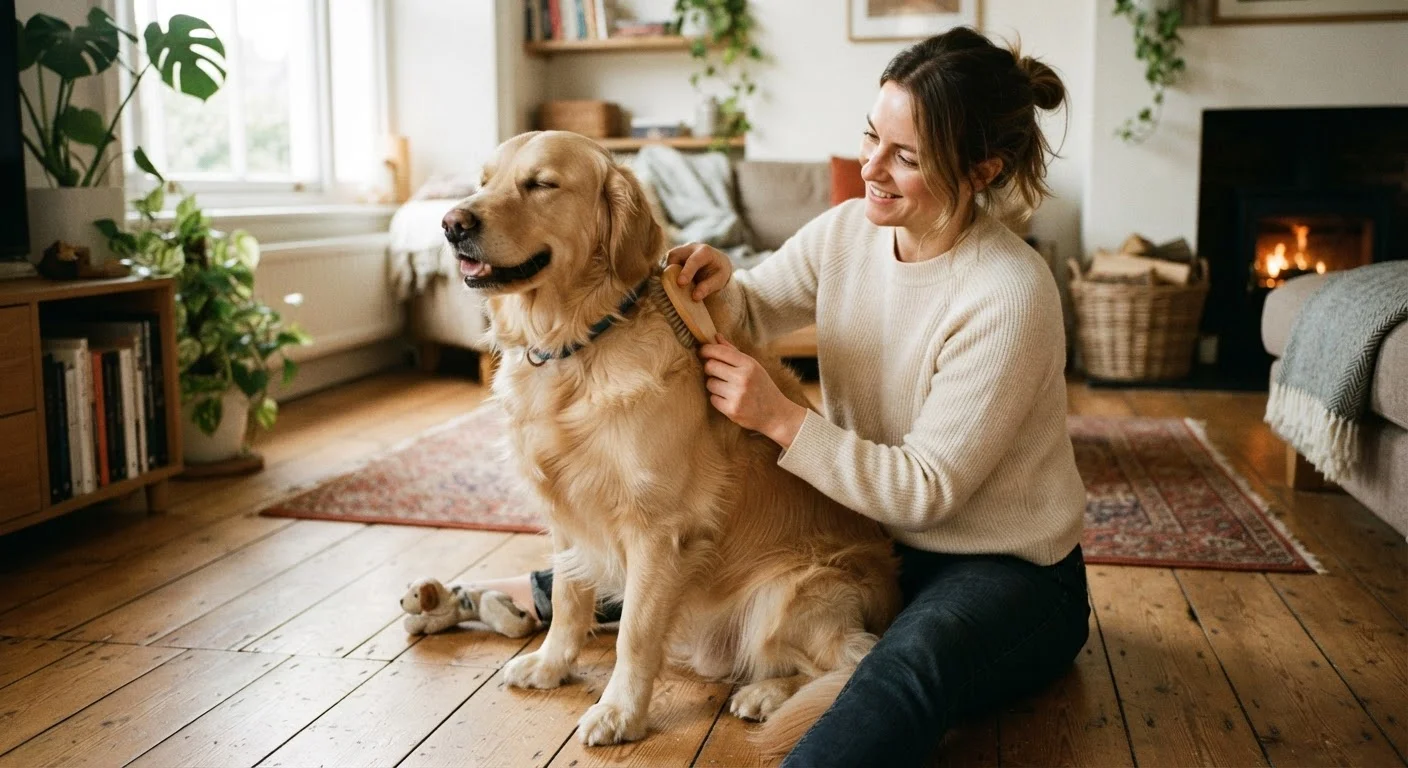
Start at the head and work toward the tail, brushing in the direction of hair growth. Use short, gentle strokes and pay particular attention to areas prone to matting: behind the ears, under the armpits, around the collar, and at the base of the tail. Lift sections of longer fur to brush from the roots rather than just skimming the surface. For double-coated breeds, a deshedding tool helps reach the undercoat without damaging the guard hairs.
While brushing, run your fingers lightly along the skin. Note any lumps, bumps, redness, dry patches, or unusual parasites. This habit pairs well with the broader daily wellness checks described in our guide to keeping your pet healthy between vet appointments.
Inspect and clean the outer ears
Fold the ear flap back gently and look into the outer ear canal. A healthy ear should be pale pink, odor-free, and have minimal wax. Apply a small amount of veterinarian-approved ear cleaning solution to a cotton ball or gauze pad - never directly into the ear canal with a bottle unless your vet has specifically instructed otherwise. Wipe away visible wax and debris from the outer canal and the ear flap's inner surface only.
Do not insert cotton swabs or your fingers into the canal itself. Deep cleaning, removal of impacted wax, or any cleaning when infection is suspected must be handled by a veterinarian or professional groomer with appropriate training.
Trim nails carefully, one paw at a time
Hold your pet's paw gently but firmly. Identify the quick - the pink blood vessel visible through light-colored nails - and plan to clip only the curved tip, well short of it. On dark nails, clip tiny amounts at a time and look at the cut surface: a white or light gray center is safe; a dark center means you are approaching the quick and should stop.
Clip one nail, release briefly with calm praise, then continue. You do not need to complete all nails in one session if your pet becomes stressed. A nail grinder used after clipping smooths sharp edges and is particularly useful for pets who tolerate vibration better than the snapping motion of clippers.
Check paws, eyes, and teeth before finishing
Examine the paw pads for cracks, cuts, or foreign objects lodged between the toes. Trim any fur between toe pads that has grown long enough to mat or collect debris. Wipe the corners of the eyes gently with a damp cotton ball if there is minor discharge - moving from the inner corner outward. Do not use the same cotton ball on both eyes.
For dental hygiene, use a pet-safe toothbrush and toothpaste to brush teeth if your pet tolerates it. Oral health is a critical component of overall wellbeing and is easy to overlook between vet visits. This check rounds out a thorough at-home grooming session and reinforces the kind of consistent care routine discussed in regular pet health maintenance.
This article provides general pet care information for educational purposes only and is not a substitute for advice from a licensed veterinarian or certified professional groomer. Always consult a qualified professional if you have concerns about your pet's health or grooming needs.