

Key Takeaways
Why Pet Weight Is Harder to Judge Than It Looks
Most pet owners rely on how their animal looks to assess whether it's carrying a healthy weight. This approach has a fundamental flaw: coat length, breed shape, and posture can easily mask an extra 10-20% of body weight. A fluffy Labrador or a deep-chested Persian cat may look perfectly proportioned while carrying significant excess fat.
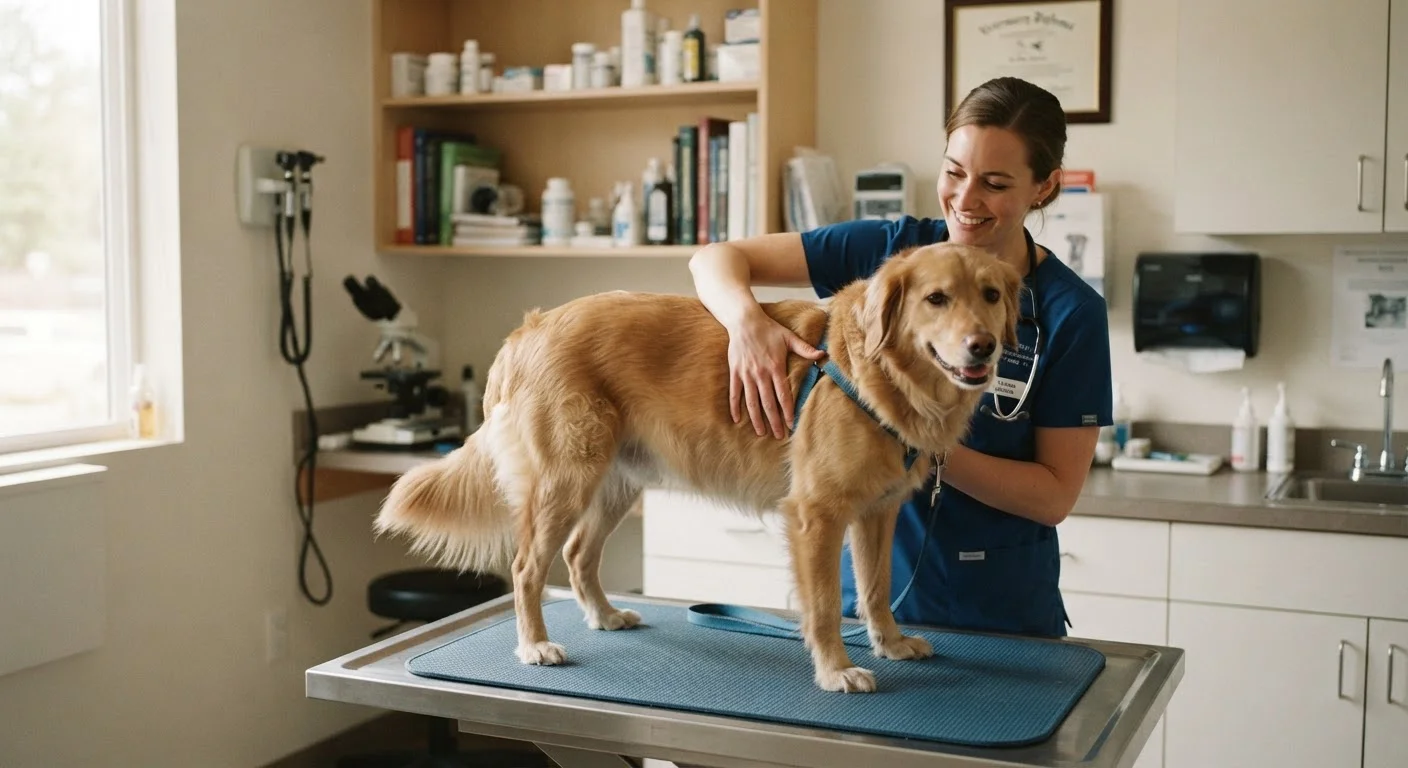
Veterinarians use a standardized method called Body Condition Scoring (BCS) - a 9-point scale that evaluates fat coverage over key bony landmarks: the ribs, spine, hips, and waist. A score of 4-5 is considered ideal. Scores of 6-7 indicate overweight; 8-9 indicate obesity. Importantly, this assessment relies on palpation - feeling the animal - not just looking at it.
You can practice a basic version at home: run your hands along your pet's ribcage. You should be able to feel individual ribs without pressing hard, but they should not be visually prominent. An inability to feel ribs without applying firm pressure is a common indicator of excess weight. For a broader set of health reference points, see our guide to normal health benchmarks in pets.
Overweight Pets Are More Common Than Owners Expect
Multiple veterinary surveys, including data from the Association for Pet Obesity Prevention, consistently find that over half of adult dogs and cats in the United States are overweight or obese. Crucially, a large share of owners of overweight pets rate their animal's weight as 'normal.' This gap between perception and clinical reality means regular professional weight assessments - not just home observation - are an important part of routine care.
Common Myths - and What the Evidence Actually Says
Misconceptions about pet weight are widespread, often reinforced by well-meaning comparisons to other pets or outdated feeding habits. The myth-and-fact pairs below address the most common errors in pet owner thinking - each one supported by veterinary consensus.
Myth
If my pet is eating a normal amount, it can't be overweight.
Fact
Caloric needs vary significantly by age, breed, activity level, and reproductive status - 'normal' portions for one animal may be excessive for another.
Pet food feeding guidelines are printed for average animals under average conditions. A seven-year-old spayed indoor cat has dramatically lower energy needs than the guidelines on most food bags assume. Neutering, aging, and reduced activity all lower metabolic rate, meaning the same food volume that maintained a healthy weight at age two may cause gradual weight gain by age five. Portion size should be calibrated to the individual animal, ideally with veterinary input, and reassessed as the pet's life stage changes.
Myth
A heavier pet is simply a bigger breed - it's proportionate.
Fact
Breed size affects healthy weight ranges, but excess fat is excess fat regardless of breed. Large breeds can be obese just as readily as small ones.
Body Condition Scoring applies across all breeds by assessing fat coverage relative to the individual animal's frame - not against a breed weight chart alone. A Saint Bernard and a Chihuahua are assessed using the same BCS criteria. Owners of large or giant breeds sometimes normalize significant excess weight because the animal still appears active and proportional at a glance. However, excess fat load on large-breed joints carries measurable health risks, including earlier onset of osteoarthritis.
Myth
You can tell a pet is overweight just by looking at it.
Fact
Coat thickness, fur type, and body conformation frequently hide excess fat. Visual assessment alone is unreliable; palpation is required.
Dense double coats - common in breeds like the Husky, Chow Chow, or Maine Coon cat - can obscure the waist tuck and rib coverage that are key visual indicators. Even in short-coated animals, posture and muscle mass distribution affect how weight appears externally. Veterinarians consistently find that physical examination reveals overweight status in animals whose owners considered them to be a healthy size. This is why hands-on BCS assessment is the standard, not an optional add-on.
Myth
A pet that exercises regularly can't be overweight.
Fact
Exercise supports health and muscle tone but does not compensate for sustained caloric excess. Diet remains the primary driver of weight.
Activity level is one input into energy balance, but it can be offset by calorie intake. An active dog that receives regular table scraps, high-calorie treats, or oversized portions can still accumulate excess body fat. This is well-established in companion animal nutrition: exercise is valuable for cardiovascular health, joint function, and behavioral wellbeing, but it is not a reliable counterweight to dietary overconsumption. Weight management in pets, as in humans, requires attention to both sides of the energy equation.
Myth
My vet would have told me if my pet was overweight.
Fact
Weight concerns are sometimes under-communicated in clinic visits, and owners may not hear or retain the information. Proactively asking your vet for a BCS assessment is worthwhile.
Research in veterinary communication has found that weight discussions can be brief, indirect, or deprioritized when other health concerns take precedence during an appointment. Additionally, some owners recall being told their pet was 'a little heavy' but did not receive specific guidance. If weight has not been explicitly addressed at a recent visit, asking your veterinarian for a formal body condition score and a target weight range is a straightforward step. Many clinics also offer nurse or technician weight-check appointments between full exams.
Behavioral and Physical Signs Worth Monitoring
Beyond hands-on palpation, certain behavioral and physical changes can suggest a pet is carrying excess weight. These signs are subtle and easy to attribute to aging or personality - which is part of why overweight pets often go unaddressed for years.
- Reduced stamina: Tiring quickly on walks or play that previously caused no issue
- Reluctance to jump or climb: Particularly in cats avoiding elevated surfaces they once used freely
- Labored breathing at rest: Audible effort during sleep or relaxed activity
- Difficulty grooming: Cats especially may struggle to reach their hindquarters, resulting in an unkempt coat in those areas
- A visibly rounded abdomen: A waist that is absent or indistinguishable when viewed from above
It's worth noting that some of these signs - such as reduced mobility or breathing changes - can also signal pain or illness unrelated to weight. Our article on subtle signs your pet may be in pain covers the overlap in more detail. Any new or worsening symptoms should be discussed with your veterinarian rather than attributed to weight alone.
Don't Adjust Diet Without Veterinary Guidance
Sudden caloric restriction - especially in cats - can cause serious medical complications, including hepatic lipidosis (fatty liver disease), a potentially life-threatening condition. If you believe your pet is overweight, consult your veterinarian before making changes to feeding amounts or food type. A supervised, gradual weight-loss plan is far safer than an abrupt diet change.
Diet is closely connected to weight management. Understanding how to evaluate what goes into your pet's food is a practical first step - our guide to reading pet food labels explains ingredient lists, portion guidance, and what AAFCO statements actually mean. For a fuller picture of what excess weight means for your pet's long-term health, see Obesity in Pets: Health Risks That Go Beyond the Scale.
This article is for general informational purposes only and does not constitute veterinary advice. Always consult a licensed veterinarian for guidance specific to your pet's health and weight management needs.