

Key Takeaways
Periodontal Disease in Pets
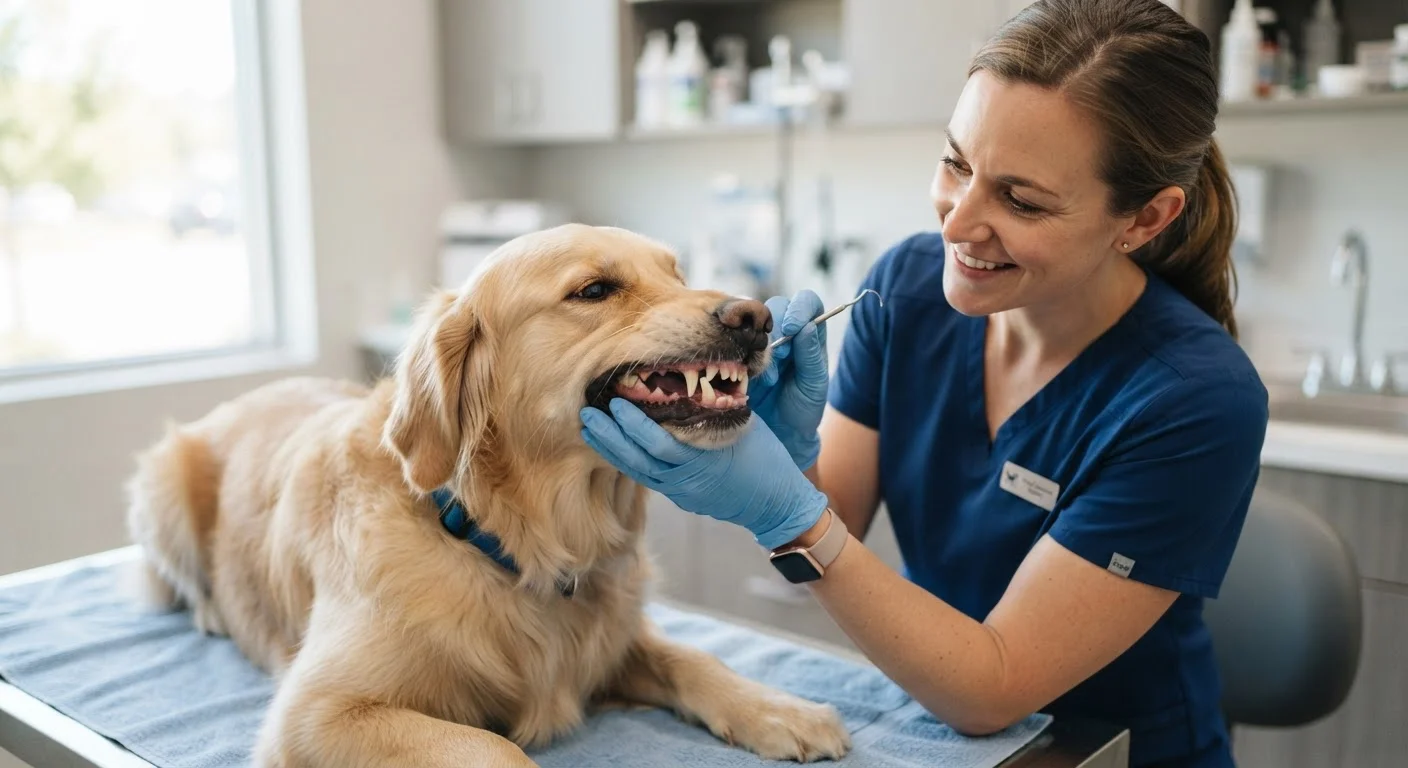
Periodontal disease is an infection and inflammation of the structures that support a pet's teeth - including the gums, ligaments, and jawbone. It begins as plaque and tartar buildup and, if untreated, progresses to gum recession, tooth loss, and chronic pain. It is one of the most commonly diagnosed conditions in adult dogs and cats.
Veterinary researchers classify periodontal disease in four stages, ranging from mild gingivitis (Stage 1) to severe bone loss and tooth mobility (Stage 4). Stages 3 and 4 often require professional extraction under general anesthesia.
Why Dental Disease Is the Norm, Not the Exception
Most pet owners think of dental problems as occasional concerns, something to address if a tooth visibly breaks or the smell becomes impossible to ignore. The reality is more sobering. The majority of dogs and cats over the age of three have some degree of periodontal disease, according to the American Veterinary Medical Association. That figure is not a worst-case scenario - it reflects routine findings in veterinary practices every day.
The underlying biology helps explain why. Dogs and cats accumulate plaque on their teeth within hours of eating, just as humans do. Without regular removal, that plaque mineralizes into tartar, which irritates gum tissue and creates pockets where bacteria thrive. Unlike humans, most pets never receive daily tooth brushing, allowing the cycle to compound year after year.
Part of what makes this condition so pervasive is how quietly it progresses. Because animals instinctively conceal discomfort - an evolved survival strategy - significant dental disease can develop long before an owner notices anything wrong. A pet that is eating normally and behaving consistently may still be living with chronic oral pain. See signs your pet is in pain that are easy to miss for a broader look at how animals mask discomfort.
~80%
Dogs with dental disease by age 3
The AVMA and veterinary dental sources estimate that the majority of dogs show signs of periodontal disease by their third year of life.
~70%
Cats with dental disease by age 3
A similar pattern is observed in cats, with most adult cats showing some degree of oral disease when examined by a veterinarian.
Stage 1-4
Veterinary periodontal disease classification
Veterinary dental guidelines classify periodontal disease across four stages, with Stage 1 being reversible gingivitis and Stage 4 involving severe bone loss.
How Dental Disease Progresses - and What's at Stake
Veterinary dentistry classifies periodontal disease in four stages. Stage 1 is gingivitis - inflamed gums that are still reversible with a professional cleaning and improved home care. Stages 2 through 4 involve progressive destruction of the bone and connective tissue that anchor teeth in the jaw. At Stages 3 and 4, tooth extraction is typically necessary, and pain has almost certainly been present for some time.
The consequences are not limited to the mouth. When the gum barrier is breached, bacteria can enter the bloodstream - a process called bacteremia. Veterinary research has associated chronic bacteremia from periodontal disease with changes in heart valve tissue, kidney function, and liver health. The strength of these associations continues to be studied, but veterinary consensus holds that untreated oral disease carries real systemic risk.
For a fuller picture of how neglected conditions compound over time, the guide on keeping your pet healthy between vet appointments addresses how daily habits across multiple health dimensions reinforce one another.
“Periodontal disease is the most common clinical condition affecting adult dogs and cats, yet it is largely preventable with appropriate home care and regular professional attention.”
— American Veterinary Medical Association, Leading U.S. veterinary professional organization
Home Care and Professional Cleaning: What Each Does
Daily tooth brushing with a pet-safe toothpaste remains the single most evidence-supported home-care intervention in veterinary dental guidelines. Human toothpaste is not appropriate for pets - it contains fluoride and sometimes xylitol, both of which are toxic to dogs and cats. Dental chews, water additives, and prescription dental diets can offer supplemental benefit, but none replaces mechanical plaque removal.
Home care slows the progression of disease but cannot reverse existing tartar buildup or treat disease below the gumline. That requires a professional dental cleaning performed under general anesthesia. Anesthesia allows the veterinary team to safely scale above and below the gumline, take full-mouth dental radiographs, probe periodontal pockets, and perform extractions if needed - none of which is possible in an awake, understandably reluctant pet.
Start Brushing Early for Best Results
Puppies and kittens introduced to tooth brushing as part of their routine are significantly more accepting of the process as adults. Use a soft-bristled pet toothbrush and a toothpaste formulated specifically for animals. Even brushing three to four times per week provides meaningful protection when daily brushing is not possible.
Anesthesia-free dental procedures, sometimes marketed as a gentler alternative, do not meet the standard of care set by the American Veterinary Dental College. They may improve the cosmetic appearance of teeth without addressing the disease where it actually lives: under the gumline.
Owners navigating the cost of professional dental care can review options for managing veterinary expenses through the guide on caring for a pet when money is tight.
Building Dental Care Into a Responsible Ownership Routine
Dental health should be part of every pet's routine wellness plan from the start, not a concern that surfaces after visible disease appears. Annual or biannual veterinary exams typically include an oral assessment, and veterinarians can identify early-stage disease long before it becomes painful or expensive to treat. Catching gingivitis at Stage 1 is far simpler - and far less costly - than managing Stage 3 bone loss and multiple extractions.
Introducing tooth brushing early, particularly in puppies and kittens, makes the process considerably easier for both pet and owner. Most adult pets can also be gradually acclimated to brushing with patience and positive reinforcement, though the process takes longer. The broader framework for building these habits from the beginning is covered in the guide on responsible pet ownership from day one.
Dental disease is common, but it is also among the more preventable chronic conditions in companion animals. Consistent home care, routine professional evaluations, and early intervention - rather than waiting until symptoms are undeniable - are what separate pets that maintain healthy mouths throughout their lives from those that do not.
This article provides general educational information about pet dental health and is not a substitute for professional veterinary advice. Consult a licensed veterinarian for guidance specific to your pet's health needs.