

Key Takeaways
Exceptionally deep, long-term emotional bond
Decades of shared experience create a level of mutual familiarity that short-lived pets simply cannot provide. Many parrot owners describe their birds as true lifelong companions who recognize individual family members and adapt to household routines over years.
Stable behavioral patterns develop over time
Long-lived animals often become more predictable and responsive with age and consistent care. A well-socialized tortoise or parrot raised in a stable home environment typically displays fewer behavioral problems than a newly acquired animal.
Continuity across major life transitions
Unlike dogs or cats whose lifespans may align with a single decade of your life, a long-lived pet can accompany you through multiple major chapters-children leaving home, retirement, relocation-providing genuine emotional consistency.
Opportunity to develop specialized expertise
Caring for an exotic, long-lived species builds real knowledge of animal husbandry, nutrition, and health management over time, which many owners find deeply rewarding and intellectually engaging.
May outlive the primary owner
A tortoise acquired today by a 40-year-old owner could still be alive in 2090. Without a formal succession plan, the animal may face abandonment, rehoming stress, or inadequate care after the owner's death.
Requires legal estate planning
Pet trusts, designated caregivers, and financial provisions must be established proactively. This adds legal complexity and cost that typical dog or cat owners rarely face.
Specialized veterinary care is harder to find
Tortoises, parrots, and other exotic long-lived animals require veterinarians with exotic animal training. In many regions, these specialists are scarce and appointments can be costly and logistically difficult.
Lifestyle changes can make care unmanageable
A career change, health decline, move to a smaller home, or transition to assisted living can make caring for a demanding long-lived animal suddenly impractical. These scenarios are difficult to predict decades in advance.
High cumulative lifetime financial cost
Even relatively modest annual care costs multiply dramatically over 50 or 60 years. A parrot requiring $500 annually in food, vet care, and enrichment will cost $25,000 over 50 years at a minimum-not accounting for medical emergencies.
Rehoming is emotionally and practically difficult
Long-lived animals, especially parrots, can develop behavioral problems and significant distress when rehomed. This creates a moral weight that makes exiting the commitment far harder than with shorter-lived pets.
Our Verdict
Long-lived pets offer extraordinary companionship and a uniquely deep human-animal bond, but they demand a level of commitment that extends well beyond a typical ownership horizon. The hidden costs-financial, logistical, and emotional-are significant and should be evaluated honestly before bringing one home. This is not a decision to make impulsively or without a long-range plan.
Best suited to experienced, financially stable pet owners who have researched species-specific needs thoroughly, built a support network, and made concrete plans for the animal's care throughout its entire lifespan-including provisions beyond the owner's own lifetime.
Which Pets Actually Live That Long?
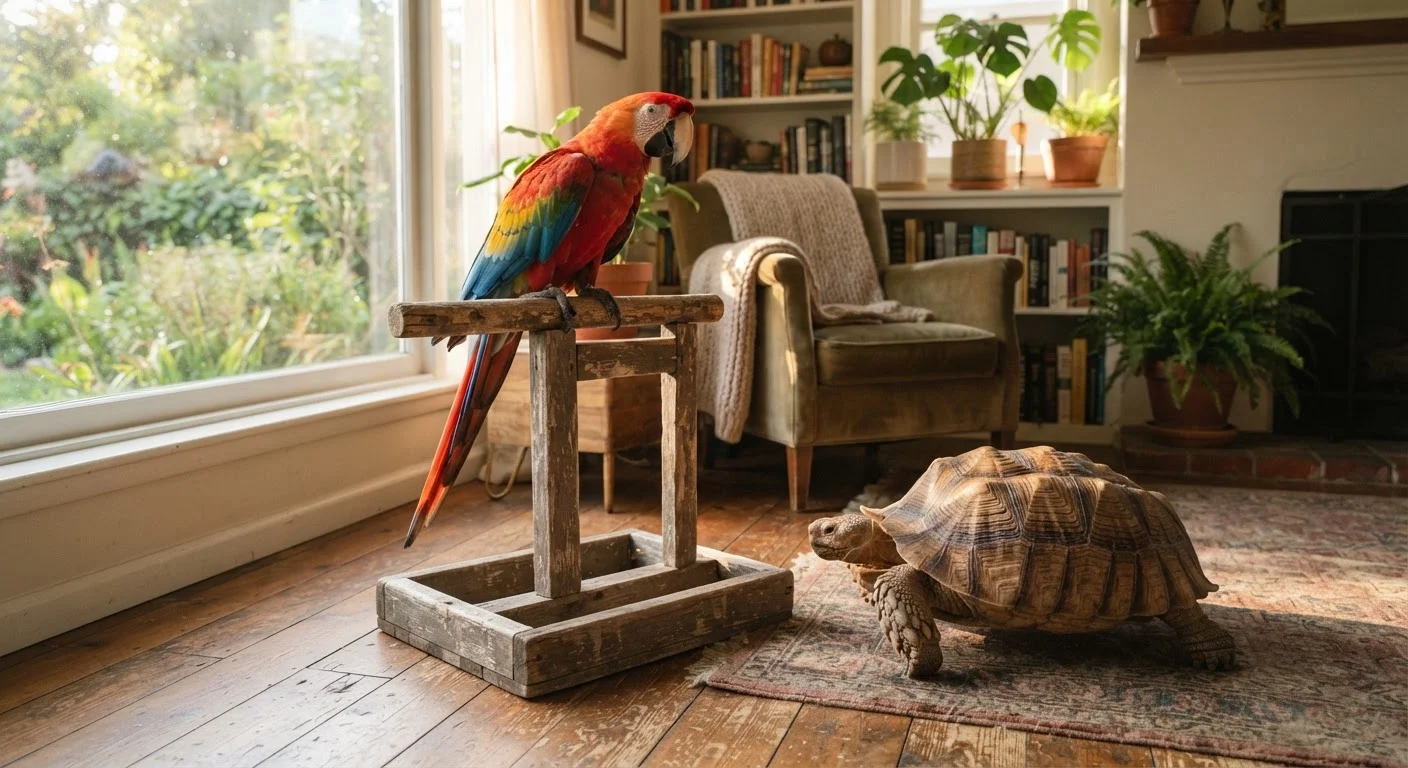
Most people understand that dogs and cats age faster than humans. What surprises many prospective owners is just how far in the other direction some species swing. Sulcata tortoises and Aldabra giant tortoises routinely live 70 to 100+ years. African grey parrots commonly reach 40 to 60 years in captivity, while macaws are similarly long-lived. Even among domestic dogs, Great Danes average only 8-10 years, while smaller breeds like Chihuahuas can reach 15-18 years.
Before committing to any animal, researching its expected lifespan is essential-not an afterthought. The right pet for your lifestyle depends heavily on how long that relationship will last and how your own life circumstances may shift over those decades.
The Real Advantages of a Long-Lived Companion
There are genuine, meaningful rewards to sharing your life with an animal over many decades. Understanding them helps put the challenges in proper context.
Exceptionally deep, long-term emotional bond
Decades of shared experience create a level of mutual familiarity that short-lived pets simply cannot provide. Many parrot owners describe their birds as true lifelong companions who recognize individual family members and adapt to household routines over years.
Stable behavioral patterns develop over time
Long-lived animals often become more predictable and responsive with age and consistent care. A well-socialized tortoise or parrot raised in a stable home environment typically displays fewer behavioral problems than a newly acquired animal.
Continuity across major life transitions
Unlike dogs or cats whose lifespans may align with a single decade of your life, a long-lived pet can accompany you through multiple major chapters-children leaving home, retirement, relocation-providing genuine emotional consistency.
Opportunity to develop specialized expertise
Caring for an exotic, long-lived species builds real knowledge of animal husbandry, nutrition, and health management over time, which many owners find deeply rewarding and intellectually engaging.
This depth of relationship is not easily replicated by shorter-lived pets. For owners who invest the time, a long-lived animal can become a genuinely irreplaceable presence across major chapters of life-career changes, moves, family milestones, and aging. Explore how pet ownership changes across every life stage to understand how this continuity plays out in practice.
The Hidden Costs and Commitments
The challenges of long-lived pet ownership are frequently underestimated, and they extend well beyond routine care costs.
May outlive the primary owner
A tortoise acquired today by a 40-year-old owner could still be alive in 2090. Without a formal succession plan, the animal may face abandonment, rehoming stress, or inadequate care after the owner's death.
Requires legal estate planning
Pet trusts, designated caregivers, and financial provisions must be established proactively. This adds legal complexity and cost that typical dog or cat owners rarely face.
Specialized veterinary care is harder to find
Tortoises, parrots, and other exotic long-lived animals require veterinarians with exotic animal training. In many regions, these specialists are scarce and appointments can be costly and logistically difficult.
Lifestyle changes can make care unmanageable
A career change, health decline, move to a smaller home, or transition to assisted living can make caring for a demanding long-lived animal suddenly impractical. These scenarios are difficult to predict decades in advance.
High cumulative lifetime financial cost
Even relatively modest annual care costs multiply dramatically over 50 or 60 years. A parrot requiring $500 annually in food, vet care, and enrichment will cost $25,000 over 50 years at a minimum-not accounting for medical emergencies.
Rehoming is emotionally and practically difficult
Long-lived animals, especially parrots, can develop behavioral problems and significant distress when rehomed. This creates a moral weight that makes exiting the commitment far harder than with shorter-lived pets.
40-60 yrs
Typical captive lifespan of an African grey parrot
According to the Association of Avian Veterinarians, African grey parrots are among the most long-lived companion birds, routinely outliving the humans who first acquired them.
70-100+ yrs
Lifespan of common pet tortoise species
Sulcata tortoises, one of the most commonly kept large tortoise species in the U.S., are documented to live well beyond 70 years under proper care conditions.
Many owners also underestimate how profoundly their own life will change over a 40- or 60-year relationship. A parrot acquired at age 30 may still be alive when the owner is 80-and potentially after. This reality makes estate planning a genuine necessity, not an optional extra. Trusts for animals, also called pet trusts, are legally recognized in all U.S. states and can designate caregivers and allocate funds for an animal's ongoing care.
Understanding the full scope of what's involved is part of being a responsible owner. The widespread myths about pet ownership often leave new owners unprepared for exactly these kinds of long-range obligations.
Planning for the Animal's Entire Life
Responsible ownership of a long-lived species requires proactive planning that most pet owners never have to consider. Key steps include identifying a willing, capable successor caregiver-ideally someone who already knows the animal-and formalizing that arrangement legally. Consulting with an estate planning attorney about a pet trust is advisable for any animal likely to outlive its primary owner.
Ongoing health monitoring is also more complex. Long-lived exotic species like tortoises and parrots require veterinarians with specialized exotic animal training; not every general practice is equipped to care for them. Building a relationship with a qualified exotic vet early is an investment in the animal's long-term wellbeing. The daily habits that support long-term pet wellness are even more consequential when compounded across decades.
Pet Trusts Are Legally Recognized Nationwide
All 50 U.S. states have enacted laws permitting pet trusts, which allow owners to legally designate a caregiver and set aside funds for an animal's ongoing care. These documents are separate from a standard will and can be structured to cover veterinary costs, food, housing, and enrichment. If you own or plan to own a long-lived species, consulting an estate planning attorney about this option is strongly advisable.
This article is for general informational purposes only and does not constitute veterinary, legal, or financial advice. Consult a qualified veterinarian, attorney, or financial professional for guidance specific to your situation.