

Key Takeaways
Why You Probably Don't Need to Shop
The instinct to go shopping before a job interview is understandable - it feels like a fresh start. But most people already have what they need hanging in their closet, or close to it. The real challenge isn't a lack of clothes; it's knowing how to evaluate and combine what's already there.
Interview dressing is less about fashion and more about communication. You're signaling that you understand the environment, you respect the occasion, and you're able to present yourself with care. None of that requires anything new. What it does require is a little time, some honest assessment, and a willingness to treat the process as a practical exercise rather than a shopping trip.
If you've ever felt like your wardrobe never quite comes together, our guide to building cohesive outfits from what you already own covers the underlying logic in detail.
Iron or clothing steamer
Removes wrinkles so garments look neat and intentional rather than pulled from a pile.
Lint roller
Quickly removes pet hair, dust, and fuzz from dark or fitted fabrics.
Full-length mirror
Lets you evaluate the complete outfit from head to toe before the interview day.
Clothes brush
Refreshes the surface of wool or structured blazers between washes.
Step-by-Step: Building Your Interview Outfit
Follow these steps in order - the process is designed to move from research to a fully tested outfit without requiring a single purchase.
What you will need
Research the company's dress culture
Before touching your closet, spend ten minutes looking up how people at the company typically dress. Check the company website, LinkedIn employee photos, and any social media presence. A tech startup and a law firm call for very different levels of formality. Knowing this upfront saves you from overdressing - or underdressing - and gives you a target to aim for when selecting pieces.
Pull every candidate piece from your closet
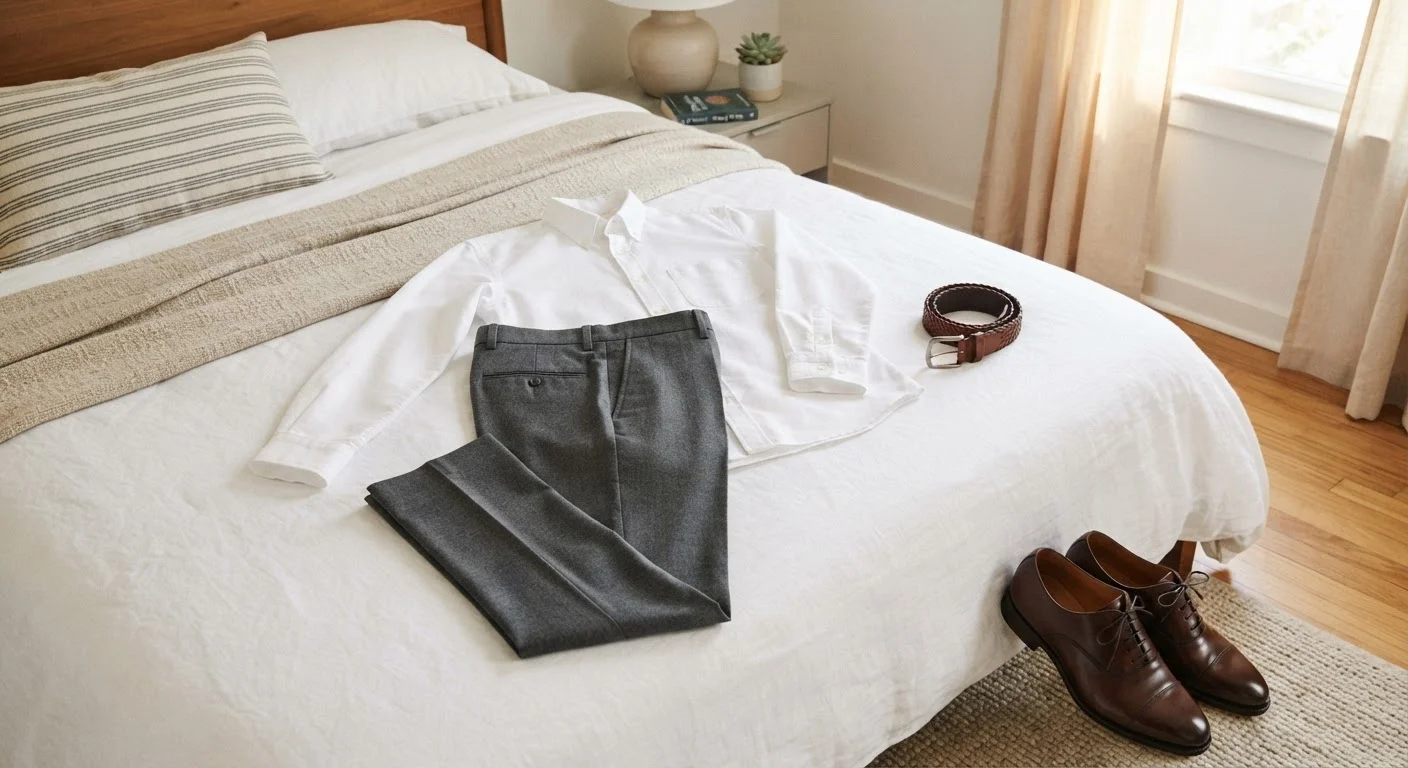
Drag out every item that could plausibly work - trousers, skirts, blazers, button-downs, blouses, sweaters, dress shoes, flats, boots. Don't pre-edit; lay everything on the bed first. You may be surprised what's already there. Pay special attention to pieces you rarely wear, which are often in better condition. See our guide to wardrobe basics for a sense of the core pieces most closets should contain.
Prioritize fit over formality
A well-fitting pair of dark chinos reads more polished than an ill-fitting suit. Go through your candidate pieces and immediately set aside anything that pulls, gaps, bunches, or is visibly too long or too short. What remains - the pieces that actually fit your body right now - becomes your working palette. Good fit signals self-awareness and attention to detail, both of which matter in an interview context.
Build a cohesive outfit from your shortlist
Aim for a combination where the pieces share a tonal logic - neutrals paired together, or a simple color with a neutral anchor. A clean, tucked-in top with tailored bottoms and a structured layer (a blazer, cardigan, or fitted jacket) covers most interview environments from business casual upward. If you're struggling to make pieces feel cohesive, our article on building outfits when nothing seems to match walks through the logic step by step.
Inspect, clean, and press your chosen outfit
Once you've settled on a combination, treat every piece as if it's going on camera - because it may be. Check for lint, pilling, loose threads, and odors. Wash or spot-clean anything that needs it, then press or steam everything. Even a casual outfit looks significantly sharper when the fabric lies flat and smooth. Do this the evening before, not the morning of the interview.
Sort out shoes and accessories
Shoes get noticed. Wipe down or polish any pair you plan to wear - scuffed heels or dirty soles are disproportionately noticeable. For accessories, less is usually more in an interview: one watch, simple earrings, or a understated necklace. Avoid anything that makes noise, requires frequent adjustment, or could distract. A clean, minimal bag or portfolio completes the picture without adding visual clutter.
Do a full dress rehearsal the day before
Put the entire outfit on - shoes, accessories, everything - and stand in front of a mirror. Sit down, stand up, reach forward. Make sure nothing rides up, gaps open, or feels uncomfortable after five minutes. If something bothers you now, it will bother you more when you're already nervous. This is also the moment to decide if you need to borrow one piece from a friend or family member rather than scrambling on interview day.
Borrowing Is Completely Legitimate
If your closet genuinely lacks one key piece - a blazer, a pair of dress shoes - ask a friend or family member of a similar size before defaulting to a purchase. Borrowing costs nothing, and a single well-chosen borrowed piece can pull an entire outfit together. Just return it clean and promptly.
Common Pitfalls and How to Sidestep Them
A few missteps come up repeatedly when people dress for interviews from an existing wardrobe. Being aware of them ahead of time makes them easy to avoid.
- Over-formalizing unnecessarily. Showing up in a full suit to a creative agency where everyone wears jeans can signal poor research just as much as showing up underdressed. Calibrate to the company, not to a generic idea of what an interview looks like.
- Ignoring grooming. Clothes are only part of the equation. Clean hair, trimmed nails, and fresh breath matter. The outfit and the person wearing it need to be equally prepared.
- Holding onto a piece that doesn't fit. Sentimental attachment to a blazer from five years ago doesn't make it right for today. If it doesn't fit your body well right now, set it aside.
For broader context on dressing in ways that genuinely work for your body rather than against it, our look at body-shape dressing advice separates the practical guidance from the outdated rules worth ignoring.
Avoid Wearing the Outfit for the First Time on Interview Day
New-to-you combinations can surprise you: waistbands that feel fine hanging feel different after 20 minutes of sitting, or fabrics that seem opaque at home look different under bright office lighting. A dress rehearsal the day before catches these problems while there's still time to adjust.
Fit and Cleanliness Outweigh Everything Else
Interviewers notice whether you look put-together far more than whether your clothing is new, expensive, or on-trend. A clean, pressed, well-fitting outfit assembled entirely from pieces you already own will always read as more polished than a new outfit that doesn't fit properly. Resist the pressure to spend money you may not have on clothes you may not need.
This article is for general style guidance only. Individual workplace expectations vary; when in doubt, contact the employer directly to ask about dress code norms.