

Key Takeaways
Option A
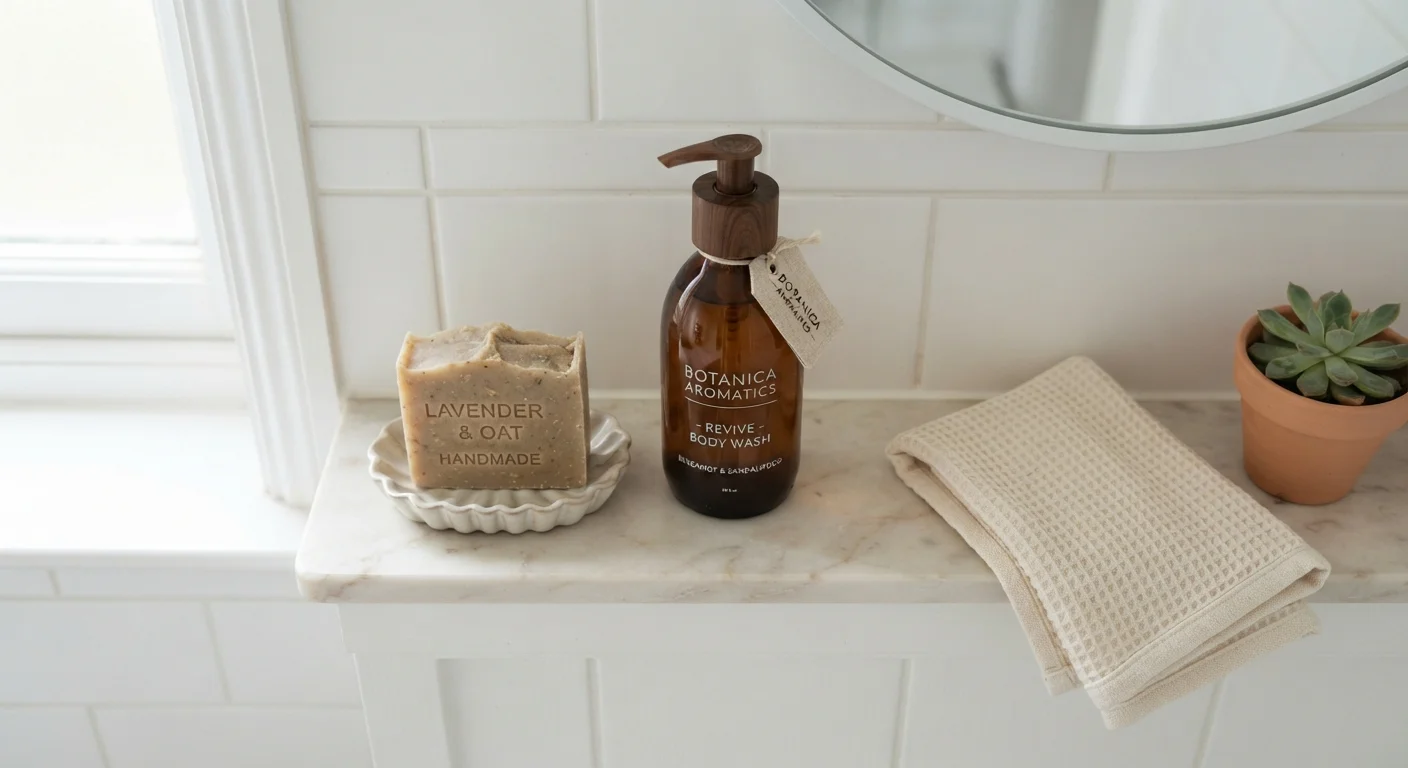
Bar Soap
The classic, no-fuss cleansing staple.
Best for: People who want a simple, low-waste routine with minimal ingredients.
Option B
Body Wash
The modern, customizable shower experience.
Best for: Those who prefer a lathery, moisturizing cleanse with a wide range of skin-targeted formulas.
If you have dry or sensitive skin
Body Wash
Many body wash formulas include moisturizing agents like glycerin or hyaluronic acid that help compensate for moisture lost during cleansing, making them gentler on dry or reactive skin.
If you want to reduce plastic packaging waste
Bar Soap
Bar soap typically comes in minimal or entirely plastic-free packaging, making it a more environmentally considerate choice for eco-conscious shoppers.
If you travel frequently or use a shared shower
Body Wash
A sealed bottle is more hygienic in shared environments and easier to pack without TSA hassle, since it comes in travel-friendly sizes.
If you prefer a simple, affordable routine
Bar Soap
Bar soap tends to last longer per dollar spent and requires no applicator, keeping your routine streamlined and budget-friendly.
How Each One Actually Cleans
At their core, both bar soap and body wash are surfactants - compounds that attach to oil and dirt on your skin so water can rinse them away. The mechanism is fundamentally the same. The real differences lie in their chemistry, feel, and formula extras.
Traditional bar soap is made through saponification: fats or oils react with an alkali (like sodium hydroxide) to produce a cleansing salt. This process typically results in a product with a pH between 9 and 10, which is notably more alkaline than your skin's natural surface, which sits closer to a pH of 4.5-5.5. For most healthy skin, this brief alkaline exposure during a shower rinses off without issue - but for people with conditions like eczema or very dry skin, repeated disruption of the acid mantle can lead to increased sensitivity and dryness.
Body wash is typically formulated as a synthetic detergent (syndet) product, engineered to land closer to the skin's natural pH. This alone doesn't make body wash objectively superior, but it does make it a more accommodating choice for reactive skin types. The liquid format also allows formulators to blend in humectants, emollients, and conditioning agents more easily.
| Criterion | Bar Soap | Body Wash |
|---|---|---|
| Typical pH | 9-10 (alkaline) | 5-7 (closer to skin's pH) |
| Moisturizing additives | Possible; varies by formula | Commonly included |
| Packaging waste | Minimal; often plastic-free | Plastic bottle typical |
| Cost per use | Generally lower | Generally higher |
| Hygiene in shared spaces | Exposed surface; some concern | Sealed; more hygienic |
| Fragrance-free options | Widely available | Widely available |
Skin Feel, Moisture, and Ingredients
One of the most common reasons people switch from bar soap to body wash is the post-shower feel. Older-style bar soaps can leave skin feeling tight and stripped, particularly in hard water, where soap reacts with minerals to form residue. Modern bar soaps - especially those labeled "beauty bars" or "moisturizing bars" - often include added oils, shea butter, or glycerin to counter this effect.
Body wash, by contrast, almost always contains glycerin or other humectants that draw moisture into the skin. Some formulas layer in ceramides or botanical extracts. That said, ingredient-heavy labels aren't inherently better: many of those additives are present in concentrations too low to have a meaningful skincare effect, and fragrance - common in both product types - is one of the top causes of contact dermatitis in rinse-off products.
If ingredient transparency matters to you, both formats now offer fragrance-free, dye-free, and simplified options worth exploring. The same curiosity that leads you to scrutinize your body cleanser might extend to your exfoliation routine - our guide on chemical exfoliants vs. physical scrubs breaks down how different approaches affect skin differently.
~25%
Lower carbon footprint per wash
Research published in the International Journal of Life Cycle Assessment found bar soap produced roughly 25% less CO₂ equivalent per wash compared to liquid soap.
#1
Top cause of contact dermatitis
Fragrance is consistently ranked as the leading cause of allergic contact dermatitis in rinse-off personal care products, according to dermatological literature.
Environmental Impact and Practical Considerations
Sustainability is increasingly part of the personal care conversation, and here bar soap holds a measurable edge. A standard bar soap arrives in cardboard or no packaging at all, while body wash typically comes in a plastic bottle - often not easily recyclable depending on local programs. Studies comparing the lifecycle of bar versus liquid cleansers (including water and energy used in production) have generally found bar soap carries a lower carbon footprint per wash.
That said, body wash in concentrated or refillable formats is narrowing the gap. Solid body wash bars - a hybrid format - are also growing in availability and offer liquid-like formulas in a plastic-free form.
Practically speaking, bar soap lasts longer per ounce when stored dry between uses (a soap dish that drains is key). Body wash runs out faster partly because liquid formats make it easier to over-dispense, and many people use a loofah or sponge that absorbs a significant amount of product.
A Note on Shared Bar Soap
Research has found that bar soap used by multiple people can harbor bacteria on its surface - but studies also show that normal handwashing or showering with bar soap does not transfer those bacteria to skin in clinically significant amounts. If you share a shower, rinsing a bar before use and keeping it dry between uses are simple, sensible habits.
This article is for general informational purposes only and does not constitute medical or dermatological advice. If you experience persistent skin irritation, dryness, or sensitivity, consult a qualified healthcare professional or dermatologist.