

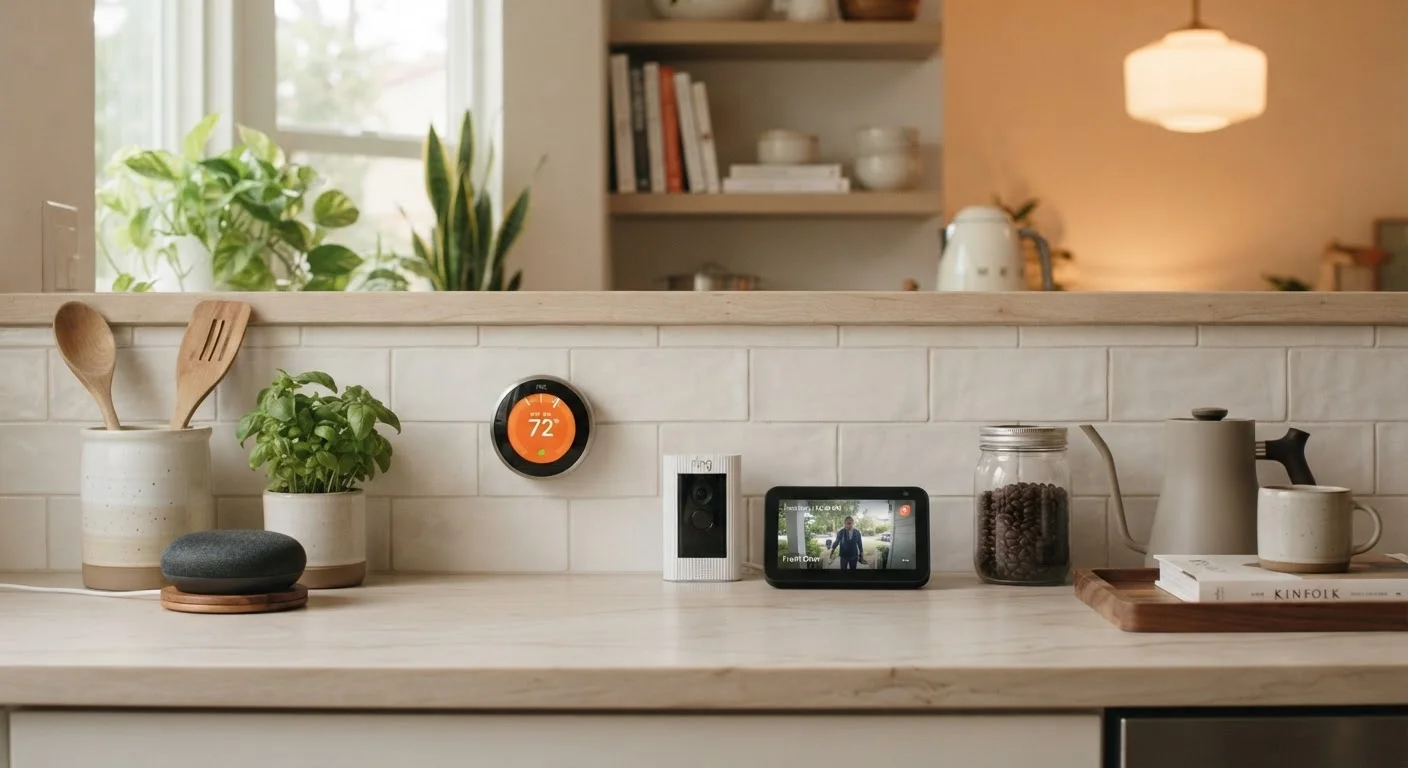
Key Takeaways
The Case for Useful Over Impressive
Smart home marketing tends to lead with the most dramatic features - locks you can open from another state, refrigerators that reorder milk automatically. These demonstrations are memorable, but they're rarely what makes home technology worth the investment for most people.
The devices that earn their place are the ones that quietly reduce friction: catching a leak before it spreads, keeping a comfortable temperature without constant manual adjusting, letting you check the front door without interrupting whatever you're doing. The goal of this list is not to showcase the latest hardware but to explain what specific problem each category of device actually solves - so you can decide whether it's a problem you have.
If you're thinking about where to begin, a thorough overview of how smart home systems work can help you understand the broader picture before committing to any particular setup.
Start With One Problem, Not a Full System
The households that get the most from smart home tech usually started small - one device that solved a specific irritation. Trying to automate everything at once tends to create more complexity than it resolves. Pick the friction point that genuinely costs you the most time or worry, and go from there. For a structured way to think this through, starting with first-device guidance helps avoid the common trap of over-investing early.
Six Devices That Address Real Household Problems
Compatibility Is Worth Checking First
Before purchasing any smart home device, verify it works with your existing router, phone operating system, and - if relevant - any smart home platform you already use. Many devices work independently through their own app, but if you want devices to work together, checking for a shared standard (such as Matter) or a compatible hub avoids frustration later. The plain-language glossary of smart home terms is a useful starting point for unfamiliar protocol names.
Smart Thermostat
Heating and cooling account for a significant portion of a typical household's energy use. A smart thermostat doesn't just let you adjust the temperature from your phone - it learns or can be programmed around the times your home is actually occupied, so you're not heating empty rooms all day.
The practical win here isn't the app. It's that a thermostat you can program clearly - or that adjusts automatically - stops the low-level annoyance of returning to an uncomfortable home or discovering the heat ran all weekend while you were away. Most models install in place of a standard thermostat and require no hub or special wiring knowledge beyond what an average homeowner can manage.
A smart thermostat stops you heating empty rooms all day without any technical fuss.
Video Doorbell
A video doorbell does something a traditional doorbell can't: it lets you see, hear, and speak to whoever is at your door without being home - or without getting up. For households that receive deliveries regularly, have young children, or simply want to know what's happening at the front entrance, this is a genuinely useful tool.
Motion alerts can be noisy if configured poorly, so it's worth spending a few minutes adjusting the detection zone during setup. Beyond convenience, a visible camera at the entrance can also act as a deterrent, though it's worth reading what the evidence actually says about cameras and deterrence before making security assumptions.
A video doorbell lets you answer the door from anywhere - no running downstairs required.
Water Leak Sensor
Water damage is one of the most common and expensive home insurance claims. A small sensor placed under a sink, near a water heater, or behind a washing machine can alert you to a leak within seconds - long before the water reaches flooring, drywall, or cabinetry.
These devices are often overlooked because they're unglamorous, but they offer an unusually high return on the problem they prevent. Most run on batteries, require no hub, and simply sound an alarm or send a phone notification when moisture is detected. For a low-traffic area like a utility room or basement, this kind of passive monitoring is hard to argue against.
A water leak sensor can catch a drip under the sink before it becomes a flooring replacement.
Smart Plug or Smart Power Strip
A smart plug converts any ordinary lamp, fan, or appliance into something you can schedule or switch off remotely. This is particularly useful for devices that don't have timers - like a space heater you occasionally leave on, or a lamp you want on a consistent schedule when you're traveling.
Smart plugs also let you monitor energy draw on some devices, which can be illuminating if you've ever wondered how much a second refrigerator or an older TV actually costs to run. They're one of the least disruptive entry points into home automation - no installation, no rewiring, no commitment.
Smart plugs are the lowest-friction way to add scheduling to any device you already own.
Smart Smoke and Carbon Monoxide Detector
Standard smoke detectors are required in most U.S. homes, but they have a well-known limitation: they alert you only when you're in earshot. A smart detector sends a notification to your phone regardless of where you are, and some models can indicate which room triggered the alarm - useful in larger homes.
Carbon monoxide detection is particularly worth upgrading. CO is odorless and can build up while occupants are asleep. A detector that also alerts your phone adds a layer of notification that a basic unit simply can't provide. As with all life-safety devices, check that any model you use is listed by a recognized testing laboratory and compliant with local codes.
Smart smoke detectors alert your phone even when you're not home - a meaningful upgrade over basic units.
Mesh Wi-Fi System
This one isn't a smart home device exactly, but it's often what makes everything else work reliably. A single router placed in one corner of a home can leave dead zones in bedrooms, garages, or back rooms - and every smart device in those areas will be frustratingly unreliable as a result.
A mesh Wi-Fi system uses multiple nodes to distribute coverage more evenly throughout the home. For households with more than a handful of connected devices - phones, laptops, smart speakers, cameras, thermostats - stable and consistent Wi-Fi is the foundation everything else depends on. If you've experienced the cycle of devices dropping off your network, the explanation is often in the Wi-Fi setup itself.
Reliable Wi-Fi coverage is the foundation that makes every other smart device actually work.
Getting the Most from What You Install
A device that goes unused - or that gets turned off because it's too complicated - doesn't solve anything. The setup experience matters as much as the hardware. Before adding anything to your home, it's worth spending a few minutes with a room-by-room tech audit to identify where the real gaps are rather than guessing.
Security is also a consideration that gets overlooked in the excitement of a new setup. Connected devices on your home network do carry some exposure, and keeping smart devices secure over time doesn't require advanced knowledge - mostly consistent habits around updates and passwords.
Home tech works best when it's sized to your actual household, not to a showroom demo. Start with what genuinely irritates or worries you, and let your setup grow from there.