
Vehicle Depreciation Explained: Why Your Car Loses Value and What It Means for You

Key Takeaways
Vehicle Depreciation
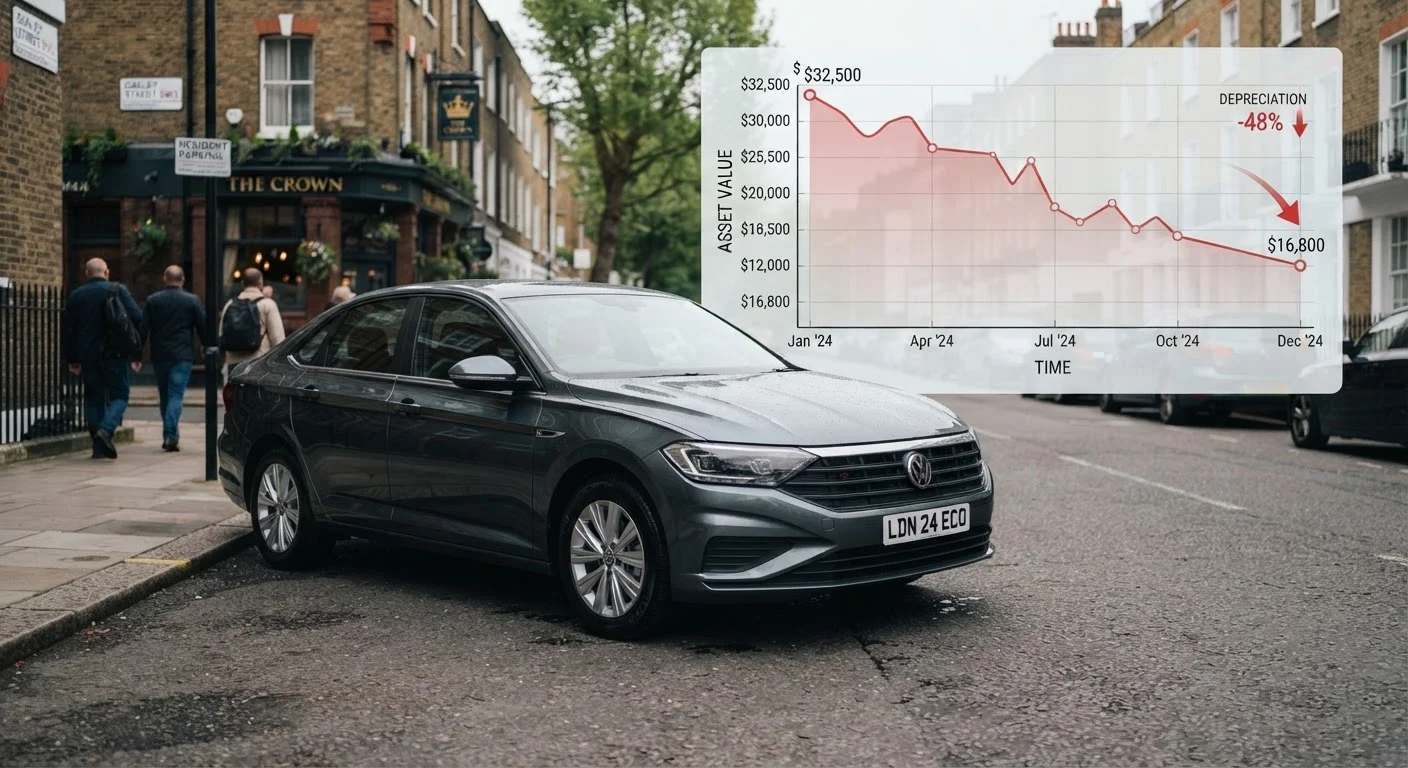
Vehicle depreciation is the reduction in a car's market value over time. It's the gap between what you paid for a vehicle and what it's worth when you sell or trade it in. Unlike most consumer purchases, a car's value begins declining almost immediately after ownership begins - and continues declining every year you own it.
Depreciation is formally recognized as a non-cash expense in accounting contexts and is a key factor in calculating the total cost of vehicle ownership over a defined period.
What Depreciation Actually Means for Car Owners
Depreciation isn't an abstract accounting term - it's the real money you lose between the day you buy a vehicle and the day you sell or trade it. For most drivers, it's the largest single cost of ownership, quietly exceeding what they spend on gas, insurance, or repairs over the same period.
Consider a straightforward example: if you purchase a vehicle for $35,000 and sell it five years later for $18,000, you've absorbed $17,000 in depreciation - roughly $3,400 per year just in lost value. That cost doesn't show up on a monthly statement, which is part of why it tends to catch owners off guard. For a fuller picture of what car ownership actually costs beyond the purchase price, see the true cost of owning a car.
~20%
Average new-car value lost in year one
Industry estimates from automotive valuation sources consistently place first-year depreciation for new vehicles in the 15-25% range, depending on make and model.
~50%
Value lost within five years on average
Many new vehicles retain only about half their original purchase price after five years of typical use, according to long-term residual value analyses.
#1
Depreciation's rank among ownership costs
When total cost of ownership is calculated over a multi-year period, depreciation routinely ranks as the single largest expense for most vehicle categories.
When Depreciation Hits Hardest
The steepest drop in value occurs in the earliest years of ownership - particularly the first year. A new vehicle can lose a substantial percentage of its value simply by being titled and driven off the dealership lot. This happens because it transitions from being a new, warranty-backed product to a used vehicle in the eyes of the market.
Depreciation typically follows a curve: rapid in years one through three, then gradually flattening out as the vehicle ages. By the time a car is six or seven years old, the annual dollar loss from depreciation has usually decreased considerably - though the vehicle's total accumulated loss is significant by that point.
Factors That Influence How Fast a Vehicle Depreciates
Not all vehicles depreciate at the same rate. Several factors shape how quickly a specific car loses value:
- Mileage: Higher annual mileage shortens a vehicle's expected lifespan, which buyers factor into what they'll pay.
- Condition: Cosmetic damage, interior wear, and mechanical issues all reduce resale value. A well-maintained vehicle commands a measurably higher price.
- Make and model reputation: Vehicles with strong reliability track records and loyal buyer bases tend to retain value better.
- Market demand: Economic shifts, fuel price changes, and consumer preferences all affect what the used-car market will bear at any given time.
- Fuel type: As fuel technology evolves, older powertrain types may face accelerated depreciation in some market segments.
Keeping thorough service records is one practical way to support resale value - documented care signals to buyers that the vehicle was maintained responsibly. Learn more about why maintenance records matter when it comes time to sell.
Protect Resale Value From Day One
Keep every oil change receipt, inspection record, and repair invoice in a dedicated folder - physical or digital. When it's time to sell, a complete service history can set your vehicle apart and support a stronger asking price. Consistent care also reduces the likelihood of costly surprises that accelerate value loss.
How Depreciation Should Inform Your Buying and Selling Decisions
Understanding depreciation changes how you approach key ownership decisions. When buying new, you're accepting the steepest part of the depreciation curve - a trade-off for having the latest features, full warranty coverage, and no unknown history. When buying used, you're effectively letting a prior owner absorb those early losses. A two-to-four-year-old vehicle with moderate mileage often sits in a particularly practical value window: most of the initial drop has already occurred, yet the vehicle still has substantial useful life remaining. For a deeper look at how these trade-offs stack up, see new car vs. used car - what the numbers actually tell you.
Depreciation also has direct implications for auto insurance. If your vehicle is declared a total loss, your insurer typically pays out actual cash value - the depreciated market value - not your original purchase price. If you're financing a new vehicle and owe more than it's worth, a gap in coverage can leave you with out-of-pocket losses. Understanding how insurance intersects with depreciation is worth reviewing carefully; some auto insurance decisions can backfire in ways that become costly when a claim arises.
Finally, timing a trade-in or sale matters. Selling before major service intervals - or before age and mileage push the vehicle into a lower valuation tier - can meaningfully affect what you net. Buyers also watch for dealer add-ons and financing terms that can obscure the true cost picture; understanding common dealership pitfalls can help you keep the full cost equation in view.
“Depreciation is the silent partner in every vehicle purchase. Most buyers focus on the monthly payment, but the larger financial story is told by what the car is worth when they're ready to move on.”
— Automotive Editors' Desk, Autos & Driving Editorial Team
This article is for informational and educational purposes only and does not constitute financial or investment advice. Consult a qualified financial professional for guidance specific to your situation.