

Key Takeaways
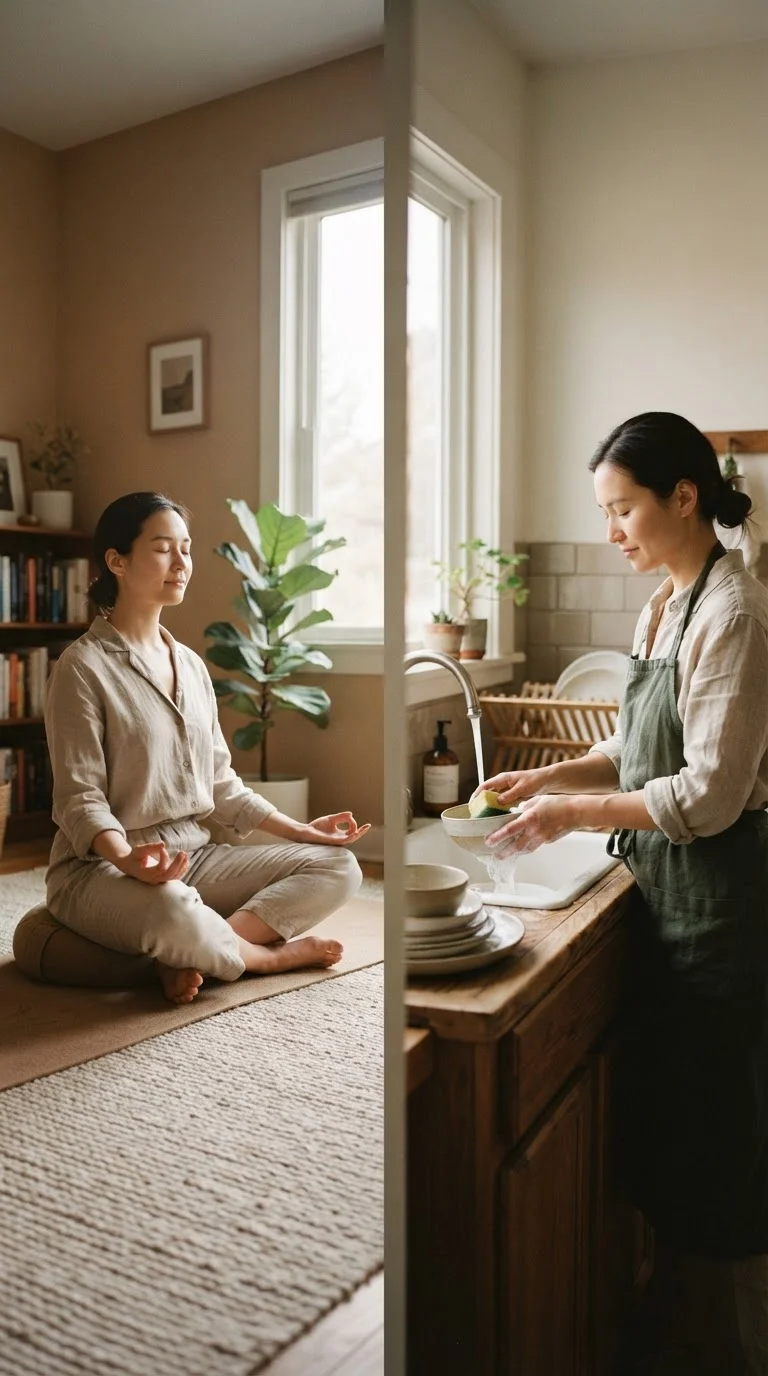
Option A
Mindfulness
The everyday quality of present-moment awareness.
Best for: People who want to reduce automatic stress reactions and bring more intentional attention to daily activities.
Option B
Meditation
The structured practice that trains the mind over time.
Best for: People who want a dedicated, repeatable technique for building mental focus, emotional resilience, or relaxation skills.
If you want to reduce daily stress without carving out dedicated practice time
Mindfulness
Mindfulness can be integrated into activities you already do - eating, commuting, or conversations - making it accessible without a schedule change.
If you want to systematically build focus, emotional regulation, or relaxation skills
Meditation
Formal meditation provides structured repetition that research suggests is effective for training the mind over weeks and months.
If you are new to either practice and unsure where to start
Mindfulness
Starting with simple present-moment awareness in ordinary activities lowers the barrier to entry before committing to a formal sitting practice.
If you want to deepen an existing mindfulness habit
Meditation
A consistent meditation practice provides a dedicated environment to refine and strengthen the attentional skills mindfulness relies on.
The Core Distinction: State vs. Practice
The words mindfulness and meditation appear together so often that many people treat them as synonyms. They're closely related, but they describe different things - and knowing the difference can help you choose the approach that fits your life.
Mindfulness is a quality of attention: the deliberate, non-judgmental awareness of what is happening in the present moment. It isn't something you schedule. You can be mindful while making coffee, listening to a colleague, or noticing tension in your shoulders mid-afternoon. It's a way of relating to experience rather than a specific activity.
Meditation, by contrast, is a formal practice - a deliberate technique performed during a set-aside period of time. Seated breath-awareness, body-scan exercises, loving-kindness meditation, and guided visualization are all examples. Many meditation styles are specifically designed to cultivate mindfulness, but meditation also encompasses techniques aimed at relaxation, concentration, or spiritual development that don't center on mindfulness at all.
The relationship between the two is asymmetric: meditation is often a means of developing mindfulness, but mindfulness is not the same as meditating. Think of it like physical fitness and exercise - fitness is the quality you develop; exercise is one reliable way to develop it.
What the Research Generally Shows
Both practices have attracted significant scientific attention, though the quality and scope of evidence vary considerably by technique and outcome measured.
8 weeks
Duration of standard MBSR programs
Mindfulness-Based Stress Reduction, developed at the University of Massachusetts, follows an eight-week structured curriculum widely used in research settings.
~43%
Reduction in depressive relapse risk (MBCT)
A 2016 meta-analysis in JAMA Internal Medicine found Mindfulness-Based Cognitive Therapy was associated with a significant reduction in relapse risk for people with recurrent depression compared to usual care.
10-20 min
Typical daily meditation session length in studies
Many positive outcomes in meditation research are observed with sessions in this range practiced consistently over several weeks, though optimal duration varies by technique and individual.
Mindfulness-based interventions - structured programs such as Mindfulness-Based Stress Reduction (MBSR) and Mindfulness-Based Cognitive Therapy (MBCT) - have been studied in clinical settings. A substantial body of research associates these programs with reductions in perceived stress, anxiety symptoms, and depressive relapse risk. MBCT, in particular, is recognized by some clinical guidelines as a recommended option for people with recurrent depression, though individual outcomes differ and professional guidance remains important.
Research on standalone meditation is broader and more mixed. Focused-attention practices (such as breath-focused sitting meditation) show consistent associations with improvements in sustained attention. Loving-kindness meditation has been linked in some studies to increased positive emotion and social connectedness. However, many studies in this area are small or methodologically limited, so treating headlines about meditation as definitive proof of benefit is worth avoiding.
Importantly, neither mindfulness nor meditation has been shown to replace professional mental health treatment for clinical conditions. If you're managing significant anxiety, depression, or trauma, consider consulting a qualified mental health professional. You can explore what that looks like with our overview of therapy, counseling, and psychiatry.
How Each Fits Into Daily Life
One practical difference between mindfulness and meditation is how each integrates with an ordinary schedule.
| Criterion | Mindfulness | Meditation |
|---|---|---|
| What it is | A quality of present-moment awareness | A formal, structured technique |
| When it happens | Anytime, during any activity | During a dedicated practice session |
| Time required | No set time - integrated into daily life | Typically 5-45 minutes per session |
| Learning curve | Gentle; can begin immediately | Moderate; technique and consistency matter |
| Primary goal | Non-judgmental awareness of the present | Varies: focus, calm, insight, compassion |
| Scientific evidence base | Strong for structured programs (MBSR, MBCT) | Growing; quality varies by technique |
Mindfulness can be practiced informally throughout the day without any special equipment or environment. Paying deliberate attention to the sensation of eating, the rhythm of breathing during a walk, or the sound of water while washing dishes are all examples. This accessibility makes it easier for people who struggle to maintain a formal routine. It's also the basis of approaches like mindful eating - a concept explored further in our look at mindful eating vs. calorie counting.
Meditation, on the other hand, generally requires a specific commitment: choosing a time, finding a space, and following a technique consistently. This structure is part of what makes it effective - repetition builds the mental "muscle" - but it also creates a higher barrier to entry. Apps and guided audio can lower that barrier, though it's worth understanding their limits before relying on them heavily. Our article on mental wellness apps offers a balanced look at what these tools can and can't do.
Neither approach is inherently superior. The better question is which one you'll actually sustain. Some people find that a brief daily meditation session makes informal mindfulness throughout the day feel more natural. Others start with mindful moments and eventually develop curiosity about sitting practice. Both directions are valid.
Choosing a Starting Point
If you're new to both practices, there's no single correct entry point - but a few questions can help you find one that fits.
Do you have five to ten minutes you can consistently protect each day? If yes, a simple breath-focused meditation practice is a well-documented starting point. Sit comfortably, direct attention to the physical sensation of breathing, and gently return attention when it wanders. That's the core of it.
Does a formal sitting practice feel inaccessible right now? Begin with informal mindfulness. Pick one routine activity - morning tea, a short walk, brushing your teeth - and practice paying deliberate, non-evaluative attention to it for its full duration. Over time, this can build the attentional capacity that formal meditation exercises more intensively.
If you're interested in combining awareness practices with reflective writing, journaling for mental clarity explores structured approaches that complement both mindfulness and meditation. And if you've noticed that your downtime doesn't feel genuinely restorative, our piece on rest vs. relaxation helps clarify what actual mental recovery requires.
This article is for general informational and educational purposes only and is not a substitute for professional medical or mental health advice. If you are experiencing symptoms of a mental health condition, please consult a qualified healthcare professional.