

Key Takeaways
Why Budget Eating Gets a Bad Reputation
The idea that eating healthfully requires a premium grocery budget is one of the most persistent myths in nutrition. It's reinforced by marketing that positions expensive superfoods and specialty products as the path to good health. In reality, many of the most nutrient-dense foods available - dried lentils, canned beans, oats, eggs, frozen spinach, sweet potatoes - are among the most affordable items in any grocery store.
That said, food insecurity is a real and serious challenge for many households, and this article doesn't minimize that. Instead, it focuses on practical strategies that help stretch a limited food budget without requiring perfection or sacrificing nutritional quality. These approaches are grounded in evidence about how people actually eat well over time - not crash diets or extreme restrictions.
For a broader look at where financial trade-offs show up in everyday life, see the honest trade-offs of strict budgeting.
Core Practices for Nutritious, Affordable Eating
The following strategies are consistently supported by nutrition research and practical experience. None require exotic ingredients or hours in the kitchen.
Plan meals before you shop - even loosely
Without a plan, grocery trips tend to produce a mix of items that don't combine into complete meals, leading to food waste and additional spending. Even a basic outline of four or five dinners dramatically reduces impulse purchases and forgotten ingredients. Research on household food waste suggests planning is one of the most impactful interventions available.
Build meals around legumes and whole grains as the base
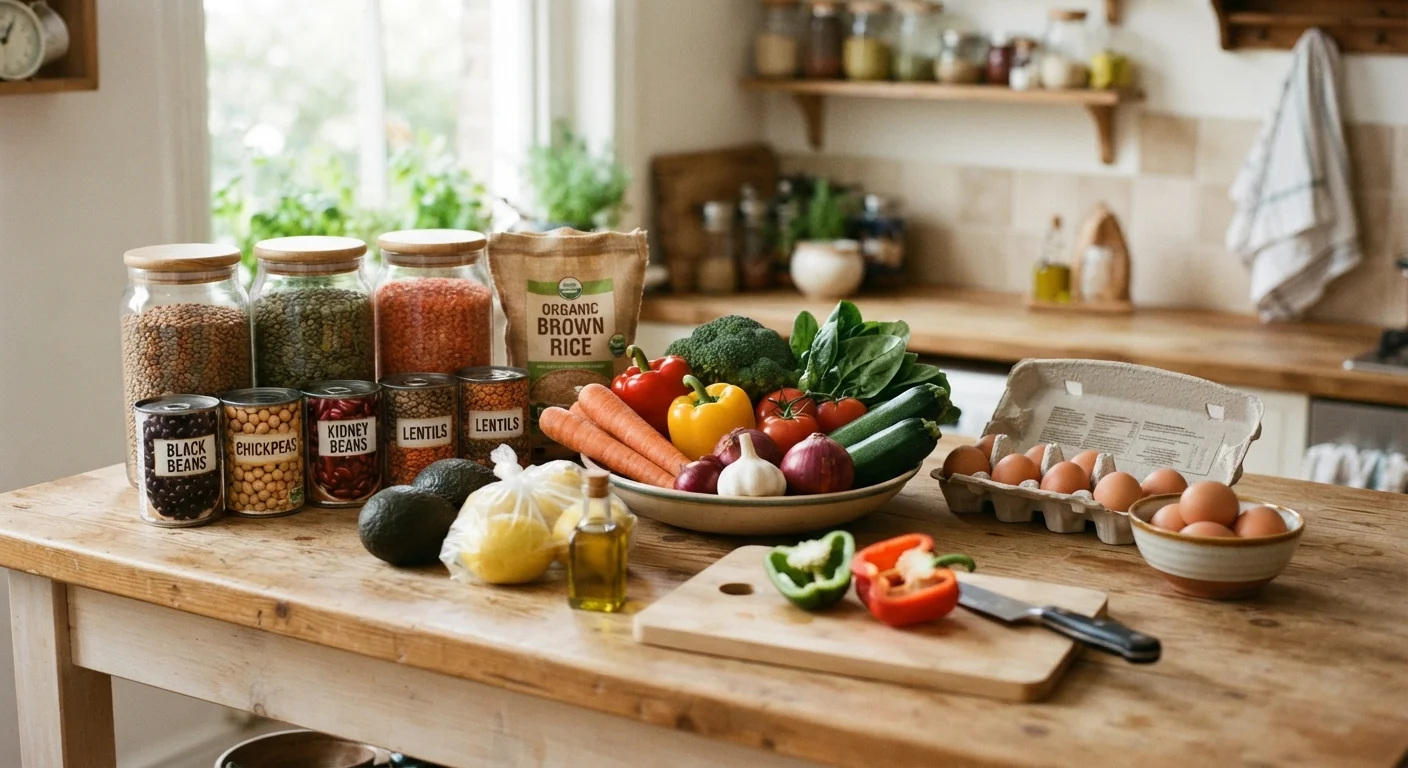
Dried beans, lentils, chickpeas, oats, and brown rice are among the most cost-effective sources of protein, fiber, and complex carbohydrates available. Centering meals on these staples - rather than treating them as sides - dramatically reduces cost per serving while maintaining nutritional density.
Embrace frozen and canned produce without hesitation
Frozen vegetables are harvested at peak ripeness and preserve the majority of their vitamins and minerals through flash-freezing. Canned legumes and tomatoes are similarly shelf-stable and nutritionally sound. These options are often significantly cheaper than fresh alternatives and reduce spoilage risk.
Cook in batches to reduce time and extend ingredient value
Batch cooking turns one shopping trip and one block of time into multiple ready-to-eat meals, reducing reliance on takeout or convenience foods during busy days. It also makes full use of bulk ingredients before they spoil, which is central to budget efficiency.
Choose store-brand staples over name brands for pantry goods
For commodity items like canned beans, oats, pasta, and frozen vegetables, store-brand and private-label products are often manufactured in the same facilities as name brands and carry equivalent nutritional profiles. The cost difference is typically 20-40%, adding up significantly over a month.
Where to Focus Your Grocery Dollars
Not all food spending delivers equal nutritional return. Prioritizing certain categories - and understanding where cheaper alternatives genuinely hold up - makes a meaningful difference across a month of meals.
~$1,500
Estimated annual household food waste cost
The USDA estimates the average American household wastes roughly 30-40% of the food supply, translating to significant financial loss per household annually.
3-4x
Cost difference: convenience vs. home-cooked meals
Research from the USDA Economic Research Service suggests home-cooked meals cost substantially less per serving than restaurant or prepared convenience food equivalents.
Proteins: Dried or canned legumes (lentils, chickpeas, black beans) are among the most cost-effective protein and fiber sources available. Eggs remain a reliable, versatile protein source. Canned fish such as tuna and sardines offer omega-3 fatty acids at a fraction of the cost of fresh fish.
Produce: Frozen vegetables are picked at peak ripeness and flash-frozen, preserving most of their nutrients. Research consistently shows that frozen vegetables are nutritionally comparable to fresh. Seasonal fresh produce is typically more affordable and nutritious than out-of-season imports.
Grains: Oats, brown rice, and whole-wheat pasta provide fiber and sustained energy at very low per-serving costs. Store-brand versions of these staples are nutritionally equivalent to name brands.
For a structured approach to building a well-stocked kitchen, the weekly grocery shopping nutrition checklist offers a practical food-group framework adaptable to any budget.
Nutrition Labels Work in Your Favor Here
For staple foods like oats, canned tomatoes, or frozen peas, the nutrition label on a store-brand product is almost always identical to the name-brand version. Get in the habit of comparing labels rather than brand names - you'll often find you're paying for packaging, not nutrition.
Quick Wins to Start This Week
Lasting habits are built incrementally. The following actions can meaningfully improve diet quality and reduce food spending with minimal friction.
Cooking more meals at home is consistently associated with better dietary quality. Even simple meals - a pot of soup, a grain bowl, or eggs with sautéed vegetables - tend to outperform packaged convenience foods on both cost and nutrition. Building a weekly meal plan doesn't have to be elaborate; even a rough outline of three or four dinners can cut impulse spending noticeably.
Dietary fiber is one nutrient that budget eating can actually support well - beans, lentils, oats, and most vegetables are fiber-rich and inexpensive. Most Americans fall short of recommended fiber intake, and fiber's role in everyday health extends well beyond digestion.
This article is for general informational purposes only and does not constitute medical or dietary advice. Nutritional needs vary by individual. Consult a qualified healthcare professional or registered dietitian for guidance specific to your health circumstances.