

Key Takeaways
When Your Electrical System Is Trying to Tell You Something
Most homeowners don't think about their electrical system until something goes wrong. But the system rarely fails without warning. Strange sounds, heat where there shouldn't be any, and lights that behave unpredictably are your home's way of flagging a problem that deserves professional attention - not a wait-and-see approach.
Electrical hazards are a leading cause of residential fires in the United States, according to the U.S. Fire Administration. Many of those fires trace back to aging wiring, overloaded circuits, or DIY fixes that bypassed safety standards. Knowing how to read the warning signs is the first step toward protecting your home and everyone in it.
This guide covers the clearest signals that your electrical system needs a licensed electrician - not just a reset or a new bulb. For a broader look at keeping your home in good shape throughout the year, see our seasonal maintenance guide.
Lights That Flicker or Dim Without Explanation
Occasional flickering when a large appliance starts up (like an air conditioner) is relatively normal - motors draw a surge of current on startup. But persistent flickering unrelated to appliance use, or dimming across multiple rooms simultaneously, points to something more serious: loose wiring connections, an overloaded circuit, or a problem at the main panel.
Loose connections are a particular concern because they generate heat and arcing - two precursors to electrical fires. If tightening or replacing a bulb doesn't solve the issue, the problem is almost certainly in the wiring itself.
Persistent flickering unrelated to appliance use often signals loose wiring - a fire precursor.
Outlets or Switches That Are Warm to the Touch
Outlets and switches should never feel warm under normal conditions. Heat at a receptacle can indicate a loose connection, an overloaded circuit, or wiring that's beginning to fail. In older homes, aluminum wiring (used widely in the 1960s and 1970s) is especially prone to connection failures that generate heat.
Discoloration - yellowing or scorch marks - around an outlet face is a more urgent version of the same warning. Stop using the outlet immediately and have a licensed electrician inspect it before restoring power to that circuit.
A warm or discolored outlet face is a fire-risk indicator that warrants immediate professional attention.
Circuit Breakers That Trip Frequently
A breaker that trips once after you overload a circuit is doing exactly what it was designed to do. But a breaker that trips repeatedly - even under normal use - is telling you the circuit's capacity doesn't match the demand placed on it. That might mean the circuit needs to be upgraded, loads need to be redistributed, or the breaker itself has weakened and is no longer reliable.
Never replace a breaker with one of a higher amperage rating to stop the tripping. That bypasses the safety mechanism and allows more current to flow through wiring than it was rated to handle - a common cause of house fires.
Replacing a breaker with a higher-rated one to stop tripping is a fire hazard, not a fix.
A Panel That's Outdated, Rusted, or Buzzing
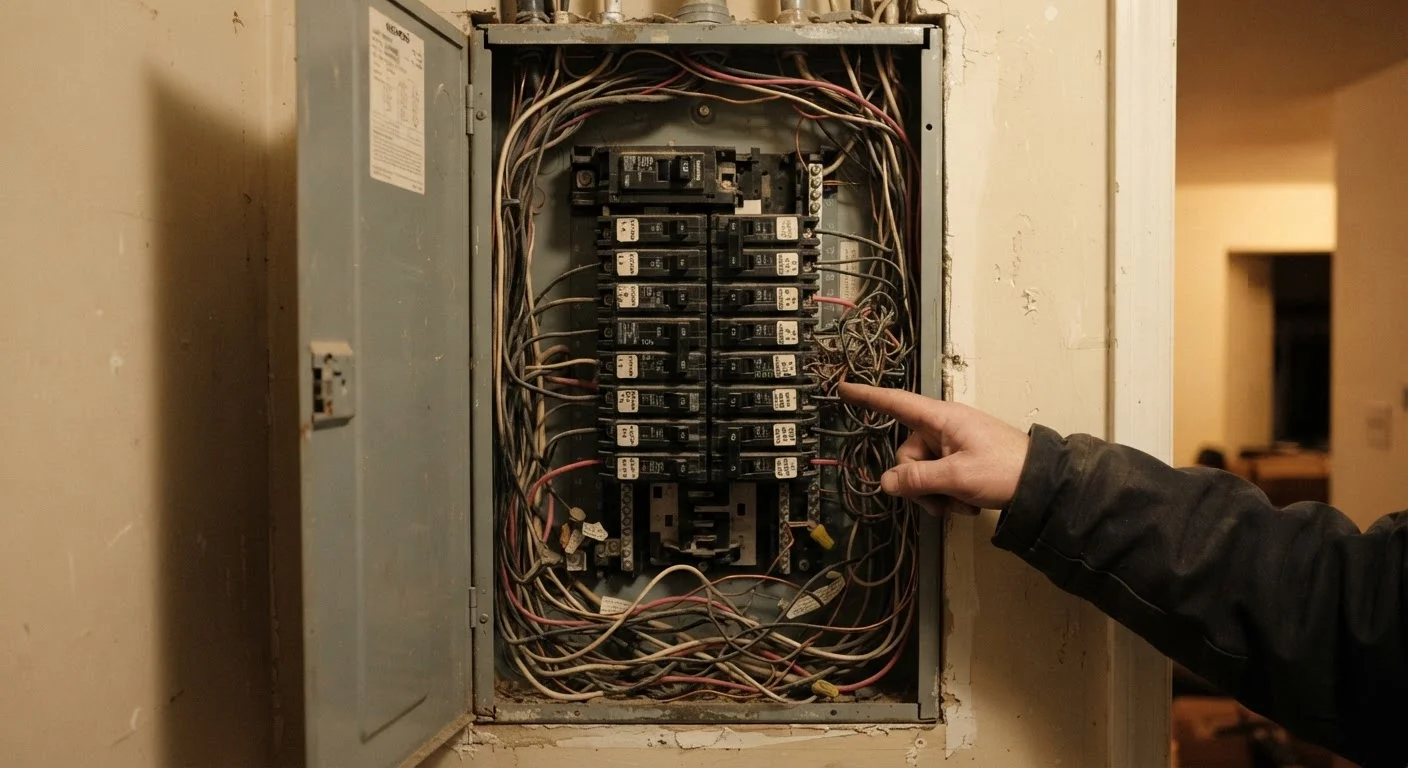
Electrical panels have a functional lifespan, and certain older panel types - such as Federal Pacific or Zinsco models, which were common mid-century - have documented reliability concerns that have led many electricians and home inspectors to recommend replacement. If your panel is over 25-30 years old, shows signs of rust or moisture intrusion, or produces a buzzing sound, a professional inspection is overdue.
Buzzing from a panel often indicates a breaker that's failing to fully open or close, or arcing within the enclosure - both situations that require immediate attention from a licensed electrician, not investigation by a homeowner.
A buzzing sound from your electrical panel should prompt an immediate call to a licensed electrician.
Burning or Unusual Smells Near Outlets or the Panel
A burning plastic or rubbery smell near any electrical component is a serious warning sign. It typically indicates that insulation around wiring is overheating or melting. This can occur inside walls where you can't see it, making it especially dangerous - you may smell the problem long before it becomes visible.
If you detect this smell, turn off the relevant circuit (or the main breaker if you can't isolate it) and contact a licensed electrician promptly. Do not attempt to locate or inspect the source yourself by removing outlet covers or opening the panel.
A burning smell near outlets or panels means wiring insulation may be failing - act immediately.
Two-Prong Outlets Throughout the Home
Two-prong outlets lack a ground conductor, which is a safety feature that helps protect people and equipment from electrical faults. Homes wired before the mid-1960s commonly have two-prong outlets throughout. While not always an immediate emergency, ungrounded outlets present real risks - especially in kitchens, bathrooms, garages, and anywhere near water.
Converting ungrounded outlets to three-prong requires either running new grounded wiring or installing GFCI (ground fault circuit interrupter) outlets with appropriate labeling - both tasks for a licensed electrician. Simply swapping the outlet face for a three-prong version without grounding it creates a false sense of safety. If you're also thinking about smart home upgrades, note that many smart switches have specific grounding requirements - see our guide on smart lighting compatibility for context.
Swapping in a three-prong outlet without grounding the circuit creates a dangerous false sense of safety.
Don't Wait Until There's a Problem You Can See
Electrical issues often develop gradually and invisibly. A circuit that trips occasionally can become a fire risk over months. Outlets that feel slightly warm can indicate wiring degradation that worsens under continued load. The signals listed above are not edge cases - they're the routine findings electricians encounter every day in older and even mid-age homes.
Schedule an Inspection Proactively
If your home is more than 40 years old and has never had a full electrical inspection, consider scheduling one even without an obvious trigger. A licensed electrician can assess your panel, wiring type, grounding, and outlet conditions against current code standards. This is also a smart step before major renovations, when buying or selling a home, or after any flooding or fire - even a minor one.
If you're ever unsure whether a situation is safe to leave, err on the side of caution: turn off the relevant circuit at the panel and call a licensed electrician. Understanding where DIY ends and professional work begins is equally important - our article on DIY home repair safety explains that boundary clearly.
This article is for general informational purposes only and does not constitute electrical, safety, or legal advice. Always consult a licensed, qualified electrician for assessment of your specific situation. Verify local code requirements and permit rules with your local authority having jurisdiction (AHJ).