

Key Takeaways
Envelope Budgeting
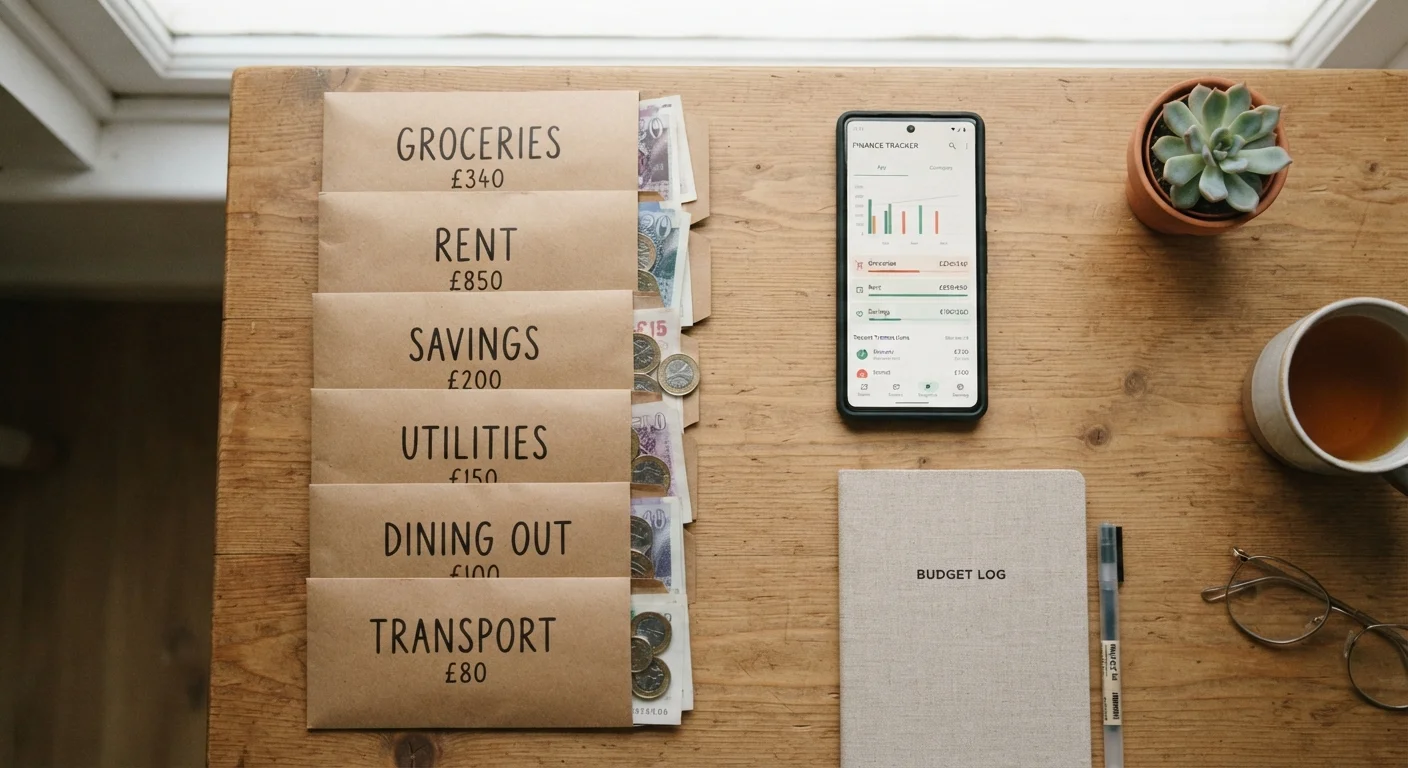
Envelope budgeting is a spending system where you divide your take-home income into separate categories - groceries, gas, dining out, and so on - and only spend what you've allocated to each. Traditionally, cash was physically placed into labeled envelopes. When an envelope was empty, spending in that category stopped for the month.
The method enforces a hard spending constraint per category, eliminating the accounting ambiguity that plagues traditional budgets tracked only in aggregate.
Where the Envelope Method Came From
Long before budgeting apps existed, households managed cash flow with a simple, tactile system: a set of labeled envelopes, each holding the exact amount earmarked for a given expense. When the grocery envelope ran dry, you either adjusted your cart or went without. There was no credit buffer, no mental math to do - the envelope told you the answer.
The method became widely associated with personal finance educators who promoted it throughout the latter half of the 20th century as a practical antidote to overspending. Its appeal was never about sophistication. It was about friction - the deliberate inconvenience of counting physical cash before spending it.
That psychological friction is the method's real engine. Research in behavioral economics consistently shows that paying with cash tends to reduce spending compared to using cards, partly because handing over physical money feels more concrete than swiping. The envelope system amplifies that effect by attaching a visible, finite limit to each spending category.
“The envelope system works not because it's clever, but because it makes the abstract concrete. A number in a spreadsheet is easy to ignore. An empty envelope is not.”
— Financial Educators Network, Community-based financial literacy organization
How the System Actually Works
The mechanics are straightforward. After you receive your paycheck, you categorize your expected variable spending for the month - groceries, gas, dining, entertainment, personal care, and any other discretionary areas you want to track. You then allocate a specific dollar amount to each category and either load that cash into physical envelopes or replicate the structure digitally.
Fixed expenses like rent, utilities, and insurance are typically handled separately, since they're already predictable and non-negotiable. The envelope system shines on the categories where spending decisions happen repeatedly throughout the month.
If you reach mid-month and your dining envelope is empty, you have two options: stop eating out, or transfer money from another envelope - which means eating into a different category's budget. Either choice is conscious. That's the point. Budgets that track spending only in aggregate often obscure where the leaks actually are until after the damage is done.
Start With Just Three or Four Categories
New envelope budgeters often over-engineer their first attempt with a dozen categories. Start with the two or three areas where you most frequently overspend - groceries, dining, and entertainment are common culprits. Once those feel manageable, add more categories gradually.
Translating Envelopes Into the Digital World
Most Americans no longer carry meaningful amounts of cash, which makes the literal envelope approach less practical than it once was. But the category-segregation logic translates cleanly to digital tools.
Some people open multiple checking or savings accounts - one per major spending category - and transfer the budgeted amount into each at the start of the month. Spending from that account, and only that account, enforces the same constraint the physical envelope did.
Others use budgeting software that incorporates virtual envelopes or spending buckets. These tools link to your bank accounts, track transactions automatically, and show you in real time how much remains in each category. A direct comparison of spreadsheets and budgeting apps can help you decide which digital format suits your habits before committing to one.
~40%
Americans who don't follow a formal budget
Surveys by the National Foundation for Credit Counseling have consistently found a large share of U.S. adults operate without any structured spending plan.
15-20%
Typical reduction in discretionary spending
Behavioral finance studies suggest people tend to spend less when using cash versus cards, with some estimates in that range depending on the category and context.
The tradeoff with digital envelopes is reduced friction - it's easier to move money between virtual buckets than to physically raid a cash envelope. For some people, that flexibility undermines the system's discipline. For others, it makes the method practical enough to actually sustain.
Who Benefits Most - and Who May Struggle
Envelope budgeting tends to work well for people who know they overspend in specific categories but struggle to course-correct mid-month. The visual, category-level feedback is more actionable than a monthly bank statement reviewed after the fact.
It also helps people who are new to budgeting and find broad percentage-based systems abstract. Systems like the 50/30/20 rule offer useful guidance on proportions but don't tell you when to stop spending on a Tuesday afternoon. Envelope budgeting does.
On the other hand, people with highly variable income or complex financial lives may find the system rigid. If your monthly cash flow shifts significantly, recalibrating every envelope at the start of each month requires consistent effort. And people whose spending is already disciplined may find the method more administrative overhead than it's worth.
If you're not sure whether you're overspending or simply under-saving, finding where your money actually goes is a useful first step before choosing any particular system.
Envelope Budgeting and Zero-Based Budgeting Often Overlap
Many people use envelope budgeting as the implementation layer for a zero-based budget - assigning every dollar a job at the start of the month and then using envelopes to enforce those assignments. They're compatible approaches, not competing ones. See how zero-based budgeting works in practice if you want to combine the two.
This article is for general informational purposes only and does not constitute personalized financial advice. Consult a qualified financial professional for guidance specific to your situation.