

Key Takeaways
The Gap Between a Budget and Real Life
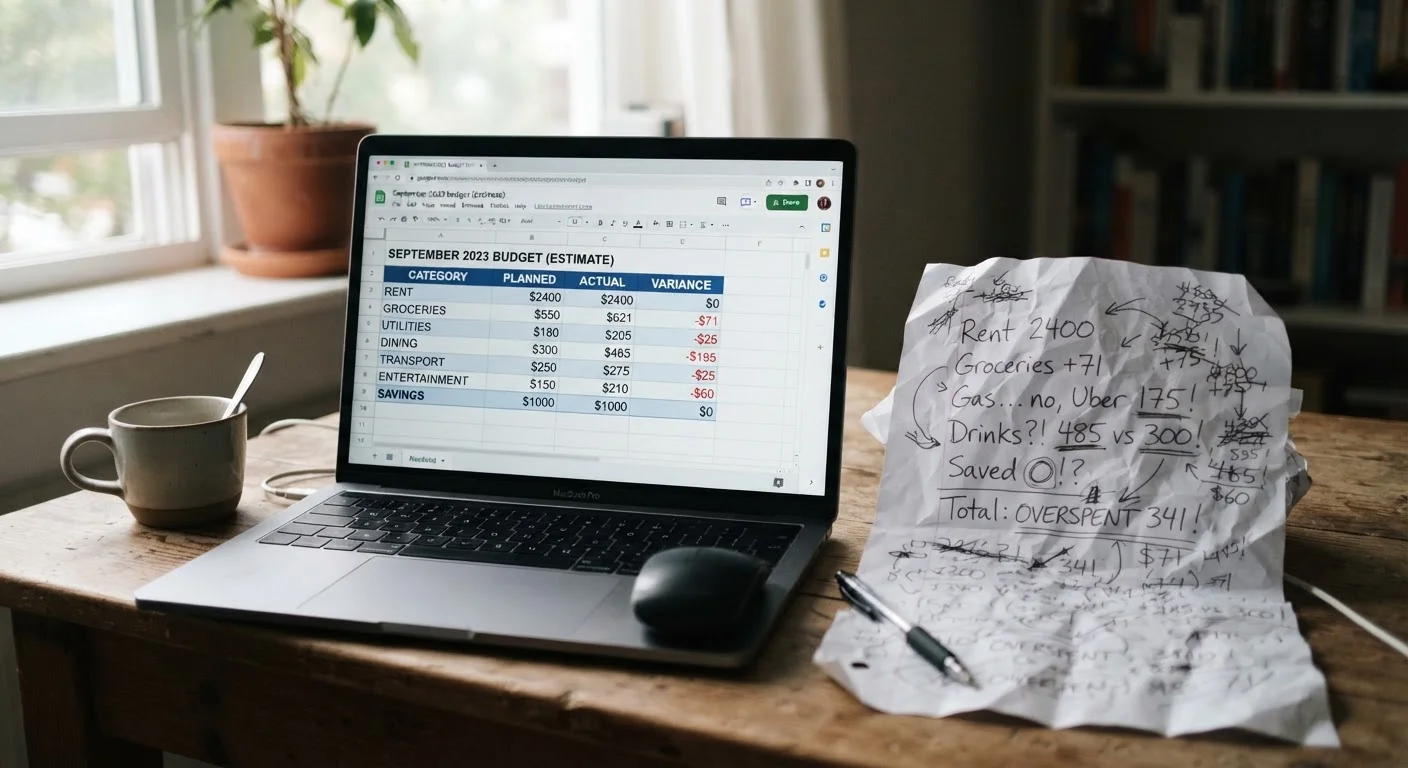
A budget that adds up perfectly on paper can still leave you scrambling by the 20th of the month. This is one of the most frustrating experiences in personal finance - and one of the most common. The problem usually isn't the math. It's the assumptions behind the math.
Budgets are built on estimates, and estimates drift from reality in predictable ways. Understanding those patterns is the first step toward a budget that actually holds. As you'll see below, the mistakes that sink most budgets are fixable - once you know what to look for.
For a broader look at how to structure your budget from the ground up, see our step-by-step monthly budgeting guide.
Using idealized income instead of actual take-home pay.
Why it happens: People often budget from their gross salary or an average paycheck, forgetting that taxes, benefits deductions, and irregular pay periods make take-home vary month to month.
Leaving out irregular and annual expenses.
Why it happens: Monthly budget templates invite monthly thinking. Costs that arrive quarterly or annually - car registration, insurance premiums, holiday gifts, annual subscriptions - simply don't come to mind when filling in a monthly column.
Underestimating variable spending categories.
Why it happens: Groceries, dining out, gas, and entertainment all fluctuate. Budgeters tend to record an optimistic number - often drawn from a single low-cost month - and then feel like they're failing every time they spend more.
Not tracking spending in real time.
Why it happens: Many people review spending weekly or at month-end, by which point the damage is already done. A budget that's only checked after the fact is closer to a spending diary than a spending plan.
Building a budget that's too restrictive to sustain.
Why it happens: The impulse to fix a budget problem by cutting spending to the bone is understandable, but an austere budget creates pressure that leads to 'rebellion' spending - a splurge that blows the whole plan.
Why These Mistakes Keep Repeating
Most budgeting mistakes aren't one-time slip-ups - they're structural. A budget built on averaged or idealized numbers will produce the same shortfall month after month, even if you're being disciplined. The fix often requires changing the budget itself, not just your willpower.
~33%
Americans with a detailed monthly budget
Surveys consistently find that fewer than one in three Americans maintains a detailed written or digital budget, even though most intend to.
3-6 months
Typical time before a new budget breaks down
Financial planners commonly observe that most self-built budgets are abandoned or significantly ignored within the first few months without structured review habits.
Variable expenses are a particular blind spot. Groceries, utilities, and gas all fluctuate, but many budgets assign them a fixed number. If that number was set during a low-cost month, every subsequent month will feel like overspending - even when it isn't. Our guide to fixed vs. variable expenses explains how to plan around each type more accurately.
Another repeating issue is the omission of irregular expenses - annual fees, car registration, seasonal costs, vet visits. These don't appear every month, so they're easy to leave out of a monthly budget. But they will arrive. See the spending categories most budgets forget for a practical checklist of what tends to go missing.
Optimism Is a Budget's Biggest Enemy
The single most common reason a budget fails is that it was built on best-case assumptions - best-case income, best-case spending, best-case discipline. Real months are rarely best-case. When you build a budget, stress-test it against your actual spending history, not your intentions. If the numbers only balance in a perfect month, the budget will fail in every ordinary one.
If your income varies month to month, standard budget templates often make things worse. A paycheck that changes makes fixed-number budgets structurally unreliable. The irregular income budgeting guide offers strategies designed for exactly that situation.
Finally, it's worth remembering that a budget is an ongoing tool, not a one-time document. If you set it up in January and haven't revisited it since, it no longer reflects your life. Revisiting it monthly - and adjusting as circumstances change - is what separates a budget that works from one that just sits in a folder. For practical ideas on finding room in a budget that feels already stretched, see finding extra money in your budget.
This article is for informational and educational purposes only and does not constitute personalized financial advice. For guidance specific to your situation, consider consulting a qualified financial professional.