

Key Takeaways
Option A
Fixed Expenses
The predictable, non-negotiable costs that anchor your budget.
Best for: Establishing a stable spending baseline so you always know your minimum monthly obligations.
Option B
Variable Expenses
The flexible costs that shift month to month and offer the most room to adjust.
Best for: Identifying where you have the most control to cut back or redirect spending when needed.
If you want to establish your minimum monthly financial obligations
Fixed Expenses
Totaling your fixed expenses first gives you an immovable baseline - the amount you must cover before any other decisions are made.
If you need to free up cash quickly without changing your lifestyle permanently
Variable Expenses
Variable costs are where short-term adjustments are possible - dining out less or pausing subscriptions can create immediate breathing room.
If you want to build a long-term budget that actually holds up
Fixed Expenses
Restructuring fixed costs - refinancing, downsizing, or renegotiating - produces lasting savings that don't require daily willpower to maintain.
If you're trying to identify where your money goes each month
Variable Expenses
Variable spending is where most people encounter surprises; tracking it reveals patterns that fixed expenses simply cannot explain.
What Fixed Expenses Are - and Why They Matter
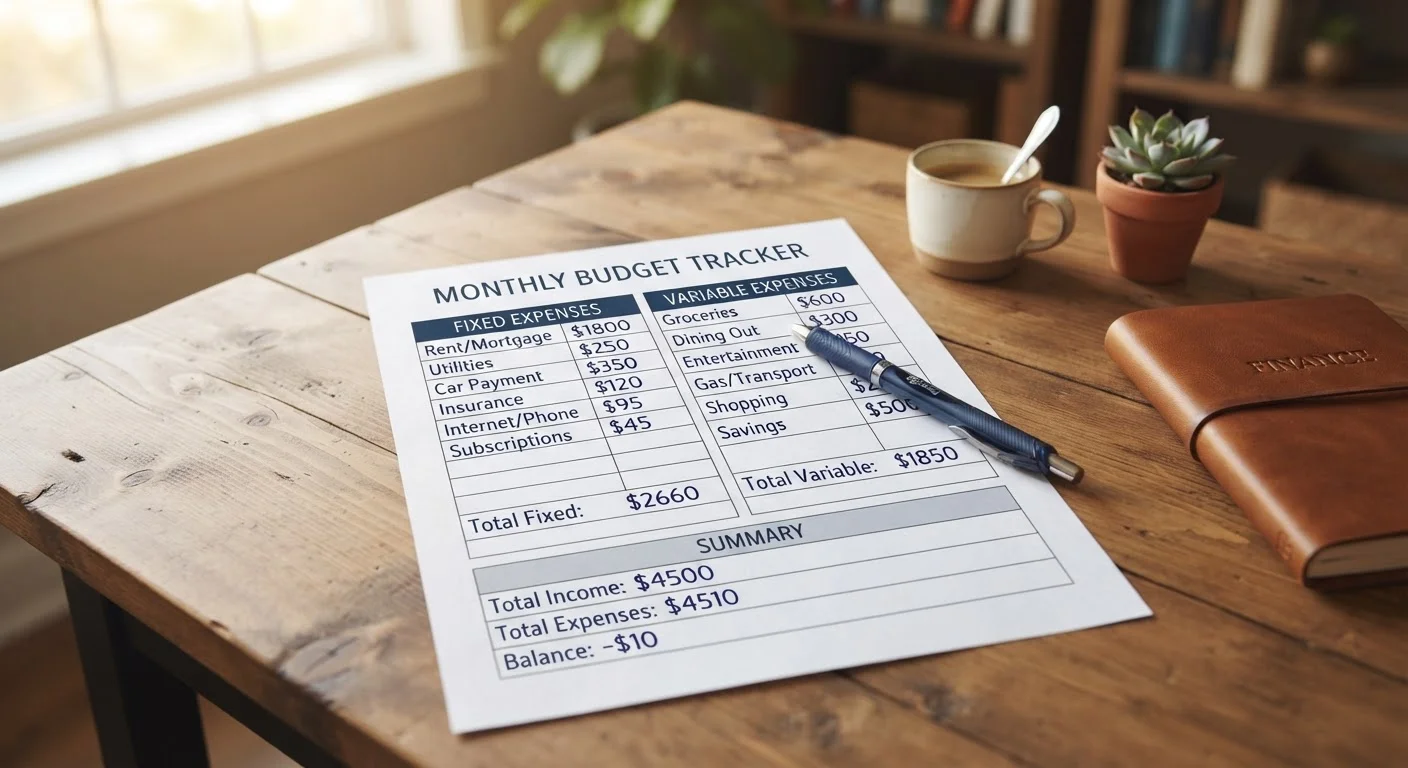
A fixed expense is any recurring cost that stays the same amount each billing period. Your rent or mortgage payment is the classic example. So is a car loan payment, a monthly insurance premium, or a set subscription fee. You owe the same amount at the same time, every time.
Because fixed expenses don't change, they're the easiest category to plan for. Once you list them, you know exactly how much of your income is already committed before the month begins. That figure becomes your spending floor - the minimum you must cover no matter what else happens.
The trade-off is that fixed expenses are also the hardest to change in the short term. You generally can't call your landlord and ask to pay less next month. Reducing them usually requires a longer-term decision: refinancing a loan, moving to a less expensive home, or switching to a lower-tier insurance plan. For a broader look at the terms used in budgeting, see our plain-English budgeting glossary.
| Criterion | Fixed Expenses | Variable Expenses |
|---|---|---|
| Amount each month | Stays the same | Changes month to month |
| Examples | Rent, loan payments, insurance | Groceries, gas, dining out |
| Predictability | High - easy to plan for | Low to moderate - requires tracking |
| Short-term flexibility | Low - hard to change quickly | High - adjustable month to month |
| Long-term flexibility | Possible through refinancing or switching | Naturally shifts with habits and needs |
| Budget role | Sets your spending floor | Reveals your spending habits |
What Variable Expenses Are - and Where They Hide
A variable expense is any cost that changes from month to month, either in amount or timing. Groceries, gasoline, dining out, clothing, entertainment, and medical co-pays are all variable. So are irregular annual costs - car registration, holiday gifts, or home repairs - that many people forget to plan for until they arrive.
Variable expenses are where most budgets run into trouble. Because the amounts shift, it's easy to underestimate them or forget to account for irregular ones entirely. Annual subscriptions, pet care, and other easy-to-miss spending categories are worth reviewing before they catch you off guard.
The upside of variable expenses is control. Unlike a lease payment, you can meaningfully change what you spend on groceries this month. That flexibility makes variable costs the primary lever most households pull when they need to trim spending or redirect money toward savings.
~33%
Share of income spent on housing for many U.S. households
The U.S. Bureau of Labor Statistics Consumer Expenditure Survey consistently finds housing is the single largest fixed expense category for American households.
$300-$500
Typical monthly range for U.S. household food spending
USDA food plan data shows monthly grocery costs vary significantly by household size, diet preferences, and local prices - a prime example of variable expense range.
1 in 3
Americans who don't track variable spending
Various consumer finance surveys suggest a significant share of U.S. adults budget for fixed costs but do not actively monitor variable expenses month to month.
Semi-Variable Expenses: The Middle Ground
Not every cost falls neatly into one category. Semi-variable expenses (sometimes called mixed costs) have a fixed baseline component and a usage-dependent component. Utilities are the most common example: your electric bill includes a flat service charge regardless of usage, plus a per-kilowatt-hour charge that fluctuates with how much power you use.
Other examples include cell phone plans with overage charges, internet service with variable speed tiers, and some gym memberships that charge additional fees for classes. For budgeting purposes, it's practical to estimate semi-variable costs based on an average of recent months, then flag them as expenses worth revisiting seasonally.
When a Fixed Expense Becomes Variable
Some expenses start as fixed but shift over time. An adjustable-rate mortgage (ARM), for example, has a set payment for an initial period, then adjusts based on market interest rates. Similarly, health insurance premiums may stay fixed during a plan year but change at renewal. It's worth reviewing your fixed expense list annually to check whether any items have quietly changed in amount or structure.
How to Use Both Categories to Build a Stronger Budget
The goal isn't to categorize expenses for its own sake - it's to make better decisions with your money. Here's how understanding both types works in practice:
- Start with fixed expenses. List every recurring, set-amount obligation. This is your non-negotiable baseline.
- Estimate variable expenses by category. Review two to three months of bank and card statements to find realistic averages, not optimistic ones.
- Identify your controllable margin. What remains after fixed and estimated variable costs is where you make active decisions about saving, debt repayment, or discretionary spending.
- Plan for irregular variable expenses. Divide annual or quarterly costs by 12 and treat them as monthly line items. This is sometimes called a sinking fund approach.
A budget that accounts for both categories is far more likely to reflect how money actually moves through your life. If yours consistently looks balanced on paper but fails in reality, here's a look at why budgets fall apart and how to fix them. For strategies to direct any margin you find toward savings or debt, explore approaches to building savings and managing debt.
This article is for general informational and educational purposes only and does not constitute personalized financial advice. Consult a qualified financial professional for guidance specific to your situation.