

Key Takeaways
Why Dogs Need Structure - and What Happens Without It
Dogs are creatures of habit in a very literal sense. Their nervous systems are wired to anticipate patterns - the sound of a leash, the smell of breakfast preparation, the time of evening walks. When those patterns are predictable, dogs experience lower baseline stress, display fewer anxious behaviors, and are generally easier to live with. When schedules are erratic, that predictability disappears, and dogs frequently compensate with attention-seeking, destructive behavior, or persistent vocalization.
Research in animal behavior consistently supports the link between routine and welfare. The American Veterinary Medical Association (AVMA) recognizes behavioral health as an integral component of overall animal wellness - not a secondary concern. A dog that feels secure in its daily structure is a dog that's better positioned to stay physically and mentally healthy. This is especially relevant for the estimated tens of millions of pet dogs in U.S. households who spend significant portions of the day alone.
It's also worth noting that building a routine for your dog isn't entirely unlike building one for yourself. The same principles - consistency, realistic expectations, and gradual habit formation - apply in both contexts. If you're interested in how structured daily habits support human wellbeing too, Starting a Mental Wellness Routine From Scratch covers the fundamentals.
What you will need
The Core Building Blocks of a Dog-Friendly Daily Schedule
A functional daily routine for a dog doesn't need to be elaborate. It needs to cover four core needs reliably: nutrition, physical activity, mental stimulation, and rest. Every other element of good dog care - training, socialization, health monitoring - can be layered onto that foundation.
Measuring cup or kitchen scale
Ensures consistent portion sizes at each feeding, preventing overfeeding or underfeeding.
Leash and collar or harness
Required for safe, controlled walks as part of the daily exercise block.
Small, soft training treats
Used during short positive reinforcement training sessions built into the daily routine.
Puzzle feeder or enrichment toy
Extends mental stimulation during low-activity periods, especially useful before owners leave for work.
Crate or designated rest area
Provides a predictable, safe space for rest periods and downtime within the routine.
For apartment owners or those without outdoor space, consistent indoor enrichment and structured outings become especially important. Apartment Living With a Dog covers the specific adjustments that make routines work in smaller living environments. Regardless of your home setup, the step-by-step framework below gives you a practical starting point you can adapt to your actual life.
Routine Changes Require a Transition Period
Dogs don't adapt to new schedules instantly. Shifting feeding or walking times too abruptly can cause digestive upset, restlessness, or increased anxiety. Introduce changes gradually over one to two weeks and watch for signs of stress. If behavioral problems persist despite a consistent routine, consult your veterinarian or a certified applied animal behaviorist.
Map your real day before designing the dog's schedule
Before setting any times, write down your actual weekday schedule - when you wake up, when you leave, when you return, and when you go to bed. A routine that works for a remote worker looks very different from one built around a 9-to-5 office commute. Be honest about low-energy periods and non-negotiable commitments. Your dog's schedule must fit inside yours, not the other way around.
Set fixed feeding times and stick to them
Most adult dogs do well with two meals per day - one in the morning and one in the evening. Puppies and some seniors may need three. Choose specific times (e.g., 7 a.m. and 6 p.m.) and use them every day, including weekends. Consistent meal times regulate digestion and make house-training significantly easier because elimination patterns become predictable. Always measure portions based on your dog's weight, age, and activity level - ask your veterinarian if you're unsure what's appropriate. For more on daily habits that support long-term health, see Keeping Your Pet Healthy Between Vet Appointments.
Schedule morning exercise before your own day begins
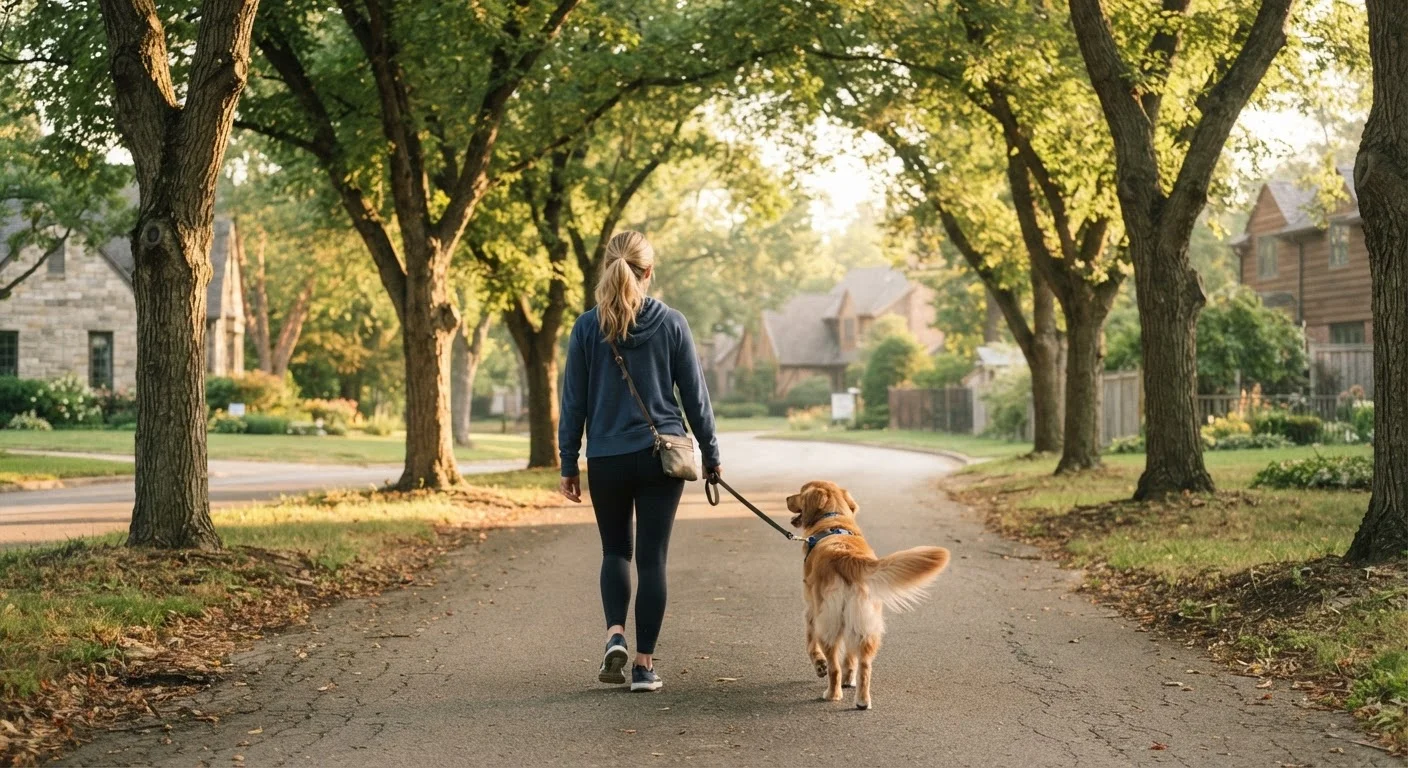
A morning walk or active play session is the single highest-impact habit in a dog's routine. It burns off overnight energy, provides critical mental stimulation through sniffing and environmental exposure, and sets a calmer behavioral baseline for the hours that follow. Aim for at least 20-30 minutes for most adult dogs, though high-energy breeds may need significantly more. This block also serves as an ideal reinforcement window - a short 5-minute training session at the end of a walk capitalizes on your dog's alert, engaged state.
Build a midday break or enrichment window
If you're away from home during the day, a midday dog walk - by you, a dog walker, or a trusted neighbor - breaks up long stretches of confinement and reduces the risk of separation anxiety developing. If a midday visit isn't possible every day, a food puzzle or long-lasting enrichment item given before you leave can provide mental engagement during that window. For dogs already showing signs of distress when left alone, Understanding Separation Anxiety in Dogs offers evidence-based guidance on management.
Incorporate a short evening training session
Five to ten minutes of reward-based training after the evening walk is one of the most effective investments in a well-behaved dog. Keep sessions short, positive, and focused on one skill at a time. Training isn't just about obedience - it builds the communication and trust that make every other part of the routine run more smoothly. Positive Reinforcement in Pet Training explains the behavioral science behind why reward-based methods outperform punishment-based approaches.
Establish a consistent wind-down and bedtime
Dogs read household cues. Dimming lights, quieter voices, and reduced activity in the hour before bed signal that it's time to settle. A final short bathroom outing - ideally at the same time each night - closes the day's schedule cleanly. Decide in advance where your dog sleeps and keep that consistent: changing the arrangement night to night can disrupt sleep and create confusion. For dogs that use a crate, Crate Training Versus Free-Roaming covers what the research says about rest environment choices.
Anchor Your Routine to Existing Habits
The easiest routines are built on habits you already keep. Feeding your dog right after your own breakfast, or doing a training session while your coffee brews, reduces the mental load of remembering. This 'habit stacking' approach is one of the most effective ways to make a new schedule stick without relying on willpower alone.
Troubleshooting Common Routine Breakdowns
Even well-designed routines hit friction. Travel, schedule changes, illness, and seasonal shifts can all disrupt the patterns your dog has come to depend on. The key is knowing which disruptions matter most and which your dog can absorb with minimal fallout.
Missed walks: One skipped walk rarely causes lasting behavioral problems, but several consecutive days of reduced exercise often will. Have a backup plan - an indoor fetch session, a longer sniff walk in a new location, or a play date with another dog - to maintain the activity level when the standard walk isn't possible.
Feeding time drift: Occasional 30-minute variations in meal timing are generally tolerable for healthy adult dogs. Larger or frequent shifts - particularly for dogs prone to digestive sensitivity or bloat-risk breeds - warrant more careful management. When in doubt, consult your veterinarian about your specific dog's needs.
Behavioral regression: If a dog that was previously well-adjusted starts showing anxiety, house-training accidents, or destructive behavior after a schedule change, that's useful diagnostic information. It suggests the current routine isn't meeting one or more of their core needs. Revisit the framework, identify the gap, and address it systematically rather than resorting to correction-based training. For dogs that remain on a solid routine but still show significant distress when left alone, separation anxiety may be a distinct issue worth investigating with professional support.
Skipping Exercise Has Real Consequences
Under-exercised dogs don't simply become lazier - they often redirect energy into destructive or anxious behaviors like chewing, barking, and pacing. Physical activity is not optional for most breeds; it's a welfare need. If your lifestyle makes daily walks difficult, factor that in before adopting - see Choosing the Right Pet for Your Lifestyle for guidance.
This article is for general informational purposes only and is not a substitute for professional veterinary advice. Always consult a licensed veterinarian for guidance specific to your dog's health, age, and individual needs.