

Key Takeaways
Our Verdict
Dry food remains the most practical daily option for most households, while wet food offers real benefits for hydration-sensitive pets. Raw feeding can be considered, but only with rigorous food-safety protocols and veterinary guidance - it is not appropriate for every pet or household. The right choice depends on your individual pet's health, your schedule, and your willingness to manage preparation safely.
| Best for | Recommended |
|---|---|
| Budget-conscious owners seeking convenience | Dry kibble |
| Cats prone to urinary issues or pets needing extra hydration | Wet food |
| Owners with time, freezer space, and veterinary support | Raw diet (with precautions) |
| Pets with specific medical conditions | Consult a veterinarian for a tailored plan |
Why the Feeding Format Question Matters
Walk the pet food aisle - or scroll through an online retailer - and the sheer volume of options can feel overwhelming. Beyond flavor and brand, the format of food you choose has real implications for your pet's hydration, dental health, caloric density, and overall wellbeing. For dogs and cats, whose nutritional needs differ considerably from one another, the kibble-versus-canned-versus-raw debate is worth understanding clearly rather than settling on habit alone.
The good news: each format can support a healthy pet when it meets established nutritional standards. The key is knowing what each trade-off actually means in practice. As you evaluate options, understanding how to read a pet food label is an essential first step - particularly the AAFCO nutritional adequacy statement, which confirms a food is formulated to meet minimum standards for a given life stage.
Dry Kibble: Convenience With Caveats
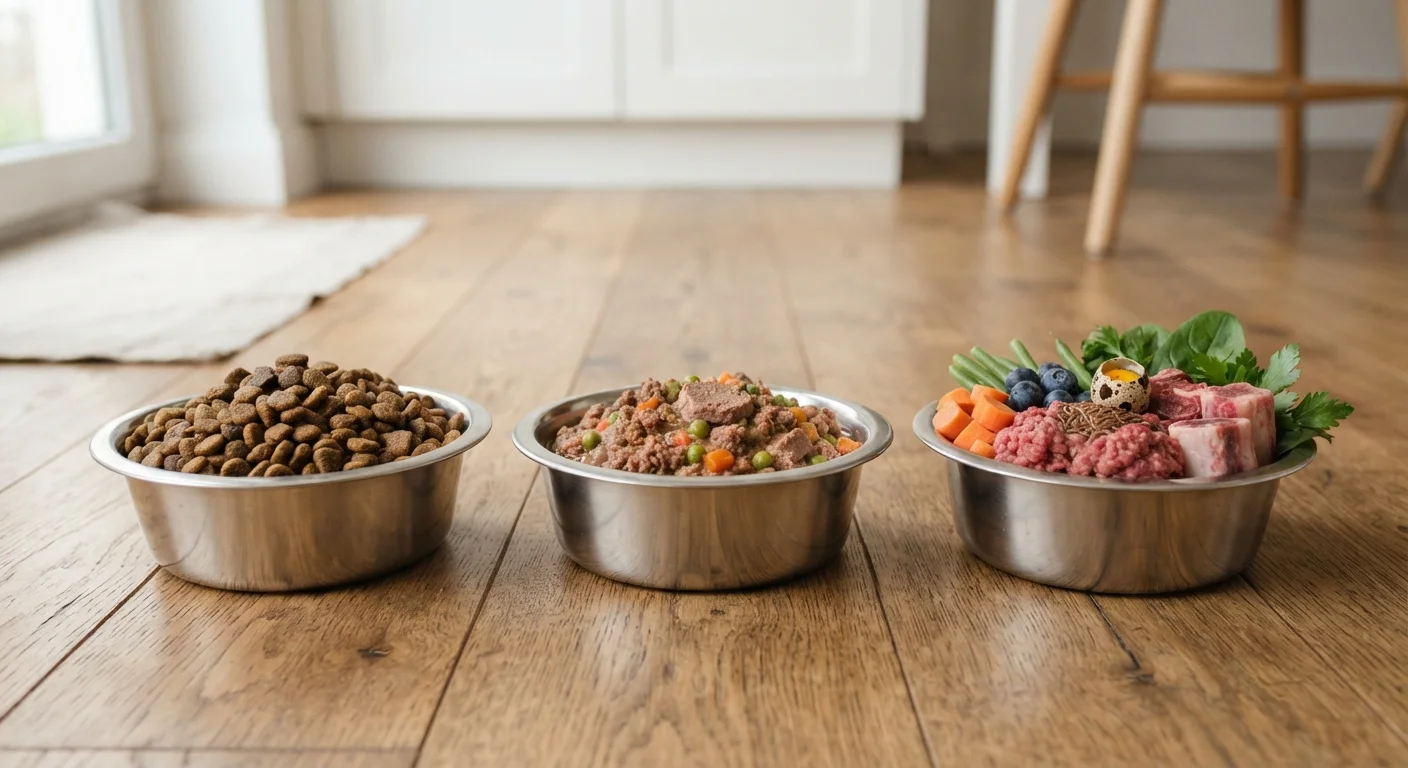
Dry food is the dominant format in American households for good reason. It stores easily, measures consistently, and is generally the most affordable option per serving. Many formulas are nutritionally complete and have been studied extensively over decades.
From a dental standpoint, the mechanical action of chewing kibble may offer some plaque reduction benefit - though it is not a substitute for regular tooth brushing or professional dental cleanings. Kibble's low moisture content (typically 6-10%) is the most important caveat to understand. Cats in particular evolved as desert animals with a naturally low thirst drive; relying exclusively on dry food may result in chronic mild dehydration, which some veterinarians associate with increased urinary tract issues over time.
Mixing Formats Can Work Well
There's no rule requiring you to pick one format exclusively. Many veterinarians support a combination approach - such as dry food as the daily base supplemented with wet food at one meal - to balance cost, hydration, and palatability. Introduce any new food gradually over 7-10 days to minimize digestive upset, and monitor your pet's stool, weight, and energy levels during transitions.
For dogs, dry food usually poses fewer moisture concerns, especially in active animals that drink freely. However, dogs recovering from illness, those with kidney disease, or those who are simply poor water drinkers may benefit from added moisture through wet food or water added to their bowl.
Wet (Canned) Food: Hydration and Palatability Benefits
Canned food typically contains 75-82% moisture, making it substantially closer to the water content of whole prey - a meaningful advantage for cats and for pets managing urinary or kidney conditions. The higher moisture content also contributes to satiety without dramatically increasing caloric load, which can help with weight management when portions are controlled appropriately.
Wet food tends to be more palatable, which matters for picky eaters and for senior pets whose sense of smell and appetite may diminish. The trade-offs are real, though: cost per serving runs higher than kibble, open cans must be refrigerated and used within a day or two, and the soft texture provides no dental abrasion benefit. Many owners use a combination approach - wet food to drive hydration and palatability, with some dry food for dental texture and cost balance. Whatever format you choose, consistent nutrition is one of the pillars of long-term wellness between vet visits.
Raw Diets: What the Evidence Actually Shows
Raw feeding - including commercially prepared raw, freeze-dried raw, or home-prepared raw diets - has a devoted following. Proponents cite improved coat condition, smaller stool volume, and better energy as anecdotal benefits. However, the scientific evidence supporting measurable health advantages over nutritionally equivalent cooked diets remains limited and inconsistent.
The concerns are more clearly established. The American Veterinary Medical Association (AVMA) advises against raw or undercooked animal-source proteins for pets due to documented risks of bacterial contamination, including Salmonella, Listeria, and E. coli - pathogens that can sicken both animals and the humans handling their food or cleaning their bowls. Home-prepared raw diets are also frequently nutritionally unbalanced unless formulated with professional guidance, risking deficiencies or excesses over time.
Raw Diets Carry Real Safety Risks
Handling raw meat-based pet food requires strict hygiene: separate cutting surfaces, thorough handwashing, and careful disinfection of feeding bowls. Pets fed raw diets can shed dangerous bacteria in their saliva and feces, creating exposure risks for other household members. The AVMA recommends against raw protein diets for pets in homes with vulnerable populations. Discuss this thoroughly with your veterinarian before proceeding.
If you are considering raw feeding despite these risks, work with a board-certified veterinary nutritionist to ensure the diet is complete and balanced. Raw diets are generally not recommended for households with immunocompromised people, young children, or elderly individuals.
For pets with specific health conditions, prescription and therapeutic diets represent a very different category of intervention - one designed to address diagnosed medical needs rather than general preference.
Comparing the Three Formats at a Glance
The table below summarizes the key practical and nutritional trade-offs across all three feeding approaches to help you frame the conversation with your veterinarian.
| Dry Kibble | Wet / Canned Food | Raw Diet | |
|---|---|---|---|
| Moisture content | Low (6-10%) | High (75-82%) | High (varies by prep) |
| Cost per serving | Generally lowest | Moderate to high | Often highest |
| Convenience | Very convenient | Moderate | Time-intensive |
| Food safety risk | Low | Low (if refrigerated) | Higher - bacterial risk |
| Dental benefit | Some abrasion benefit | Minimal | Minimal |
| Nutritional completeness | AAFCO-verified options widely available | AAFCO-verified options widely available | Highly variable; professional guidance needed |
| Palatability | Moderate | High | High |
This article is for general informational purposes only and is not a substitute for personalized veterinary advice. Always consult a licensed veterinarian before making significant changes to your pet's diet, especially if your pet has an existing health condition.