

Key Takeaways
Summary
22 items · 20-40 minutes
Why an Audit Beats an Overhaul
The impulse to blow up your entire skincare routine and start fresh is understandable - especially after a bad skin week, a scroll through social media, or an article promising a "complete reset." But overhauling everything at once is one of the fastest ways to make things worse. When your skin reacts, you won't know whether to blame the new cleanser, the new serum, or the new moisturizer.
A self-audit takes a different approach: it asks you to slow down, look honestly at what you're already doing, and identify the actual source of any issues before making a single change. Think of it like a weekly self-care check-in - targeted, specific, and grounded in what's real rather than what's trending.
This checklist walks you through four key areas: your current products, your application habits, your lifestyle inputs, and your skin's honest feedback. Work through each group before you reach for anything new.
Notebook or Notes App
Record your audit answers in writing so patterns become visible across product, habit, and lifestyle categories.
Current Product Lineup
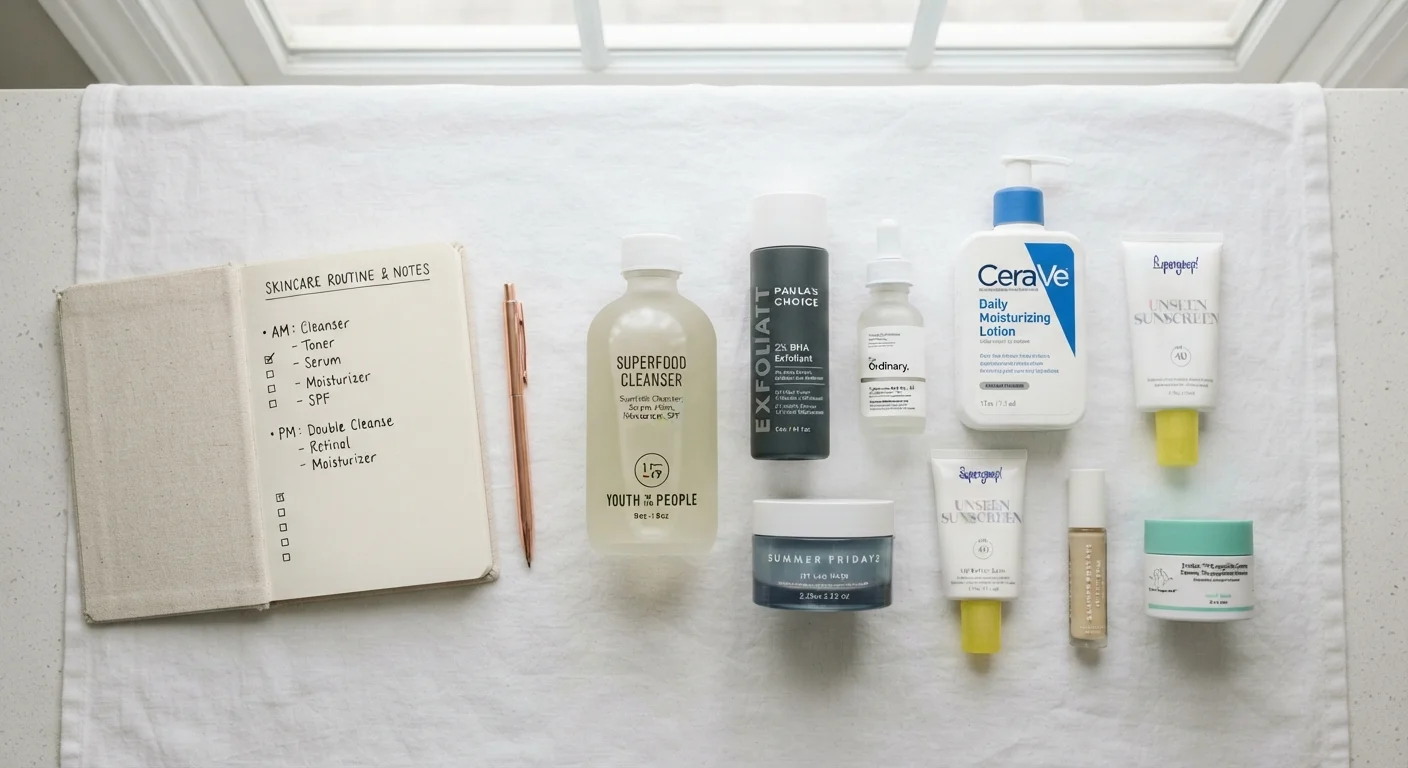
Gather every product you use so you can assess them together rather than in isolation.
Magnifying Mirror
Get a close, honest look at specific skin zones to accurately describe texture, redness, or congestion.
Phone Camera
Take a baseline photo in consistent lighting to track changes objectively over the coming weeks.
How to Use This Checklist
Grab a notebook or open your notes app - writing down your answers is genuinely useful here. Patterns you'd miss in your head become obvious on paper. If journaling sounds unfamiliar, there's good reason to start: reflective writing approaches can clarify what's easy to overlook when it stays inside your head.
Work through the checklist groups below honestly. "Must" items are non-negotiable if you want accurate insight. "Should" items add important nuance. "Nice to have" items help you go deeper if you have the time and interest.
Your Current Products
Your Application Habits
Lifestyle and Environmental Inputs
Your Skin's Honest Feedback
Don't Change Everything at Once
One of the most common audit mistakes is using your findings as permission to swap out your entire routine immediately. Instead, make one change, wait three to four weeks, and then assess. Introducing multiple new products simultaneously makes it nearly impossible to identify what's helping, what's neutral, and what's causing a reaction.
After the Audit: What to Do With What You Found
Once you've worked through the checklist, you should have a much clearer picture of where your routine is actually falling short. The next step is to prioritize: fix one thing at a time, give it at least three to four weeks, and document what changes. This is exactly the kind of disciplined, low-drama approach that keeping a routine consistent over time is built on.
If your audit reveals gaps in exfoliation, it's worth understanding how different methods compare - chemical exfoliants versus physical scrubs work in meaningfully different ways, and choosing the wrong approach for your skin type can create new problems. Similarly, if you realize your routine is overcrowded, a minimal, versatile approach can free up mental space and reduce irritation risk.
For a broader view of everything personal care covers beyond just skincare, this complete personal care guide maps out every category worth paying attention to.
This article is for informational purposes only and is not a substitute for advice from a licensed dermatologist or other qualified healthcare professional. If you're experiencing persistent skin concerns, consult a professional before making significant changes to your routine.