

Key Takeaways
Why Consistency Is the Real Skincare Secret
Walk through any beauty aisle and you'll see promises of transformation - but dermatologists consistently point to the same unsexy truth: routine consistency is what actually delivers results. A three-step regimen you complete every morning and night will outperform a ten-step one you abandon after a week. Explore the full picture of personal care essentials to see how skincare fits into a broader self-care framework.
The reason consistency works is biology. Most active skincare ingredients - think retinoids, niacinamide, vitamin C - work cumulatively. They don't produce dramatic overnight changes; they gradually support cell turnover, defend against oxidative stress, and reinforce your skin's moisture barrier over weeks and months. Skipping days interrupts that progress. Think of it less like a treatment and more like a habit that compounds over time.
4-6 weeks
Minimum time most active ingredients need to show results
Skin cell turnover cycles are typically 28 days in younger adults and longer as we age, meaning visible changes require sustained use over multiple cycles.
~3 minutes
Time needed for a complete basic skincare routine
A cleanser, moisturizer, and sunscreen routine applied daily requires minimal time investment while delivering meaningful long-term skin health benefits.
Building a Routine That Fits Real Life
The most effective skincare routine is the one you'll actually do. Before adding any new product, honestly assess your lifestyle. Do you shower at night or in the morning? Do you exercise regularly? Are you in a dry or humid climate? These factors shape what your skin genuinely needs - and when you're most likely to follow through.
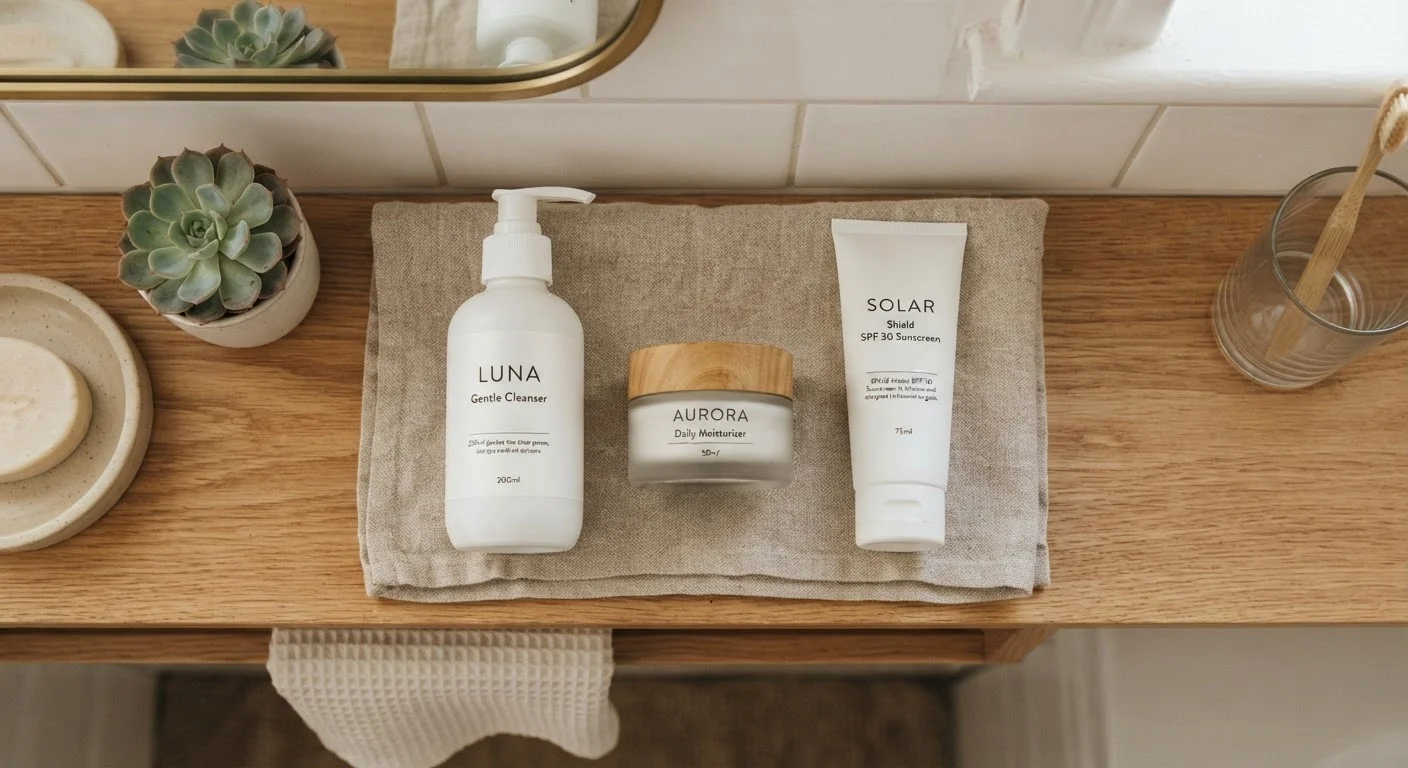
Start with the basics: a gentle cleanser, a moisturizer suited to your skin type, and a broad-spectrum sunscreen for daytime. That's a complete, functional routine. Everything else - serums, exfoliants, treatments - is supplementary. And if you're curious about why your morning and evening routines serve different purposes, our article on daytime vs. nighttime skincare explains the science clearly.
Anchor your skincare steps to an existing daily habit.
Habit-stacking - pairing a new behavior with an established one - dramatically reduces the mental effort required to remember it. Your brain treats the existing habit as a cue, making the new one feel automatic over time.
Keep your routine to the fewest effective steps.
More steps create more opportunities to skip. A streamlined routine lowers the barrier to entry on tired nights and rushed mornings, making it far more sustainable over months and years.
Give new products adequate time before evaluating results.
Skin cell turnover takes roughly four to six weeks, so most active ingredients need at least that long to demonstrate measurable change. Switching products prematurely prevents any single ingredient from doing its job.
Reassess your routine with the seasons.
Environmental conditions - humidity, temperature, UV intensity - shift throughout the year, and your skin's barrier needs adjust accordingly. A routine that works perfectly in July may leave skin tight and flaky by January.
Prepare a travel-ready version of your routine in advance.
Disrupted schedules are one of the most common reasons routines break down. Having a compact, pre-packed version ready removes decision fatigue and keeps consistency intact even away from home.
Staying the Course When Life Gets Busy
Even the best-designed routine will hit friction. Travel, stress, schedule changes - they all create openings for habits to slip. The key isn't willpower; it's reducing the effort required to show up.
Consistency also benefits from realistic expectations. If you start a new active ingredient and don't see results in two weeks, that's normal - not a reason to abandon ship. Most dermatologists suggest giving a product at least four to six weeks before assessing its impact. Keeping a simple log (even just a note on your phone) can help you track what's working without second-guessing yourself constantly.
Seasonal shifts also matter. Your skin's needs in humid summer weather differ from those in dry winter months. Building in a brief quarterly check-in - swapping a heavier moisturizer in winter, lightening up in summer - keeps your routine aligned with your skin's actual state rather than a fixed formula. This same principle of adaptive routines applies to other wellness habits; our piece on building a mental wellness routine covers it well from a broader perspective.
Sleep and Skin Health Are Connected
Consistent sleep patterns support your skin's overnight repair processes. If you're working on sticking to a skincare routine, pairing it with a reliable wind-down schedule can reinforce both habits. Our article on evidence-backed sleep hygiene habits is a helpful companion read.
Finally, don't overlook the areas that often get skipped. Hands are one of the most visible signs of skin health - our hand care guide offers practical steps that integrate easily alongside a face routine.
This article is for general informational and educational purposes only. For concerns about your specific skin type, conditions, or reactions to products, consult a qualified dermatologist or healthcare professional.