

Key Takeaways
Why Hands Age Faster Than the Rest of Your Skin
Your hands are in constant use - washing dishes, typing, handling cleaning products, and braving every weather extreme. Unlike your face, they rarely get SPF, and unlike your body, they get washed far more frequently throughout the day. That combination strips the skin's natural lipid barrier repeatedly, leaving hands prone to dryness, roughness, and visible aging.
The skin on the back of your hands is also thinner than elsewhere on your body, with fewer oil glands to help maintain moisture. That's why a real hand care routine needs to address more than just slathering on lotion. It needs to account for how you wash, protect, exfoliate, and nourish - across all seasons. For a broader look at how hand care fits into overall personal care, see what a complete personal care routine actually covers.
What you will need
Building Your Hand Care Routine: Step by Step
This routine can be adapted to a quick daily practice or a more thorough weekly reset. Follow the steps in order for the best results - each one sets up the next.
Rethink How You Wash Your Hands
Frequent hand washing is necessary, but the way you do it matters enormously. Use lukewarm - not hot - water, as heat accelerates moisture loss. Choose a mild, fragrance-free soap with moisturizing ingredients like glycerin. Lather for the recommended 20 seconds, then rinse thoroughly and pat (don't rub) dry with a soft towel.
Leaving hands slightly damp before applying moisturizer can help, as slightly moist skin absorbs humectants more effectively.
Apply Moisturizer Immediately After Washing
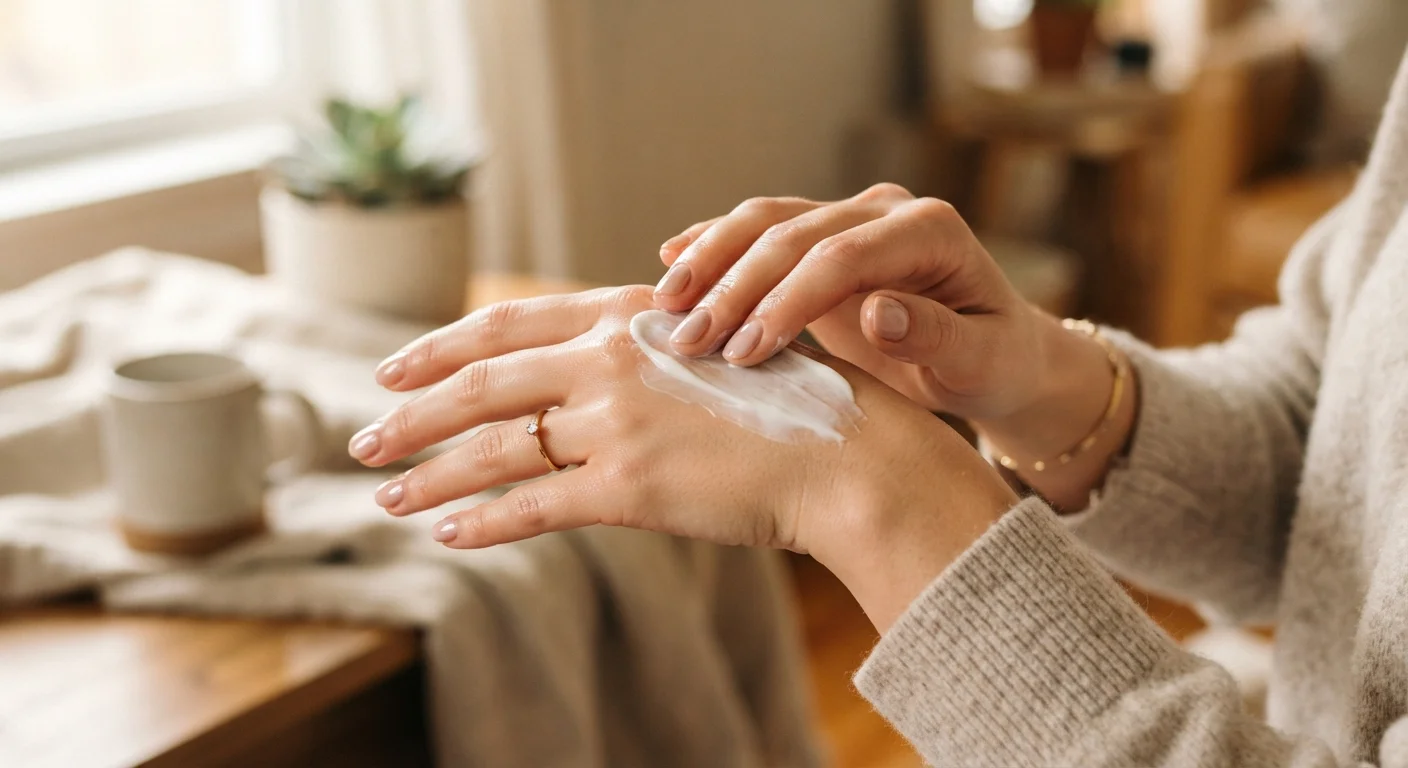
The window right after washing - within two to three minutes - is when your skin is most receptive to moisture. Keep a hand cream or lotion next to every sink. Look for formulas containing humectants (like hyaluronic acid or glycerin) to draw in moisture, and emollients (like ceramides or squalane) to smooth and soften. Applying moisturizer at this moment seals in residual water and helps rebuild the barrier you just temporarily disrupted.
Exfoliate Once or Twice a Week
Dead skin cell buildup is a major reason hands feel rough even when moisturized regularly. A gentle physical or chemical exfoliant used one to two times per week removes that buildup, allowing moisturizers to penetrate more effectively. A simple DIY option is a mixture of fine sugar and a nourishing oil - massage it over damp hands, then rinse. Alternatively, a gentle lactic acid lotion applied to hands a few evenings per week works as a mild chemical exfoliant.
Care for Your Cuticles Consistently
Cuticles are the thin layer of skin at the base of each nail that protect the nail matrix from bacteria and moisture. Cutting or aggressively pushing them back can cause irritation, infection, and long-term nail damage. Instead, soften them in warm water, then gently push them back with a rubber-tipped cuticle pusher. Apply a dedicated cuticle oil - jojoba and vitamin E formulas are widely recommended - a few times per week to keep the area supple and intact.
Perform a Nighttime Repair Treatment
Nighttime is your best opportunity for deep conditioning because your hands aren't being washed repeatedly and your body naturally repairs skin during sleep. Apply a thick hand cream or balm containing occlusive ingredients like petrolatum or shea butter right before bed. For an enhanced treatment, slip on a pair of thin cotton gloves over the moisturizer to prevent it from rubbing off on bedding and to create a gentle occlusive seal. Even two or three nights a week makes a meaningful difference over time.
Protect Hands from Environmental Stressors
Sunscreen on the backs of your hands is one of the most overlooked protective habits. UV exposure contributes to age spots, loss of elasticity, and thinning of hand skin over time. Applying a broad-spectrum SPF 30 or higher whenever you're outdoors adds meaningful long-term protection. Equally, wearing gloves during gardening, cleaning, or any task involving chemicals or rough surfaces keeps both the skin barrier and your nail edges intact.
Consistency Beats Intensity Every Time
You don't need an elaborate product lineup to see results - you need reliable repetition. Even a basic routine followed consistently will outperform an intensive one done sporadically. If you want to track how your hand care fits alongside other habits, the weekly self-care audit is a useful checkpoint.
Seasonal Adjustments and Long-Term Protection
Even the most consistent routine needs to shift with the seasons. In winter, central heating and cold air dramatically reduce ambient humidity, accelerating moisture loss. That's a signal to apply a heavier, occlusive moisturizer - one that contains ingredients like shea butter, petrolatum, or beeswax - especially overnight. In summer, increased hand washing, sun exposure, and sweat can cause different issues: irritation, uneven tone, and breakdown of the skin barrier from frequent cleansing.
Year-round, gloves are one of the most underrated tools in hand care. Wearing rubber or vinyl gloves for household cleaning protects against detergent exposure, which is a leading cause of contact dermatitis and chronic hand dryness. Cotton-lined gloves worn overnight with a thick moisturizer applied beforehand - often called the "glove treatment" - can noticeably improve texture after just a few sessions.
When to See a Dermatologist
Persistent redness, deep cracking, peeling, or oozing on the hands can indicate contact dermatitis, eczema, or another condition that a routine alone won't resolve. If your symptoms are recurring or worsening despite consistent care, a dermatologist can identify whether an irritant, allergen, or underlying skin condition is involved. General hand care information is not a substitute for professional diagnosis or treatment.
It's also worth noting that applying more moisturizer isn't always the solution to persistent dryness. If your hands stay rough despite consistent moisturizing, the issue may be barrier dysfunction or an irritant you haven't identified. Our guide on things people get wrong about moisturizing dry skin breaks down why that happens and what to try instead.
For help making any new habit stick, keeping a skincare routine consistent over time offers practical strategies that apply just as well to hand care as to facial routines.
This article is for general informational purposes only and is not a substitute for professional medical or dermatological advice. If you experience persistent skin irritation, redness, cracking, or signs of infection, consult a qualified healthcare provider.