

Key Takeaways
Our Verdict
Thrift shopping generally wins on price and uniqueness, making it ideal for patient, flexible shoppers who enjoy the hunt. Outlet shopping wins on consistency and convenience, making it a stronger fit for shoppers who value predictable sizing and recognizable quality. Used together, both can form a powerful strategy for dressing well on less.
| Best for | Recommended |
|---|---|
| Shoppers with flexible style and time to browse | Thrift Shopping |
| Those who want predictable brands and consistent sizing | Outlet Shopping |
| Anyone building a wardrobe on a very tight budget | Thrift Shopping |
| Shoppers replacing worn basics or work essentials efficiently | Outlet Shopping |
How Each Model Actually Works
These two shopping approaches operate on very different fundamentals, and understanding that difference is the first step to using each one well.
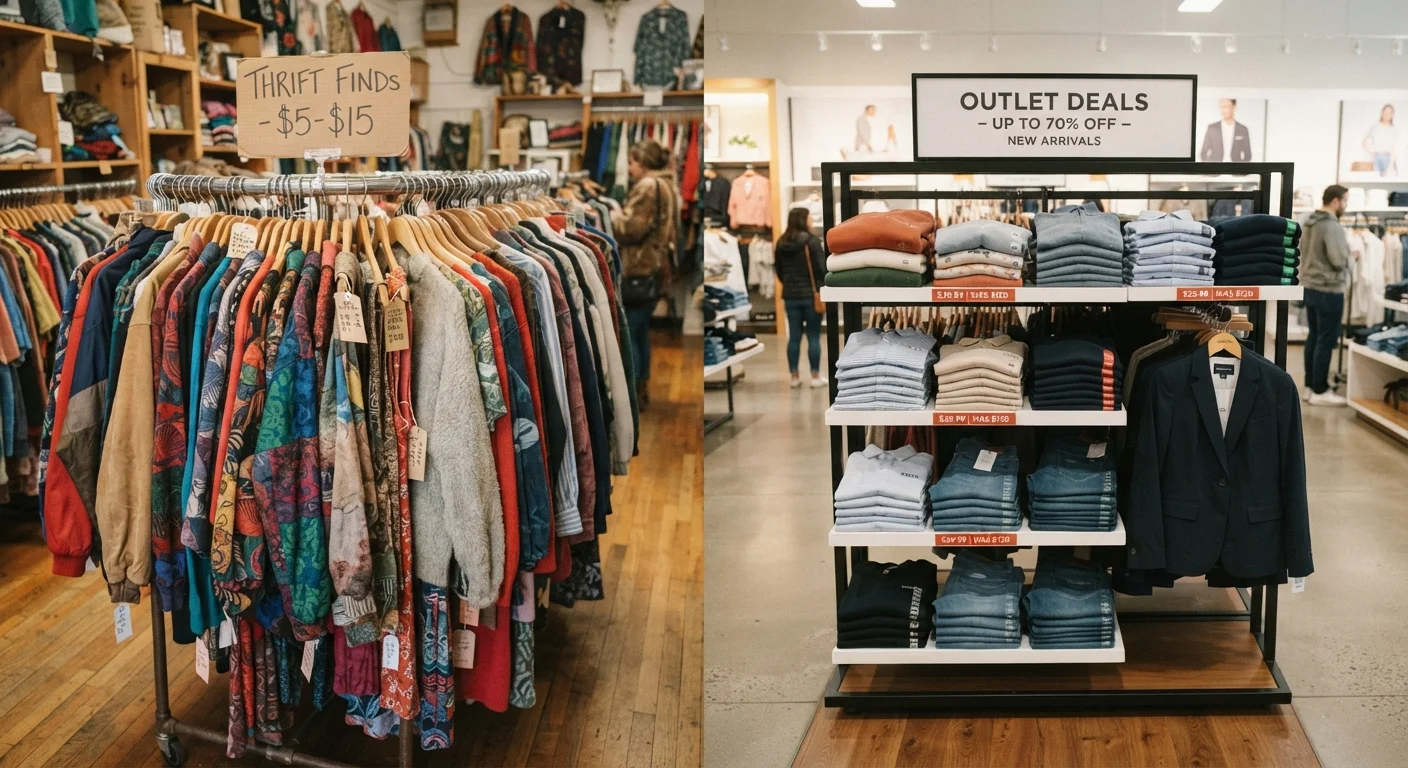
Thrift stores - including charity shops, consignment stores, and resale apps - sell secondhand clothing donated or traded in by previous owners. Inventory is entirely unpredictable: you might find a barely-worn wool coat or a shelf of faded t-shirts, depending on the day. Prices are set by the reseller, often at a fraction of original retail, and vary by item condition and local demand.
Outlet stores are operated (or licensed) by brands to sell overstock, past-season merchandise, and in many cases items made specifically for the outlet channel. Selection is consistent and organized by size, but the discount off "regular" retail varies - sometimes dramatically. It's worth noting that many outlet-exclusive items are manufactured to a lower spec than what you'd find at a brand's main retail locations.
If you're putting together a wardrobe on a tight budget, understanding which model fits your lifestyle matters more than chasing the lowest sticker price.
Price, Variety, and the Thrill of the Hunt
On raw price, thrift shopping usually comes out ahead. A well-chosen thrift find might cost 90% less than its original retail price. The catch is that you're shopping blind: there's no guarantee a specific item will be there in your size, color, or condition. The experience rewards patience and flexibility - qualities that don't suit everyone's schedule or temperament.
Variety at thrift stores is genuinely unmatched. Because inventory reflects what was donated, you'll encounter decades of styles, a wide range of fabrics, and pieces you simply won't find anywhere else. That's a major draw for shoppers who enjoy experimenting with personal style.
Outlet shopping offers a middle ground. You can typically rely on finding your size and comparing options within a style family, which makes targeted purchases - replacing a worn dress shirt, stocking up on basics - much more efficient. However, outlet discounts commonly range from 20% to 50% off, and the baseline "regular price" is sometimes inflated, which can make the math less impressive than it first appears.
| Thrift Shopping | Outlet Shopping | |
|---|---|---|
| Typical price savings | Up to 90% off original retail | 20-50% off retail (varies) |
| Selection predictability | Highly unpredictable | Consistent by size and style |
| Time investment | High - requires browsing | Lower - more targeted shopping |
| Item quality reliability | Variable; inspect carefully | Variable; outlet-made items common |
| Environmental impact | Lower - extends garment life | Higher - new production |
| Best for | Flexible, patient shoppers | Shoppers with specific needs |
For a broader look at how clothing purchase decisions interact with your overall financial picture, see finding extra money in your budget.
Quality, Sustainability, and Hidden Costs
Quality at thrift stores is a wildcard - but often a pleasant one. Pre-owned clothing has already been through the wash cycle repeatedly, so a piece that still looks good has already proven its durability. Older garments, especially those made before fast fashion dominated, are frequently constructed from heavier fabrics with more durable stitching.
Inspect Before You Commit
Whether you're thrifting or shopping outlets, check seams, zippers, fabric weight, and care labels before purchasing. At thrift stores, look for pilling, stains, and stretched-out elastic. At outlets, feel whether the fabric matches the brand's usual standard. A few seconds of inspection can save you from buyer's remorse.
Outlet-exclusive merchandise raises its own quality questions. Shoppers sometimes assume outlet prices reflect a temporary markdown on the same items sold in flagship stores - but that's frequently not the case. Checking labels and seam construction before buying is worthwhile wherever you shop.
From a sustainability standpoint, thrift shopping extends the life of existing garments rather than generating new production demand. If environmental impact factors into your purchasing decisions, that distinction carries weight. This dovetails with broader conversations around fast fashion versus slow fashion and what those production models actually mean for your wardrobe over time.
Hidden costs exist on both sides. Thrifting takes time - often considerable time - which has real value. Outlet shopping may involve driving to a shopping complex and navigating high-pressure sale environments. Factor those realities into your comparison, not just the price tags.
Making the Choice That Fits Your Life
The honest answer is that neither option is universally superior. The right choice depends on what you're shopping for, how much time you have, and what kind of experience you find enjoyable rather than exhausting.
- Choose thrift shopping if you're flexible on style, enjoy browsing, have a tighter budget, or are building out a wardrobe with unique pieces over time.
- Choose outlet shopping if you need a specific item in a specific size, prefer a more organized retail environment, or are replacing worn workwear basics efficiently.
- Consider combining both - thrift for everyday casual wear and one-of-a-kind finds, outlet for structured items like blazers or footwear where fit and brand quality matter more.
Deliberate choices about where you shop are part of a larger mindset around spending. Budgeting thoughtfully means recognizing that saving money on clothing is only worthwhile if you're actually buying things you'll wear - not just things that feel like a deal in the moment.
Wherever you shop, the goal is the same: a wardrobe that works for your real life, bought with intention rather than impulse.