
Fast Fashion vs. Slow Fashion: What the Labels Really Mean for Your Wallet and Wardrobe

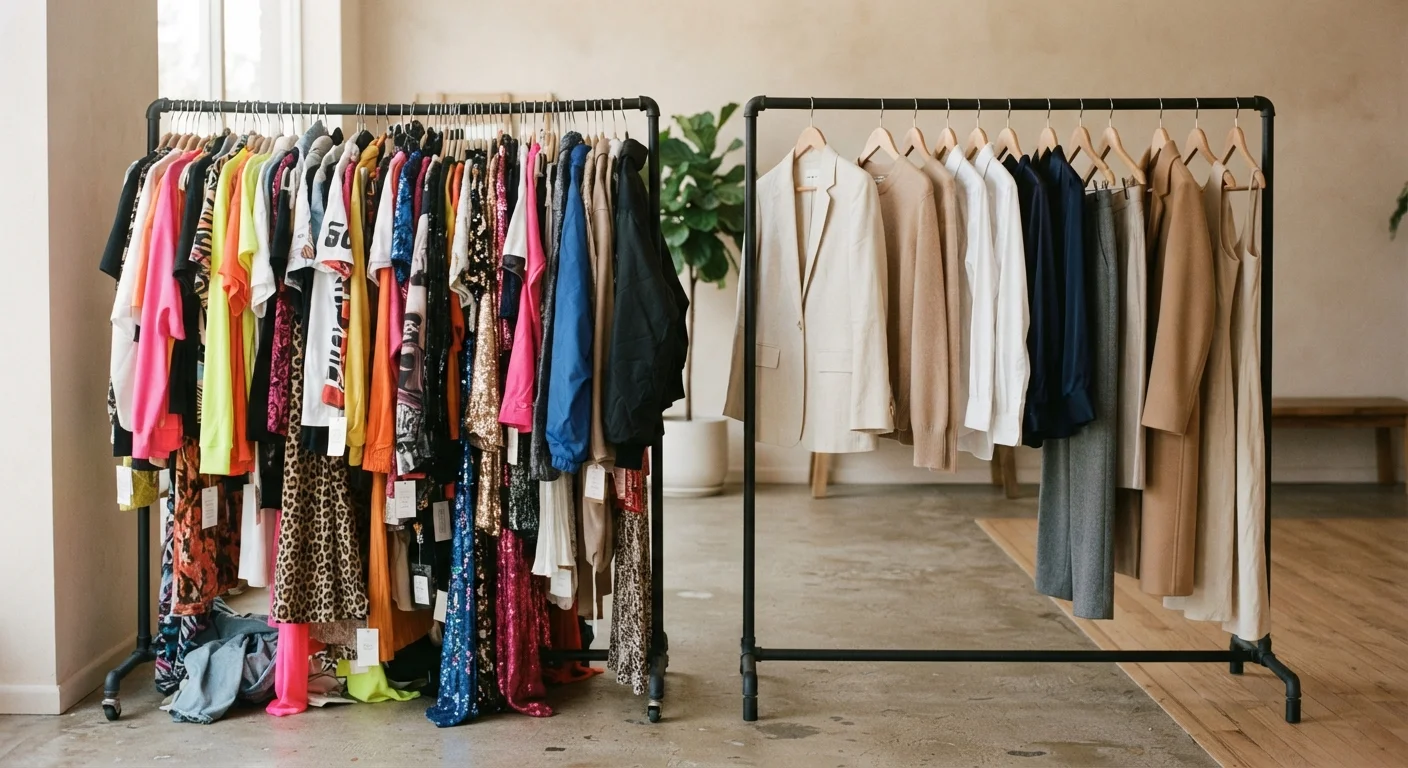
Key Takeaways
Option A
Fast Fashion
The high-volume, trend-driven approach to affordable dressing.
Best for: Shoppers who want on-trend looks at low upfront cost and don't mind replacing items frequently.
Option B
Slow Fashion
The intentional, quality-first alternative built for longevity.
Best for: Shoppers willing to spend more upfront in exchange for durability, versatility, and less frequent purchasing.
If you're on a tight budget and need to cover clothing basics now
Fast Fashion
Lower upfront costs make it accessible when cash is limited. Focus on versatile basics rather than micro-trend pieces to get the most wear per dollar.
If you want a wardrobe that costs less over several years
Slow Fashion
Quality garments worn repeatedly over many years typically deliver a lower cost-per-wear, even if the sticker price is higher at checkout.
If you want to dress for a specific short-term occasion or trend
Fast Fashion
For one-off events or trend experiments, a lower price point limits financial risk when you know the item won't see heavy long-term use.
If you're building a versatile, mix-and-match wardrobe for the long haul
Slow Fashion
Durable, well-constructed pieces in neutral or classic styles anchor a flexible wardrobe and reduce the need for constant replacement purchases.
If you want a practical middle-ground strategy
Fast Fashion
Selectively buying lower-cost items for trend-driven or seasonal pieces - while investing in slow fashion for core wardrobe staples - balances flexibility and value.
What Fast Fashion Actually Means
Fast fashion refers to a retail model built on rapid production cycles, low manufacturing costs, and high trend turnover. Collections that once arrived twice a year now refresh weekly or even daily on some platforms. The appeal is obvious: you can pick up a new look without spending much.
What drives those low prices? Typically a combination of high-volume manufacturing, lower-cost materials (often synthetic blends), and supply chains optimized for speed over craftsmanship. The result is clothing that arrives quickly and inexpensively - but that may not hold up through repeated washing and wear.
That doesn't make fast fashion automatically off-limits. For basics like plain tees or items you'll wear a single season, the math can work in your favor. The key is going in with honest expectations about longevity. If a $12 shirt lasts eight wears before fading or pilling, the cost-per-wear is higher than it first appears.
| Criterion | Fast Fashion | Slow Fashion |
|---|---|---|
| Upfront cost | Low | Higher |
| Cost-per-wear (over time) | Often higher | Often lower |
| Material quality | Typically lower | Typically higher |
| Trend relevance | High at purchase | Classic or timeless |
| Garment lifespan | Shorter (months to 1-2 years) | Longer (several years or more) |
| Replacement frequency | More frequent | Less frequent |
| Best use case | Trend pieces, one-off occasions | Core wardrobe staples |
What Slow Fashion Actually Means
Slow fashion is less a single label and more a set of values: buying fewer items, choosing better construction, and wearing pieces longer. It's a deliberate pushback against the churn of trend-driven retail. In practice, slow fashion garments tend to use more durable materials, stronger stitching, and more considered design - though none of those qualities are guaranteed just because a brand markets itself as "sustainable" or "ethical."
The financial case for slow fashion rests on cost-per-wear. A $120 jacket worn 200 times costs $0.60 per wear. A $30 jacket replaced every season after 40 wears costs $0.75 per wear - and adds up faster over time. Of course, that math only holds if you actually wear the pricier item regularly, which is why slow fashion works best for wardrobe anchors: structured trousers, well-fitting denim, quality outerwear, sturdy shoes.
For readers building a long-term wardrobe strategy, our guide to capsule wardrobes explores how a smaller, intentional closet fits into this philosophy.
~60%
Increase in garments produced globally since 2000
According to research published by the Ellen MacArthur Foundation, global clothing production roughly doubled between 2000 and 2015, with garments being worn for shorter periods.
~$1,700
Average American household annual clothing spend
The U.S. Bureau of Labor Statistics Consumer Expenditure Survey consistently places average annual household apparel spending in this range, though it varies by income level.
Less than 10
Average times a garment is worn before disposal
Estimates from multiple textile industry reports suggest many fast fashion items are worn fewer than ten times before being discarded or donated.
Side-by-Side: Key Trade-Offs to Know
The differences between fast and slow fashion show up most clearly when you look at specific decision points: upfront cost, material quality, versatility over time, and how much mental energy you spend replacing worn-out items.
One often-overlooked factor is maintenance. Regardless of which approach you lean toward, how you wash, dry, and store your clothes dramatically affects how long they last. Caring for your clothes properly - cold water washes, air drying, correct storage - can extend the life of even lower-cost garments significantly.
"Sustainable" Labels Aren't Standardized
In the U.S., there is no single regulated definition for terms like "sustainable," "eco-friendly," or "ethical" on clothing labels. A garment marketed as slow fashion may not meet any particular standard. When evaluating quality, focus on observable factors - fabric composition, stitching density, hardware weight - rather than marketing language alone. The Federal Trade Commission provides guidance on textile labeling requirements, but environmental claims remain largely self-reported.
A Practical Middle Ground for Real Budgets
Most Americans don't need to choose a side. A blended approach - slow fashion for high-use staples, fast fashion for low-stakes or trend-specific pieces - is both realistic and financially sensible. The question worth asking before any clothing purchase isn't really "fast or slow?" but rather: how often will I actually wear this, and does the price reflect that?
Secondhand shopping adds another dimension worth considering. Thrift and resale markets let you access higher-quality garments at lower price points, effectively combining the financial logic of fast fashion with the durability of slow fashion. Our comparison of thrift vs. outlet shopping breaks down how each route works in practice.
If you're starting from scratch or working within a real budget, building a versatile wardrobe on a budget walks through a grounded, step-by-step approach to dressing well without overspending.