

Key Takeaways
Scalp Health
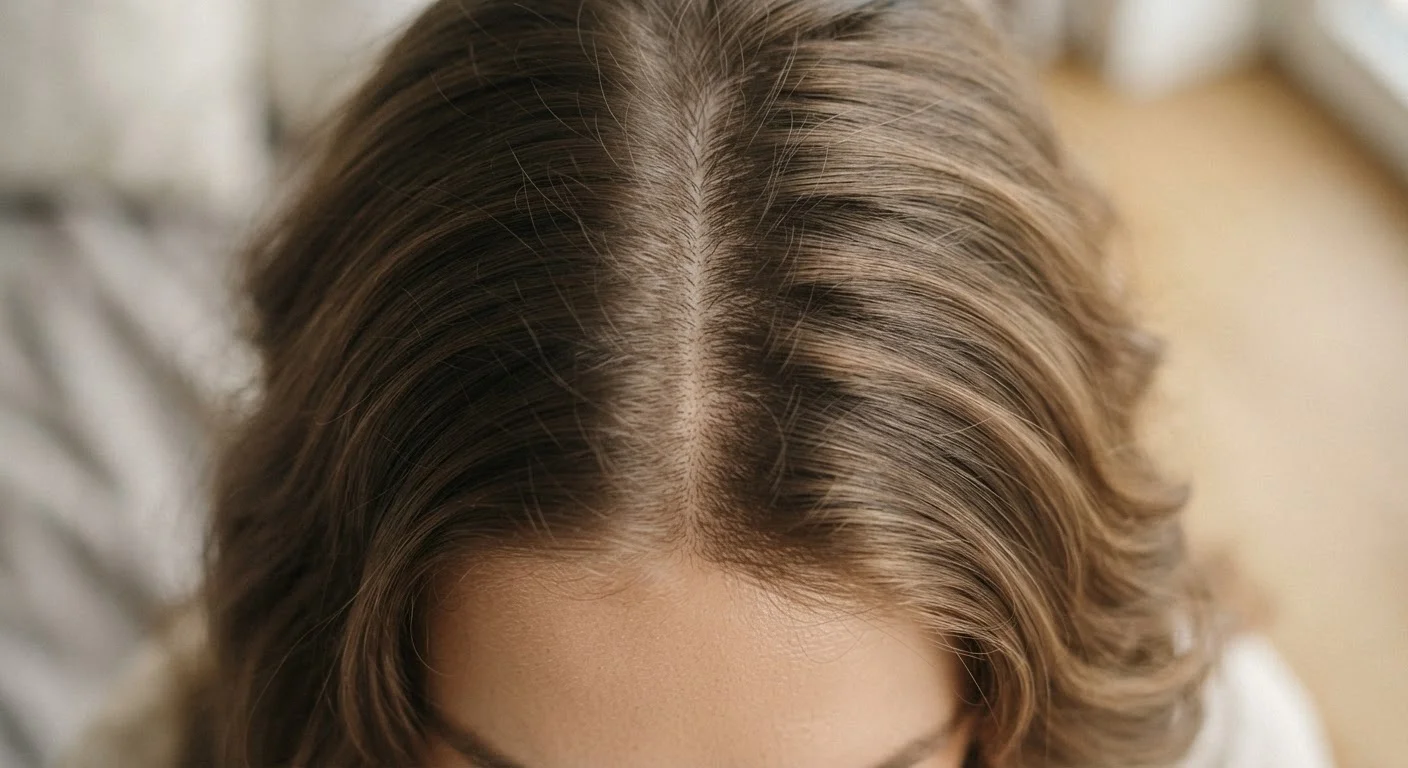
Scalp health refers to the condition of the skin covering the top of your head - the same type of living tissue as your face, neck, and body. A healthy scalp is balanced in oil production, free from excessive flaking or irritation, and provides a stable environment for hair follicles to function. When the scalp is out of balance, it can affect everything from how your hair looks to how comfortable your head feels day to day.
The scalp contains a higher density of sebaceous (oil-producing) glands and hair follicles per square centimeter than almost any other area of skin on the body, making it uniquely reactive to hormonal shifts, product buildup, and environmental stressors.
Why the Scalp Is a Skin Story
Most people have a dedicated face-care routine - cleanser, moisturizer, the works - yet treat their scalp as little more than the backdrop to their hairstyle. The reality is that the scalp is skin: it has the same basic structure of epidermis, dermis, and underlying tissue as your forehead, just with a much denser population of hair follicles and oil glands packed into it.
That's not a minor detail. It means the scalp is subject to the same conditions that affect skin everywhere else - dryness, excess oil production, sensitivity, barrier disruption - and that ignoring it can create issues that show up not just on your head, but in the health and appearance of your hair. To understand your overall skin better, it helps to know what your skin type is doing in the first place: learn what your skin type actually means.
Scalp Skin vs. Face Skin: Key Differences
While both are skin, the scalp has roughly 100,000 hair follicles and produces significantly more sebum than facial skin. This means it can tolerate - and sometimes requires - more targeted cleansing than your face does. It also means that products formulated for facial skin aren't always the right match for scalp-specific concerns.
What Throws Scalp Balance Off
Several everyday factors disrupt the scalp's equilibrium, and many are well within your control:
- Product buildup: Dry shampoos, styling gels, and leave-in conditioners all leave residue. Over time, that residue accumulates on the scalp surface and around follicle openings, which can lead to irritation or clogging.
- Washing too little - or too much: Under-washing allows sebum and dead skin cells to accumulate. Over-washing strips the scalp's natural oil barrier, triggering even more oil production to compensate.
- Heat and environmental stress: Hard water mineral deposits, UV exposure, and dry indoor air all stress scalp skin just as they stress facial skin.
- Hormonal shifts: Oil production on the scalp is partly regulated by androgens, which is why scalp oiliness often changes during puberty, pregnancy, or menopause.
This is a good place to reconnect with your broader personal care picture. A weekly self-care audit can help you spot where habits like scalp care might have quietly fallen through the cracks.
Start With a Simplified Routine
If your scalp feels irritated or reactive, strip your routine back to basics before adding new products. Use a gentle, fragrance-free shampoo and give your scalp two to four weeks to recalibrate before drawing conclusions about what it needs. Adding multiple new products at once makes it impossible to identify what's helping or hurting.
Reading Common Scalp Signals
Scalp symptoms are information. Knowing what they point to helps you respond effectively rather than reaching for the wrong product.
- Flaking
- Small, dry white flakes often indicate a dry scalp or mild sensitivity. Larger, oilier flakes are more associated with dandruff (seborrheic dermatitis), which involves a yeast component and typically responds to antifungal ingredients like zinc pyrithione or selenium sulfide.
- Itching
- Can result from dryness, product sensitivity, buildup, or a skin condition. Patch-testing new products and simplifying your routine is a reasonable first step.
- Excess oiliness
- Often a sign that the scalp is overproducing sebum - sometimes in response to over-stripping with harsh shampoos.
- Tightness or sensitivity
- Similar to facial skin, a tight or reactive scalp may indicate a compromised moisture barrier.
~100,000
Hair follicles on the average adult scalp
Each follicle is anchored in scalp skin and dependent on its health - making scalp condition directly tied to hair growth and quality.
50%+
Adults affected by dandruff at some point
Dandruff is among the most common scalp conditions worldwide, according to dermatological literature, yet it is frequently misidentified or mistreated.
1 of the top 3
Most sunburned body sites: the scalp part
Dermatologists consistently note the scalp and part line as high-risk for UV damage, particularly in people with thinning hair.
Understanding the hair-scalp relationship goes both ways. Your scalp environment influences how your strands absorb and retain moisture - a concept explored in depth in our guide to hair porosity.
Simple Habits That Actually Move the Needle
Scalp care doesn't require a separate ten-step system. A few consistent habits make a meaningful difference:
- Cleanse according to your scalp, not a calendar. Pay attention to how quickly your roots feel oily or your head feels itchy - that's your real signal for when to wash.
- Rinse thoroughly. Shampoo residue left on the scalp is a surprisingly common source of irritation and buildup.
- Massage while cleansing. Gentle fingertip massage increases circulation to the scalp and helps loosen buildup. Skip the nails - they can scratch and irritate.
- Exfoliate occasionally. A scalp scrub or a shampoo with salicylic acid used periodically can clear dead cell buildup, especially for those who use a lot of styling products.
- Protect from UV. The scalp - especially along the part - is one of the most commonly sunburned areas on the body and is often completely overlooked.
Scalp care is one of several commonly skipped steps covered in personal care habits most adults have never learned. It fits naturally into a complete personal care routine that addresses the whole body, not just the visible parts.
This article is for general informational and educational purposes only and is not a substitute for professional medical or dermatological advice. If you have persistent or worsening scalp symptoms, consult a qualified healthcare provider or dermatologist.