

Key Takeaways
5G
5G is the fifth generation of wireless network technology used by mobile phones and other connected devices. It's designed to be faster, handle more simultaneous connections, and respond more quickly than 4G LTE. In practical terms, it's the invisible infrastructure that determines how quickly your phone loads websites, streams video, or sends data when you're not on Wi-Fi.
5G operates across three spectrum bands - low-band, mid-band, and millimeter wave (mmWave) - each offering a different balance of speed, range, and building penetration. The experience you get depends heavily on which band your carrier deploys in your area.
Not All 5G Is the Same
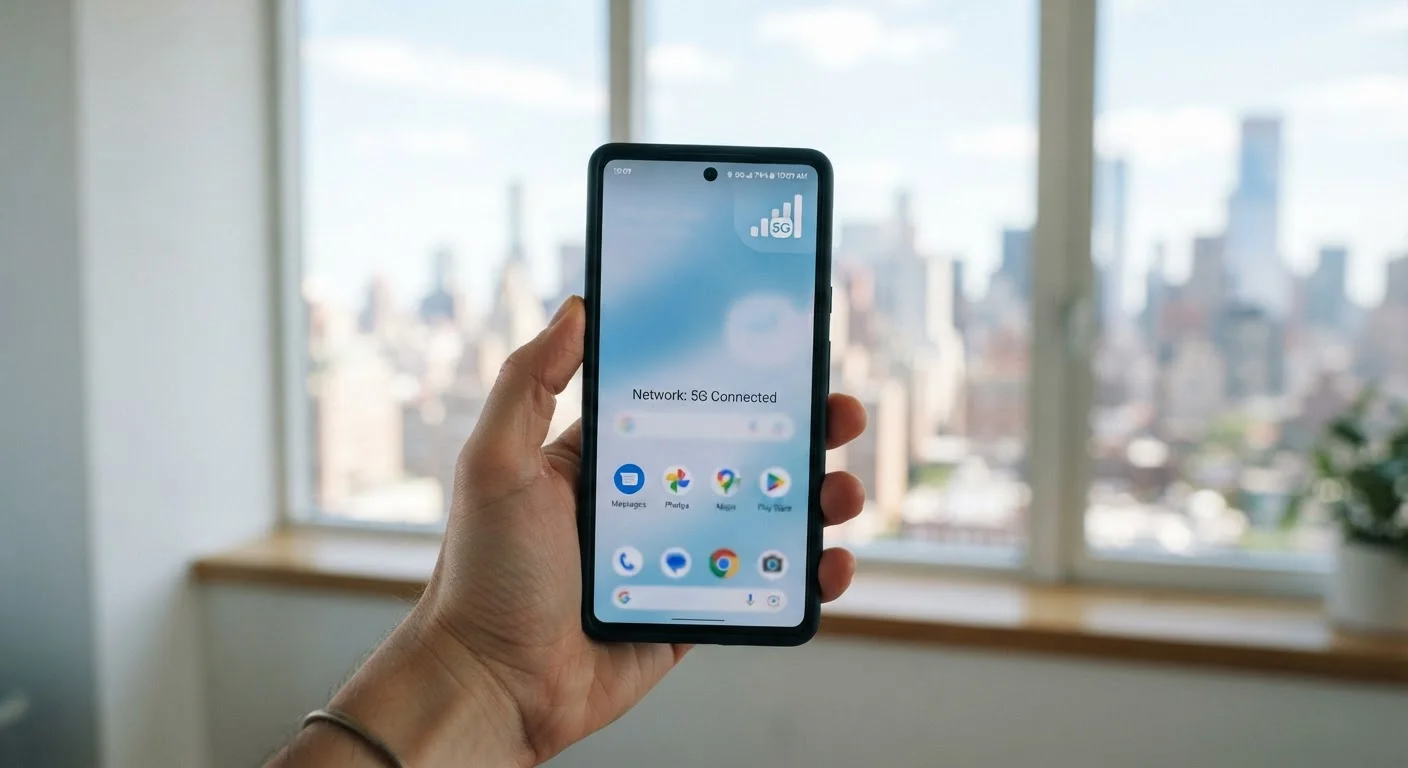
When your phone shows a "5G" indicator, that label can mean three very different things depending on where you are and which network band your carrier is using.
- Low-band 5G uses radio frequencies below 1 GHz. It travels far and penetrates buildings well - making it ideal for wide coverage. Speed improvements over 4G LTE are real but modest, often 20-50% faster in typical conditions.
- Mid-band 5G operates between 1 GHz and 6 GHz. It delivers significantly faster speeds and lower latency than low-band while still covering a reasonable geographic area. This is often described as the sweet spot of 5G performance.
- mmWave (millimeter wave) 5G operates above 24 GHz and can deliver extremely fast speeds - but only within a short range, and it struggles to pass through walls or windows. It's currently useful mainly in dense locations like stadiums, airports, or downtown blocks.
Most people in the US connecting to 5G are on low-band. If your day-to-day speeds haven't dramatically changed since your carrier switched you to a 5G plan, this is almost certainly why. For a broader look at what these specs actually mean, see our plain-English glossary of smartphone specs.
3
Distinct 5G spectrum bands in use
Low-band, mid-band, and mmWave each offer different coverage ranges and peak speeds, according to the FCC's spectrum classification framework.
~72%
US population with some 5G coverage
Coverage estimates vary by carrier and methodology; the majority of this reflects low-band deployment as of recent network rollout reports.
10x
Potential latency reduction vs. 4G LTE
Under ideal mid-band or mmWave 5G conditions, latency can fall to single-digit milliseconds, compared to 20-60ms on typical LTE, per industry technical specifications.
What 5G Changes - and What It Doesn't
5G genuinely improves a few things for everyday users:
- Download speeds in well-covered areas are faster, meaning large app updates or video downloads complete more quickly when you're away from Wi-Fi.
- Network congestion is reduced in dense areas because 5G can handle more simultaneous connections, so you're less likely to experience slowdowns in a crowded stadium or city center.
- Latency - the delay between sending and receiving data - can decrease, which matters for real-time applications like video calls or mobile gaming.
What 5G does not change:
- Your Wi-Fi speed at home. Your broadband connection and router determine that entirely.
- Coverage in rural or remote areas, where 4G LTE infrastructure often remains the primary option.
- The performance of an older phone. If your device doesn't have a 5G modem, no plan upgrade changes that.
“The 5G experience varies enormously depending on spectrum, deployment density, and device capability. Consumers should look beyond the label on their status bar and ask what kind of 5G they're actually getting.”
— Jessica Rosenworcel, Former Chairwoman, Federal Communications Commission
What This Means for Your Phone Bill
Carriers market 5G heavily, but whether you pay more for it depends on your plan. In many cases, 5G access is bundled into mid-tier and premium plans without a separate surcharge. In others, accessing the faster tiers of 5G requires an upgraded plan.
A few honest realities to keep in mind:
- If you're on a low-band 5G plan and experiencing only slight speed improvements, paying a premium specifically for 5G likely doesn't offer proportional value.
- If you live or work in an area with strong mid-band 5G coverage, the speed difference can be meaningful for heavy data users - streaming, remote work on cellular, or frequent large file transfers.
- Phones that support 5G are generally more expensive at purchase than 4G-only equivalents, though 5G has become standard on most new mid-range and flagship phones.
Before upgrading a plan or device primarily for 5G, it's worth checking your carrier's coverage map for which band is available in the places you actually use your phone most - not just whether 5G appears on the map at all.
Check Your Carrier's Band Map, Not Just Coverage
Most carrier websites show a general 5G coverage map, but some also let you filter by network type - low-band, mid-band, or ultra-wideband. Looking at which band reaches your home, workplace, or commute route gives you a much more honest picture of what 5G will actually feel like for you.
Practical Steps Worth Taking
If you already have a 5G-capable phone, a couple of settings are worth reviewing:
- Network mode settings: Most Android phones and iPhones allow you to set a preferred network type. If your battery is draining faster than expected, switching to "LTE only" when you don't need 5G speeds can help.
- Carrier settings updates: Keeping your carrier settings updated (separate from your phone's software updates) ensures your device is optimized for the network. On iPhone, a prompt appears automatically; Android phones vary by manufacturer.
For those keeping older phones longer, it's worth knowing that 4G LTE networks aren't disappearing soon. Carriers have financial incentives to maintain them for years while 5G build-out continues. See our guide on keeping your smartphone running well year after year for habits that extend device life regardless of network generation.
And if you're thinking through your phone's broader settings - not just network preferences - our walkthrough of mobile security settings most people never touch is a useful companion read.