

Key Takeaways
Why Estimates Feel Confusing - and Why They Don't Have To
A mechanic's estimate is a working document, not a final verdict. Its purpose is to give you a reasonable projection of what a repair will cost so you can make an informed decision about proceeding. The confusion most drivers feel comes from unfamiliar terminology, inconsistent formatting between shops, and the assumption that questioning the document is somehow impolite.
It isn't. A reputable shop expects you to read the estimate carefully and ask questions. Think of it the same way you'd approach a contractor's bid for home work - and if you've ever read one of those, you know the experience has a lot in common. Our guide to reading a construction estimate walks through a similar process for home repairs, if that comparison is useful.
For auto repairs, three broad categories account for almost every line on any estimate: parts, labor, and fees. Once you know how to read each, the document stops feeling like a foreign language.
Bring a Notepad to the Shop
When you drop off your car, jot down the mileage, the specific symptoms you've noticed, and any recent repairs already performed. Providing this context helps the technician diagnose accurately - and gives you a reference point if the final invoice lists work you didn't discuss.
If you're weighing whether a particular job is worth doing yourself versus taking it to a shop, our DIY vs. shop guide helps you think through that decision before you commit.
Written estimate (paper or digital)
The document you review, question, and sign before work begins - your primary reference throughout this process.
Smartphone or notepad
Used to photograph the estimate, take notes during conversations with the service writer, and research unfamiliar terms.
Your vehicle owner's manual
Confirms manufacturer-recommended service intervals and parts specifications so you can verify the shop's recommendations.
Following the Steps: What to Do at the Shop
The steps below walk you through the process from the moment you request an estimate to the moment you compare the final invoice. Each stage includes specific questions you can ask - not to challenge the shop's integrity, but to understand exactly what you're agreeing to pay for.
What you will need
Request a fully itemized written estimate
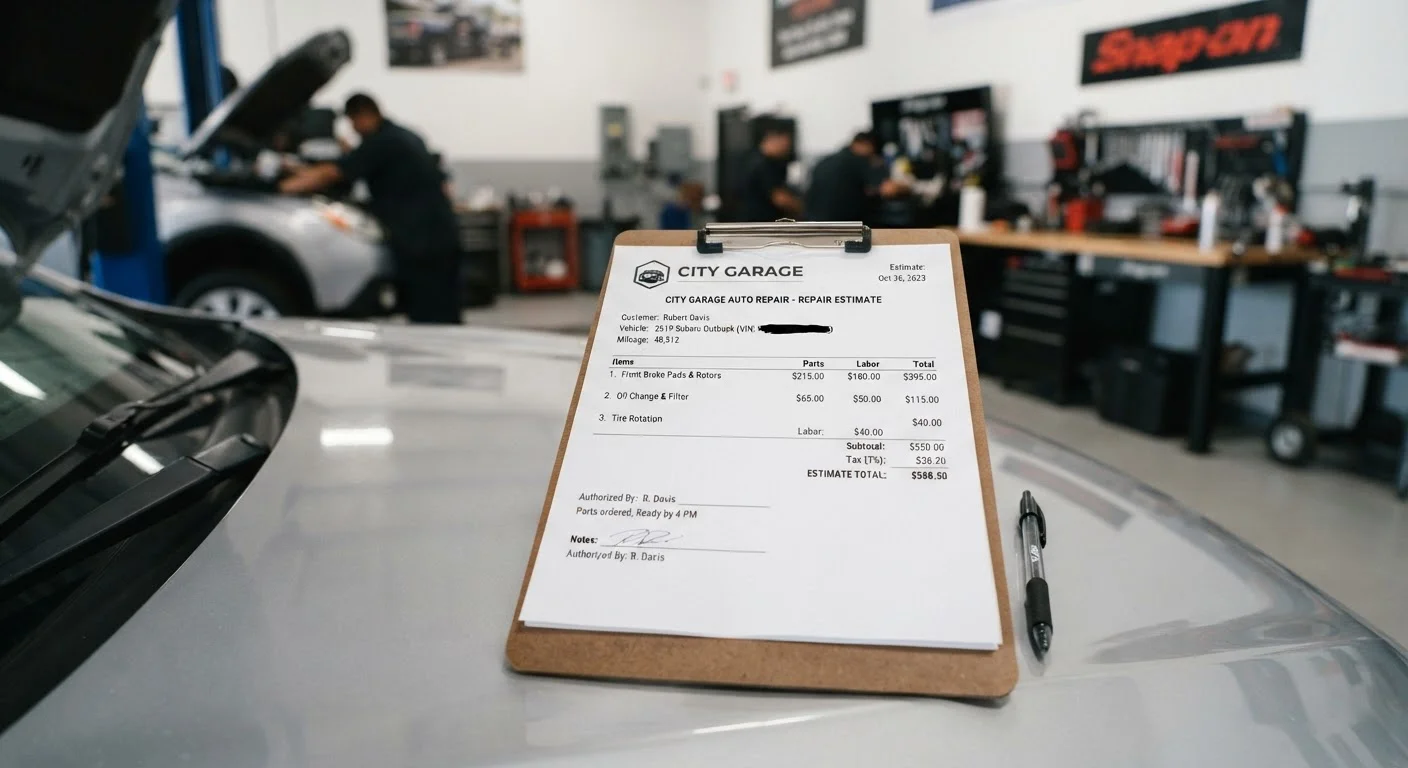
Before a technician touches your vehicle, ask for a written estimate that lists every anticipated charge separately. A proper estimate should show: parts (with part numbers where applicable), the number of labor hours estimated, the shop's hourly labor rate, and any shop or disposal fees. If the estimate arrives as a single lump sum, ask the service writer to break it into those categories before you proceed.
Decode the labor rate line
Labor is typically listed as a rate per hour (for example, $120/hr) multiplied by a number of estimated hours. Shops often use a standardized labor guide - such as a flat-rate manual - to assign how many hours a given job "should" take, regardless of how long it actually takes. This means a job estimated at 2.5 hours will be billed at 2.5 hours even if the technician finishes in 90 minutes. Understanding this prevents surprise. Independent shops, dealerships, and national chains each tend to have different rate structures - none is automatically better or worse, but knowing the rate lets you make fair comparisons.
Distinguish OEM parts from aftermarket and remanufactured parts
Parts are usually categorized as: OEM (Original Equipment Manufacturer - made to the same specification as your factory parts), aftermarket (made by a third party, often less expensive), or remanufactured (rebuilt used parts restored to working condition). Each has legitimate applications. Ask which category appears on your estimate and why the shop chose it - there's no single right answer, but you deserve to know what's being installed.
Identify shop fees and disposal charges
Many estimates include a line for "shop supplies" or "environmental/hazmat disposal fees." These cover items like rags, small fasteners, lubricants, and the proper disposal of fluids. Some shops charge a flat fee; others calculate it as a percentage of the total. These charges are generally legitimate, but they should be listed explicitly - not added silently after the fact. Ask if you don't see them on the estimate and want to know if they'll appear on the final invoice.
Ask targeted questions before signing
Before you authorize any work, it's reasonable to ask the following:
- Why is this repair necessary now? Ask the technician to show you or explain the failure if possible.
- What happens if I delay this repair? Some issues are safety-critical; others are not urgent.
- Is there a warranty on parts and labor? Many shops offer 12 months or 12,000 miles - get it in writing.
- Can I have my old parts returned? Most shops will return removed parts on request, which lets you verify the work was done.
Compare the final invoice to the original estimate
When you pick up your vehicle, place the final invoice side by side with the estimate you signed. Verify that every line item matches or is explained. If the total is higher, the shop should have contacted you for authorization before exceeding the agreed price - this is required by law in most states. Politely ask for a written explanation of any new charges before paying. Most reputable shops will walk through the invoice with you without hesitation.
Authorize in Writing - Always
Most states require a shop to obtain your written authorization before beginning any repair work. Never give verbal-only approval for a job, especially if the scope or cost may change mid-repair. If additional problems are discovered, ask the shop to provide a revised written estimate before they proceed. This protects both you and the shop from misunderstandings about what was agreed upon.
Watch for Vague Line Items
An estimate that lists only broad descriptions like "engine work" or "electrical repair" without specific parts or labor hours is a red flag. Always ask the shop to itemize every charge before you sign. Vague estimates make it much harder to compare prices or dispute a charge later.
Understanding a repair estimate is one piece of the broader picture of vehicle ownership costs. If your car is involved in an accident, knowing how your policy works becomes equally important - our plain-language breakdown of auto insurance policies covers that territory in similar detail.