

Key Takeaways
Our Verdict
DIY maintenance makes sense for straightforward, low-risk tasks where the margin for error is small and the required tools are affordable. For anything involving brakes, steering, suspension, or complex electronics, the expertise and equipment a professional shop provides are generally worth the cost. A hybrid approach - doing the simple tasks yourself while leaving the complex ones to a mechanic - is what most well-informed drivers settle on.
| Best for | Recommended |
|---|---|
| Drivers comfortable with basic tools and willing to follow instructions carefully | DIY |
| Safety-critical repairs or jobs requiring specialized diagnostic equipment | Professional Shop |
| Drivers with limited time who value convenience and a documented service record | Professional Shop |
| Routine consumables like wipers, cabin air filters, or battery replacements | DIY |
Where the DIY Line Actually Falls
The question isn't whether you can do car maintenance yourself - it's whether the specific task is safe, practical, and cost-effective to do without professional help. That line is drawn differently for every job, and it depends on three factors: the tools required, the consequences of an error, and how accessible the component is on your particular vehicle.
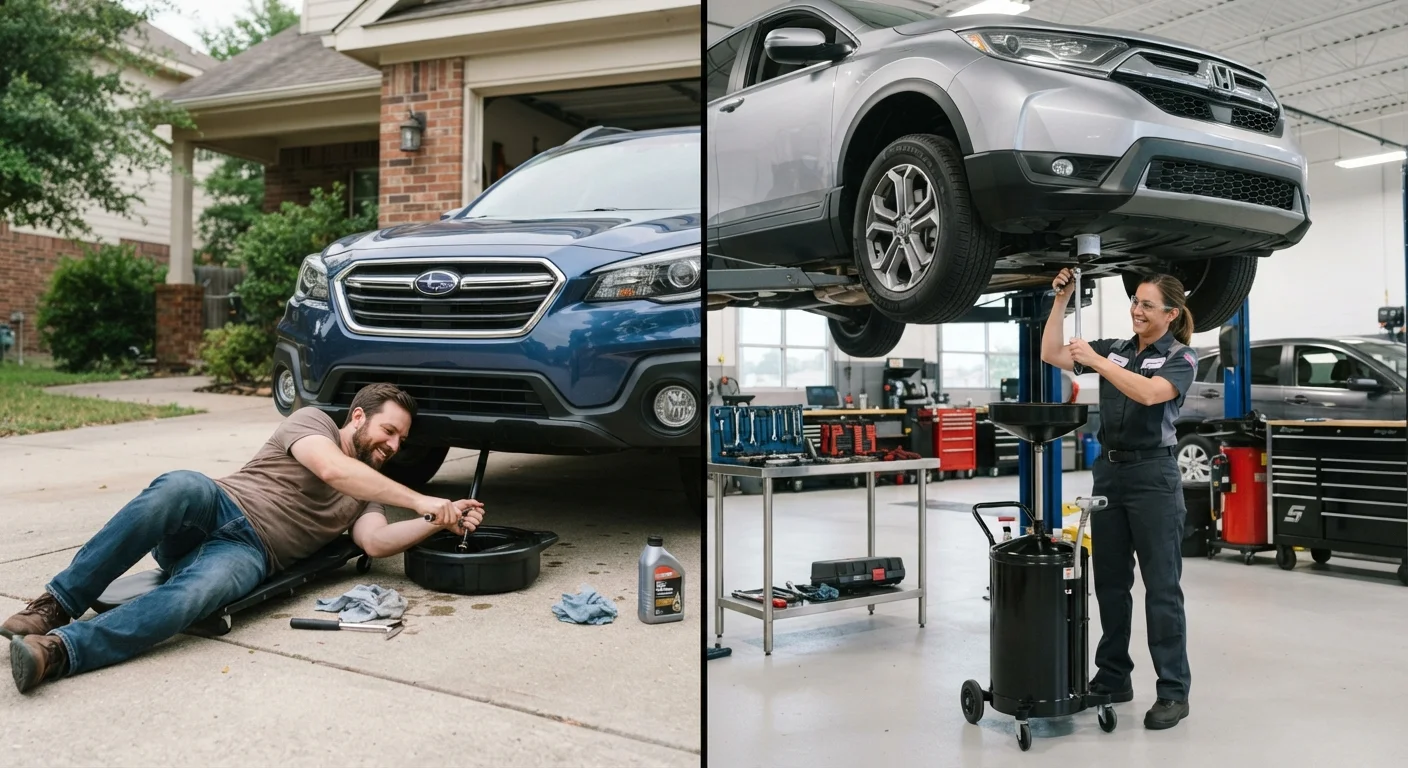
For most everyday drivers, a handful of tasks sit clearly on the DIY side. Replacing a cabin air filter, swapping wiper blades, topping off washer fluid, changing a battery, and even performing an oil change are jobs that require minimal tools, carry low risk if done correctly, and come with plenty of reliable how-to guidance. Routine maintenance tasks like these are worth understanding, because staying on top of them keeps a vehicle running longer regardless of who does the work.
On the other side of the line sit jobs that involve your braking system, steering components, suspension, fuel system, or advanced driver-assistance electronics. These are not areas where an honest mistake is a minor inconvenience - they're areas where a mistake can compromise vehicle safety. Those jobs belong in a shop.
Start With Your Owner's Manual
Before attempting any maintenance task, consult your vehicle's owner's manual. It specifies the correct fluids, capacities, filter types, and service intervals for your exact make and model. Following manufacturer specifications - rather than generic advice - reduces the risk of using incompatible materials or missing a model-specific step.
What DIY Actually Costs You (Beyond Parts)
The financial appeal of DIY is real but often oversimplified. Yes, you avoid labor charges - but you take on hidden costs that don't always show up in the first calculation.
- Tools: A quality floor jack, jack stands, torque wrench, and socket set represent a meaningful upfront investment. If you plan to do multiple tasks over many years, that cost amortizes. For one-off jobs, it may not.
- Time: A shop might complete an oil change in 20 minutes. Your first attempt at the same job could take 90 minutes or more.
- Disposal: Used motor oil, old filters, and brake fluid require proper disposal. Many auto parts retailers accept these materials, but it's a step you need to plan for.
- Mistakes: An overtightened drain plug can strip threads and turn a $30 oil change into a several-hundred-dollar repair. The risk is low if you're careful, but it's not zero.
For a deeper look at motor oil decisions that affect both DIY and shop jobs, understanding the difference between synthetic and conventional oil is a practical starting point.
| Task | DIY | Professional Shop | |
|---|---|---|---|
| Cabin air filter replacement | DIY-friendly, no special tools | Unnecessary for most drivers | |
| Wiper blade replacement | Simple, low-risk | Quick but rarely worth the labor charge | |
| Oil and filter change | Manageable with basic tools and care | Faster, includes disposal, documented | |
| Brake pad replacement | Risky without proper tools and knowledge | Recommended for safety and warranty | |
| Tire rotation | Possible but requires jack stands and torque wrench | Efficient; <a href="/autos-driving/car-maintenance/tire-rotation-balancing-and-alignment-whats-the-difference">often bundled with balancing</a> | |
| Suspension or steering repair | Not recommended - safety-critical | Required; specialized tools needed | |
| Battery replacement | Generally DIY-friendly | May be needed if system reset required |
When a Professional Shop Is the Right Call
Modern vehicles are not simply mechanical machines - they're software-driven platforms. Many repairs that were once straightforward now require scan tools to read diagnostic codes, calibrate sensors, or reset warning systems after a component is replaced. Brake pad replacement on some vehicles, for example, requires electronic parking brake retraction tools and post-service resets that a standard home toolkit simply cannot provide.
Beyond electronics, any job that puts the vehicle in an elevated or unstable position carries inherent risk. Working under a car supported only by a floor jack - without properly rated jack stands on stable, level ground - is genuinely dangerous. Shops have lifts rated for the job and mechanics trained to use them safely.
If you're ever unclear about what a shop is recommending or what's included in a quote, understanding how to read a mechanic's estimate can help you ask the right questions before authorizing any work.
Never Work Under an Unsupported Vehicle
A floor jack alone is not a safe support for working beneath a raised vehicle. Always use properly rated jack stands placed at the manufacturer's designated lift points on stable, level ground. Vehicle falls are a leading cause of serious injury in home repair scenarios - this is one area where there is no acceptable shortcut.
Making the Decision for Your Situation
There is no universal right answer here - the best approach depends on your vehicle, your skill level, your available tools, and your comfort with risk. A useful mental framework: if a mistake on this job could create a safety hazard or a significantly more expensive repair, let a professional handle it. If the task is reversible, low-stakes, and well-documented, it's a reasonable candidate for DIY.
Service records also matter. A documented history of professional maintenance can support a vehicle's resale value and is sometimes required for warranty claims. If you do work yourself, keep your own written log of what was done, when, and with what parts - including receipts.
The same principle applies in other areas of home and vehicle upkeep. Just as some home repairs carry real safety or legal risk and call for a licensed professional, some vehicle repairs are not appropriate for a driveway. Knowing the difference is the skill that actually saves you money over the long run. For a full picture of what responsible car ownership looks like, it pays to understand both what you can confidently handle and where to call in expertise.