

Key Takeaways
What a Slow Leak Actually Does to Your Tire
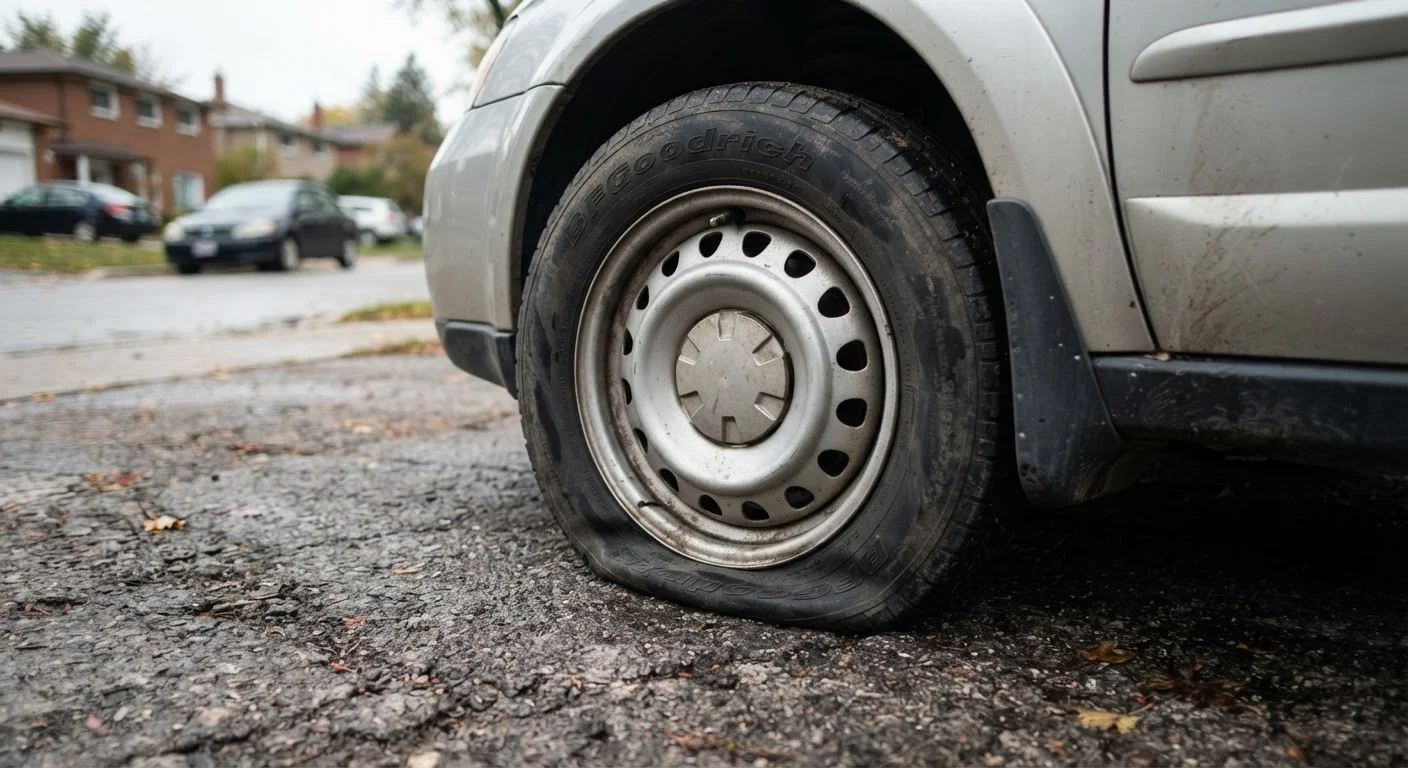
A tire leaking just two or three PSI per week can drop from a properly inflated 35 PSI to a dangerously low 20 PSI within a month - all without ever looking obviously flat. At that point, the tire's contact patch (the area touching the road) has changed shape, the sidewalls are flexing abnormally, and heat is building up with every rotation.
Rubber breaks down under sustained heat. The internal steel belts and fabric cords that give a tire its structure begin to weaken, making the tire far more vulnerable to a sudden failure. This is why underinflation - not just punctures - is a leading factor in highway blowouts.
Low Pressure Is a Blowout Risk
Underinflated tires flex more with each rotation, generating heat that degrades the rubber and internal structure. This heat buildup is one of the most common precursors to a sudden blowout at highway speeds. A slow leak is not merely an inconvenience - it is a progressive safety risk that worsens every mile you drive.
Beyond safety, the financial consequences are real. Underinflated tires increase rolling resistance, which forces your engine to work harder. The U.S. Department of Energy has noted that for every 1 PSI drop in pressure across all four tires, fuel economy decreases by roughly 0.2%. Multiply that across weeks or months of driving, and the fuel cost alone adds up. That's before accounting for accelerated tread wear, which can shorten a tire's usable life significantly. As part of the true cost of car ownership, tires represent one of the more controllable expenses - if you manage them proactively.
The Mistakes Drivers Make (And How to Avoid Them)
Most slow leak problems don't start with a dramatic blowout - they start with small decisions made over days and weeks. The pattern is consistent: dismiss the warning, add a little air, repeat. Each step delays a repair that typically costs far less than the damage accumulating underneath.
Assuming a slightly low tire is 'close enough' and doesn't need attention.
Why it happens: Tires that look mostly inflated are easy to dismiss, especially when the loss is gradual. Drivers often rely on visual checks rather than using a pressure gauge, and a tire can lose 10-15 PSI before it looks noticeably flat.
Repeatedly topping off air without diagnosing the source of the leak.
Why it happens: Adding air is quick and free at many gas stations, so it feels like a solution. In reality, it only delays the underlying problem - whether that's a nail, a cracked valve stem, or a faulty bead seal.
Ignoring the tire pressure monitoring system (TPMS) warning light.
Why it happens: TPMS lights are sometimes triggered by cold weather causing a temporary pressure drop, which leads drivers to dismiss recurring alerts as false alarms. Once ignored once or twice, the habit forms.
Delaying a repair because the leak seems too slow to matter right now.
Why it happens: A tire losing only one or two PSI per week feels non-urgent. Drivers mentally defer it alongside other low-priority tasks, not realizing that ongoing underinflation is causing cumulative damage.
Overlooking tire rotation and alignment as related maintenance when a slow leak is discovered.
Why it happens: Drivers focus narrowly on fixing the leak itself and don't consider that weeks of underinflation may have caused uneven wear that alignment and rotation could help correct.
The broader lesson here mirrors what happens with deferred home upkeep - small problems compound into expensive ones. Deferred maintenance rarely saves money, whether it's a leaky faucet or an underinflated tire. And because underinflated tires affect vehicle handling and braking response, ignoring them also contributes to the kind of gradual unsafe habits covered in habits that quietly make drivers more dangerous over time.
What a Proper Fix Costs vs. What Ignoring It Costs
A professional patch for a nail puncture typically runs $15-$30. A valve stem replacement - another common leak source - is often in the same range. These are among the least expensive repairs in automotive maintenance.
~0.2%
Fuel economy lost per 1 PSI drop
The U.S. Department of Energy estimates fuel economy decreases by approximately 0.2% for every 1 PSI drop across all four tires.
$15-$30
Typical cost of a professional tire patch
Most puncture repairs and valve stem replacements fall in this range at a tire shop, making early action highly cost-effective.
Up to 25%
Tire life reduction from chronic underinflation
Sustained underinflation can cause uneven shoulder wear that significantly shortens a tire's usable tread life, according to tire industry guidance.
Compare that to the cost of replacing a tire prematurely due to sidewall damage or excessive shoulder wear: $100-$250 per tire depending on size and type, plus potential alignment and balancing fees. In worst-case scenarios, a blowout at speed can cause additional vehicle damage or, more seriously, an accident.
Routine pressure checks take less than five minutes and require only an inexpensive gauge. Building it into a monthly habit - alongside checking oil and other fluids - is one of the most cost-effective things a driver can do. For a broader look at which maintenance habits pay off most over time, see routine maintenance that keeps a car running longer.