

Key Takeaways
Blind Spot
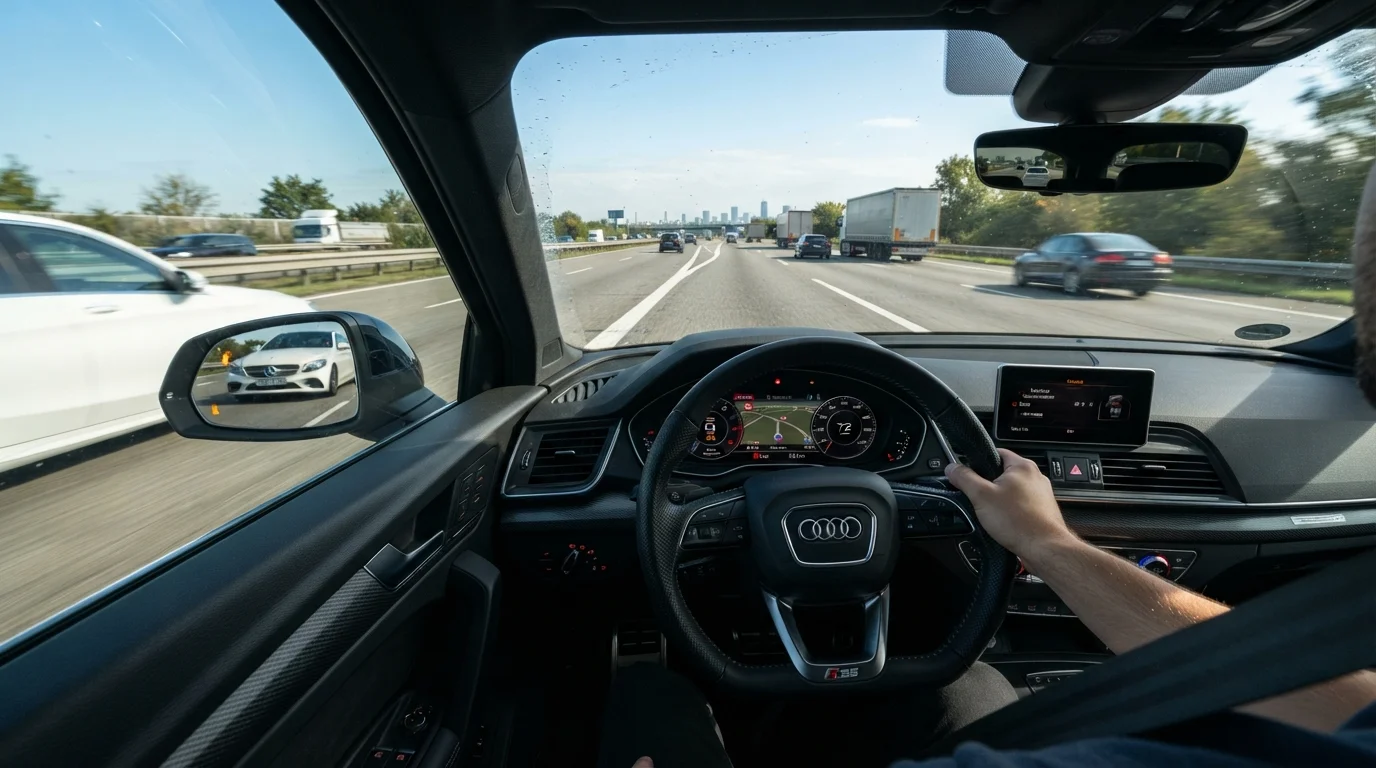
A blind spot is any area around your vehicle that cannot be seen through your mirrors alone. Even properly adjusted mirrors leave zones — typically to the rear-left and rear-right of your vehicle — where another car can travel completely out of sight. Moving into those zones without a physical head check is one of the most common causes of lane-change crashes.
The precise size of a blind spot varies by vehicle body style; trucks, SUVs, and vans typically have significantly larger blind zones than sedans due to their height and rear-pillar geometry.
Why Blind Spots Catch Drivers Off Guard
Most drivers understand the concept of a blind spot in theory. In practice, however, the gap between knowing and checking is where crashes happen. According to the National Highway Traffic Safety Administration (NHTSA), lane-change and merging maneuvers account for a substantial share of police-reported crashes on U.S. roads each year — and driver failure to detect vehicles in adjacent lanes is a recurring factor.
The problem isn't recklessness. It's a routine underestimation of how large these unseen zones actually are. At highway speeds, a vehicle can be fully hidden in your blind spot while traveling alongside you. If you begin a lane change at that moment, the consequences can be severe.
840,000+
Annual blind spot-related crashes in the U.S.
NHTSA estimates approximately 840,000 crashes per year involve blind spot failures, resulting in around 300 fatalities annually.
~20%
Share of crashes involving lane changes
Lane-change maneuvers represent a significant proportion of all police-reported crashes, with mirror-check failures cited as a primary contributing factor.
Understanding where your mirrors fall short — and building a reliable check habit — is one of the highest-value safety improvements any driver can make.
How Mirrors Work and Where They Fall Short
Your rearview mirror covers the area directly behind the vehicle. Your side mirrors extend that view outward — but only to a point. The critical gap is the zone that begins where your side mirror's field of view ends and extends forward along the side of your vehicle. A car sitting in that zone is invisible to mirror-only monitoring.
Many drivers inadvertently make this worse by positioning their side mirrors too close to their own vehicle. When you see a large portion of your own car's side in the mirror, you're wasting valuable coverage on something you already know is there. The widely recommended technique is to lean your head toward the window and adjust the side mirror until your vehicle's flank barely appears at the inner edge. This pushes the mirror's coverage further outward, shrinking the blind zone considerably.
Adjust Your Mirrors Before Every Drive
Mirror positions shift when different people drive the same vehicle, or after the car has been in a parking lot. Taking ten seconds to verify your side and rearview mirrors before driving is a low-effort habit that consistently reduces blind zone size. Aim for the side mirrors to show just the edge of your vehicle — not a broad panel of it.
Even with optimally adjusted mirrors, a physical head check — briefly turning to look over your shoulder in the direction of the intended lane change — remains the only reliable way to clear the remaining gap. This applies whether you're merging onto a highway, changing lanes in city traffic, or moving over on a two-lane road.
The Correct Way to Check Before Moving
An effective blind spot check follows a consistent sequence. Before signaling, identify your intended destination lane and check both your center rearview mirror and the relevant side mirror to establish a baseline picture of surrounding traffic. Then signal your intention, allowing nearby drivers to react. Finally, take a brief over-the-shoulder glance — one to two seconds — into the blind zone before committing to the move.
The signal-before-check sequence matters. Signaling first gives other drivers a moment to anticipate your move, which reduces the chance that someone accelerates to close the gap while you're looking away.
On highway merges, the dynamic changes slightly. You're entering moving traffic from a stopped or slower position, which means your relative speed to other vehicles is higher. Check mirrors early and often as you accelerate along the on-ramp, and time your merge for a gap — don't force one. Scanning ahead while managing your mirrors simultaneously is a skill that develops with deliberate practice.
It's also worth noting that blind spot risks are compounded at night or in poor weather. Night driving reduces contrast and depth perception, making it even harder to judge whether a zone is truly clear.
Technology Assists — But Doesn't Replace Awareness
Blind spot monitoring (BSM) systems use radar or ultrasonic sensors to detect vehicles in adjacent lanes and alert the driver — typically through a light in the mirror housing or an audible tone. These systems have become increasingly common across vehicle classes and, when functioning correctly, provide a meaningful safety layer.
However, BSM systems have documented limitations. They may not reliably detect motorcycles, cyclists, or vehicles approaching at significantly higher speeds. Sensor range and detection angles vary by system. And like any electronic system, they can malfunction or be affected by environmental conditions such as heavy rain or dirt on sensors.
BSM Systems Vary Significantly by Vehicle
Not all blind spot monitoring systems detect the same zone or respond to the same conditions. Some systems only alert at highway speeds; others are active at lower speeds. Consult your owner's manual to understand exactly what your vehicle's system detects — and what it doesn't. Never assume a silent alert means an all-clear.
The safest approach treats BSM as an additional check, not the primary one. A driver who relies solely on the alert light and skips the head check has effectively delegated a critical safety decision to a sensor. Habits that quietly erode safe driving often start exactly this way — convenience gradually replacing deliberate technique.
For new drivers especially, building the mirror-and-head-check habit before relying on driver-assist technology ensures the fundamental skill is solid. See what new drivers should understand before going solo for a broader foundation on safe lane management.