

Key Takeaways
Why Hazard Scanning Is a Teachable Skill
Defensive driving isn't about reflexes - it's about time. The earlier you identify a potential hazard, the more options you have: slow down, change position, signal, or stop. Drivers who consistently avoid close calls aren't just lucky; they've developed a systematic way of reading the road that buys them the extra seconds that matter most.
The techniques in this guide are grounded in principles used in professional and commercial driver training. They can be learned and reinforced by any driver, on any road type. For a broader framework on building these habits into your overall driving practice, see the complete guide to safe driving.
What you will need
The Scanning Techniques: Step by Step
The following steps build on each other. Steps 1-3 address where and what you look at. Steps 4-6 address the conditions and habits that allow effective scanning to work. Apply them together rather than in isolation.
Shift your gaze to 12-15 seconds ahead
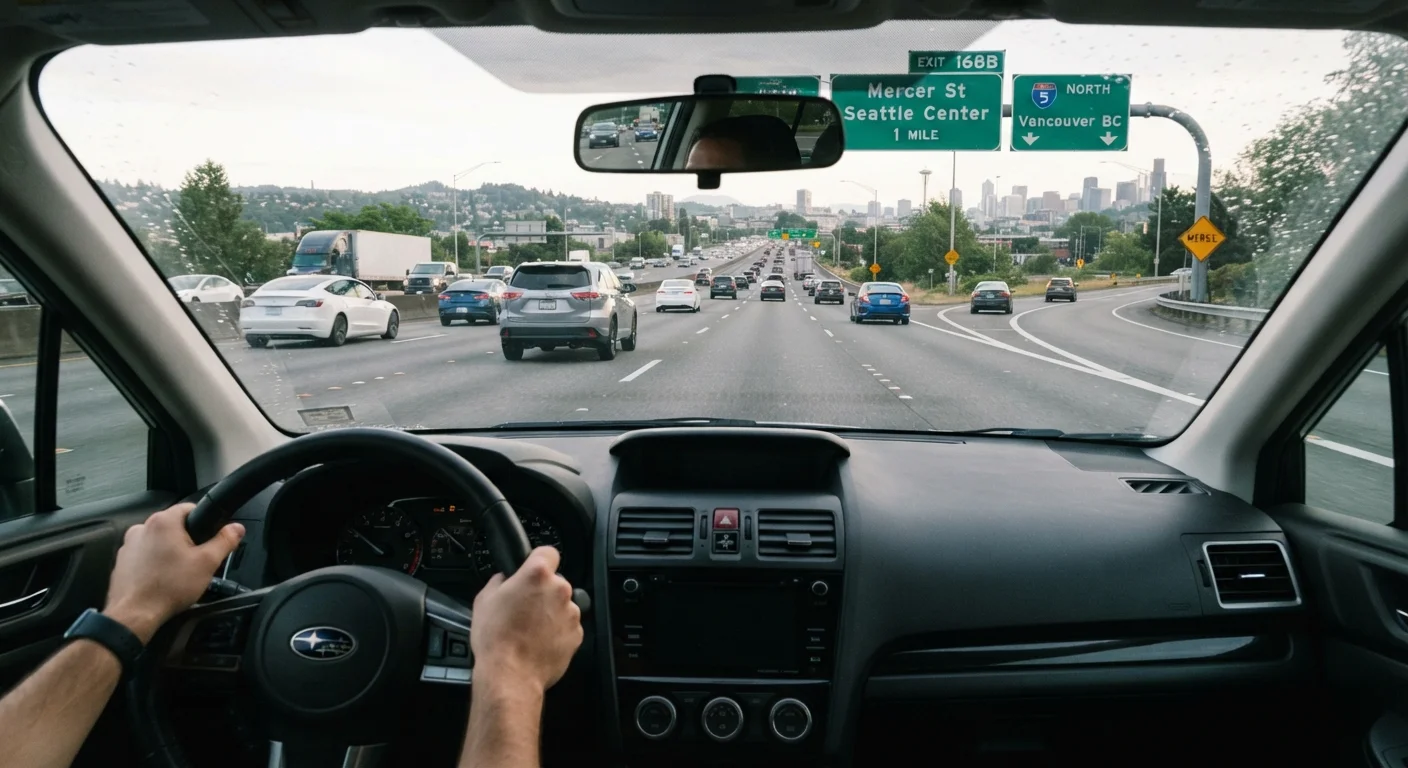
Most drivers focus on the vehicle immediately in front of them. Professional driving instructors and traffic safety researchers consistently recommend targeting a point roughly 12-15 seconds of travel time down the road - at 60 mph, that's approximately a quarter mile ahead. This forward scanning window gives you time to perceive a hazard, decide on a response, and act before the situation becomes critical.
On city streets where speeds are lower, 12 seconds may only be a block or two. On the highway, it spans a much greater physical distance. The principle stays the same regardless of speed: look ahead, not just in front.
Use a structured mirror-check routine
Forward scanning alone is incomplete. Hazards also approach from behind and alongside your vehicle. Develop a habit of checking your mirrors - rearview and both side mirrors - approximately every 5-8 seconds. This isn't a long look; a quick, deliberate glance is enough to register what's happening around you.
Before any speed change, lane shift, or turn, check the relevant mirror first. This real-time awareness of your surrounding traffic means you're never surprised by a vehicle closing in from a blind spot. See our guide to blind spots and lane changes for a deeper look at where mirror gaps remain and how to close them.
Read environmental cues, not just vehicles
Roads communicate information beyond the cars on them. Scanning effectively means reading the full environment:
- Parked cars with occupied driver seats, brake lights, or exhaust - potential pull-out hazards.
- Pedestrians near the curb looking at their phones or stepping off the sidewalk edge.
- Shadows or silhouettes appearing before an intersection - a vehicle or cyclist may be about to cross.
- Loose gravel, standing water, or debris patches ahead on the road surface.
- Animals near the road edge, particularly at dawn and dusk when wildlife movement peaks.
The goal is to treat each of these as early signals - not confirmed threats, but prompts to reduce speed slightly or shift lane position to give yourself margin.
Manage your following distance to protect your scan window
Following too closely does two things: it eliminates your stopping margin, and it blocks your forward view. A large vehicle directly ahead can hide an entire hazard zone from your line of sight. The standard recommendation in the U.S. is a minimum three-second following gap under normal conditions - measured by picking a fixed point and counting the seconds after the vehicle ahead passes it.
Increase that gap in poor visibility, wet roads, or heavy traffic. A greater following distance lets you see more of the road ahead and gives you the time your hazard-scanning system actually needs to function. For more detail on why following distance matters physically and statistically, see our article on why tailgating is more dangerous than most drivers realize.
Anticipate intersection and merging conflicts before they develop
Intersections and merge zones concentrate hazard potential. Before you reach an intersection, scan for cross-traffic that may not be slowing, drivers running late yellows, and cyclists or pedestrians in the crosswalk path. Before a merge, check for vehicles accelerating in the target lane that may close the gap faster than expected.
Anticipation means asking what could happen here? rather than reacting to what is happening? The mental habit of running brief, forward-looking scenarios - especially at known conflict points - is one of the core skills that separates experienced drivers from average ones. The skills required shift meaningfully depending on the road type; highway and city driving each demand a different safety approach.
Eliminate in-vehicle distractions that compete with your scan
All the scanning technique in the world is neutralized by a divided attention. Visual distractions (looking at a phone screen), manual distractions (reaching for objects), and cognitive distractions (intense hands-free conversation) all degrade the quality of your hazard scanning - even when your eyes are nominally on the road.
Before driving, set navigation, adjust mirrors, and configure audio. If something demands your attention while moving, pull off safely rather than trying to split focus. Certain habits - phone use, emotional preoccupation, routinized inattention - erode driving performance gradually and silently. Our article on habits that quietly make drivers more dangerous explores this pattern in detail.
Practice Makes Scanning Automatic
Early in developing these habits, hazard scanning takes conscious effort. With consistent practice over weeks and months, it becomes largely automatic - a background process that runs alongside normal driving. Try narrating hazards aloud on familiar routes; this forces deliberate engagement until the habit is internalized.
Adjusting Your Scan for Different Road Conditions
Hazard scanning isn't a fixed routine - it adjusts to context. In city traffic, your scan zone is shorter in physical distance but denser in potential conflict points: driveways, crosswalks, double-parked vehicles, cyclists. On the highway, individual hazards may be fewer but develop at much higher relative speeds, making early detection even more critical.
At night, your forward scanning range is physically limited by headlight reach, requiring lower speeds to keep your stopping distance within your visibility distance. For a full breakdown of how darkness changes hazard dynamics, see our article on night driving and the mindset it demands. Similarly, wet or icy roads don't just reduce traction - they extend the consequences of a late hazard detection. Our guide to driving in adverse weather covers how to adjust speed, spacing, and steering accordingly.
Overconfidence Is Its Own Hazard
Experienced drivers can fall into the trap of relying on pattern recognition so heavily that they stop actively scanning. Familiar roads feel predictable - but unpredictability is precisely what makes hazard scanning necessary. Complacency on a route you know well is one of the more common precursors to preventable crashes.