

Key Takeaways
Why Night Driving Is Genuinely More Dangerous
Roughly 50% of traffic fatalities occur at night, even though far fewer miles are driven in the dark - a disparity that underscores how much conditions change after sunset. The core problem is simple: human vision depends on light, and reduced ambient light narrows what drivers can see and how quickly they can process it.
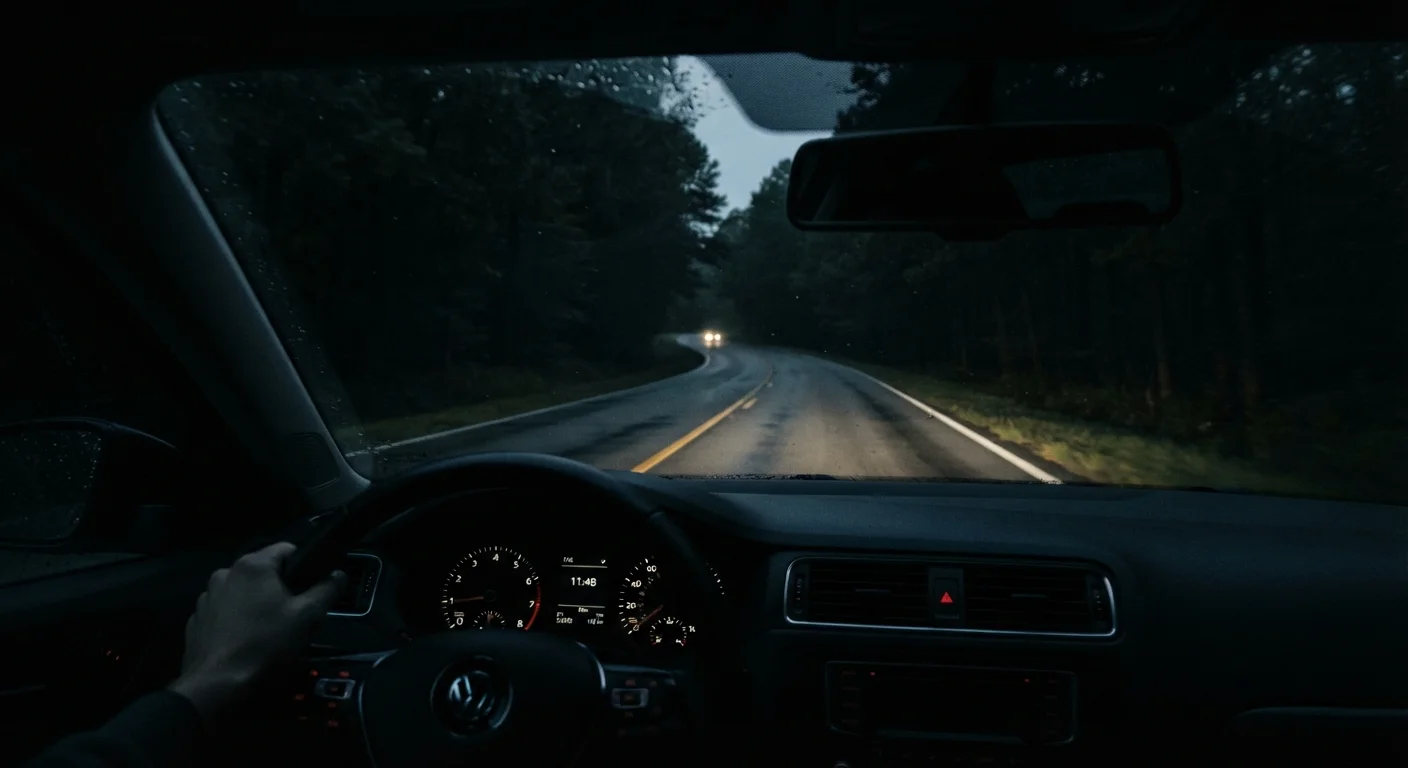
Low beams typically illuminate about 160-200 feet ahead. At 55 mph, your stopping distance can exceed 200 feet under ideal conditions. That gap - between what you can see and what you need to stop - is the fundamental risk of night driving. Add fatigue, glare, and the higher likelihood of impaired drivers on the road, and the challenge becomes clear.
Understanding these conditions isn't about fear - it's about preparation. See our guide to spotting road hazards for techniques that give you more reaction time in any conditions.
~50%
Of fatal crashes occur at night
The National Highway Traffic Safety Administration (NHTSA) has consistently reported that roughly half of traffic fatalities happen during nighttime hours despite lower overall traffic volume.
3x
Higher fatality rate per mile driven at night
Traffic safety research indicates that the fatal crash rate per mile driven is approximately three times higher at night than during daylight hours.
Best Practices for Safe Night Driving
Adapting to nighttime conditions means actively changing habits that work fine in daylight but fall short after dark. The following practices address the most critical adjustments every driver should make.
Reduce your speed to match your sight distance after dark.
If your headlights illuminate 200 feet ahead, you need to be able to stop within that distance. Driving faster than your sight distance allows means you may be unable to stop for an obstacle before reaching it. This principle - sometimes called 'overdriving your headlights' - is a leading factor in nighttime crashes.
Use high beams on unlit roads - and switch them off for oncoming traffic.
High beams roughly double the distance your headlights illuminate, giving you significantly more time to identify and react to hazards. However, leaving them on when another vehicle approaches blinds that driver and creates mutual danger.
Look toward the right edge of the road when facing oncoming headlights.
Staring directly at bright oncoming lights causes temporary glare blindness that can last several seconds after the vehicle passes. Shifting your gaze to the road's right edge - the white fog line if present - lets you maintain lane position without the full impact of the glare.
Increase your following distance to at least four seconds at night.
The standard three-second following distance assumes reasonable visibility. At night, reaction time is slower and stopping distances don't shrink - adding an extra second of buffer compensates for the reduced information available to you. On unfamiliar or poorly lit roads, even more distance is appropriate.
Clean your windshield inside and out before night driving.
Interior film buildup on windshields - common in vehicles with off-gassing plastics - scatters light and dramatically worsens glare from oncoming headlights and streetlights. A clean interior glass surface reduces this effect substantially.
Check that all exterior lights are functioning before driving at night.
Burned-out headlights, taillights, or marker lights reduce your ability to see and make it harder for other drivers to see you. At night, these failures create significant hazards that are invisible until conditions demand them.
Managing Fatigue: The Hidden Night-Driving Risk
Drowsiness is one of the most underestimated dangers behind the wheel - and it peaks at night, particularly between midnight and 6 a.m. Fatigue slows reaction time, narrows attention, and impairs judgment in ways that parallel alcohol impairment, according to traffic safety researchers.
Know the Early Warning Signs of Drowsy Driving
Frequent blinking, heavy eyelids, drifting out of your lane, and difficulty remembering the last few miles are all signs that fatigue is impairing your driving. Do not try to push through - pull off at a safe, well-lit area, such as a rest stop or gas station, and rest before continuing. No destination is worth the risk of driving while severely fatigued.
Warning signs include frequent yawning, difficulty keeping your eyes focused, drifting between lanes, and missing exits. If you experience these, pull over safely and rest. Caffeine can provide a short-term boost, but it is not a substitute for sleep - and its effects diminish faster than many drivers expect.
Planning long night drives is also wise. If you regularly struggle with late-night alertness, a structured wind-down routine before an early sleep can help you bank rest before a demanding drive. And be aware that certain habits can quietly erode your alertness over time - see our article on gradual habits that make drivers more dangerous.
Quick Actions to Take Before Your Next Night Drive
Preparation before you leave can make a meaningful difference in how safely you handle after-dark conditions. These quick steps take minutes but address the most common failure points.
Night driving is one of several scenarios where the standard rules of the road require deliberate adjustment. Weather is another - just as reduced visibility demands lower speeds at night, slick roads demand longer stopping distances in rain or snow. See our piece on driving in rain, snow, and ice for parallel guidance.
This article is for general informational purposes only. Always follow the traffic laws and safety regulations applicable in your state or jurisdiction.