

Key Takeaways
Why Slick Roads Demand More Than Caution
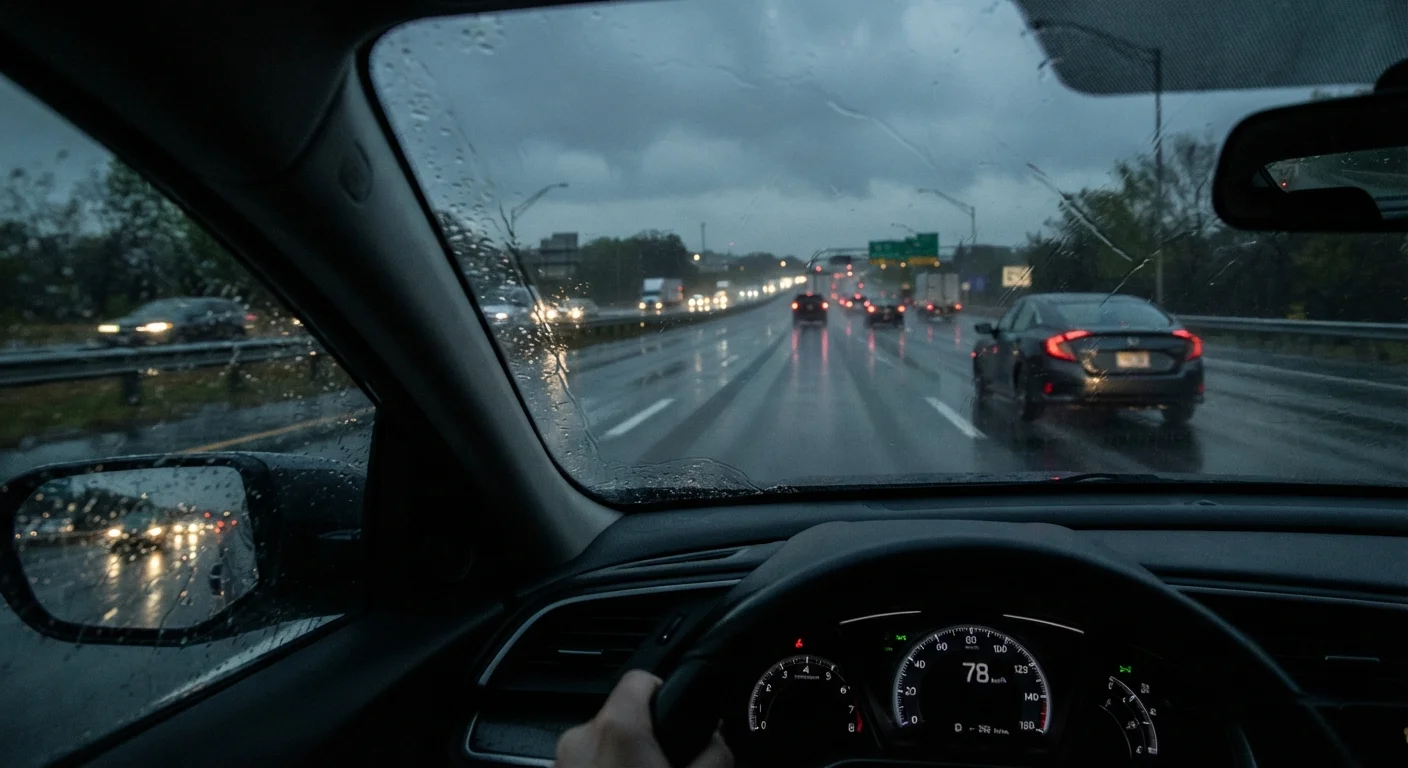
Adverse weather doesn't just reduce visibility - it fundamentally changes how your vehicle grips, steers, and stops. On dry asphalt, a well-maintained car can stop from 60 mph in roughly 130-140 feet. On wet pavement, that distance can increase by 50%. On packed snow or ice, stopping distances can more than triple. Speed limits are set for ideal conditions; in rain, snow, or ice, you must mentally recalibrate everything from following distance to how gently you press the brake pedal.
Understanding a few principles helps all the steps below make sense. First, traction - the friction between your tires and the road - is what lets you accelerate, steer, and stop. Any surface contamination (water, snow, ice) reduces available traction. Second, every driver input that demands traction - braking, accelerating, turning - competes with the others. Asking your tires to do two things at once on a slick surface is a reliable way to lose control. Smooth, deliberate inputs are the foundation of safe adverse-weather driving.
Before any winter trip, a quick vehicle check goes a long way. See our pre-trip safety walkthrough for the habits that catch problems before they become emergencies on the road.
What you will need
Step-by-Step: How to Adjust Your Driving in Rain, Snow, and Ice
The following steps apply broadly to rain, snow, and ice. Specific notes for each condition are called out within each step.
Reduce Your Speed Below the Posted Limit
Speed limits reflect dry, clear conditions. In rain, slow to at least 5-10 mph below the posted limit. In snow or slush, reduce speed by 30-40% or more depending on accumulation and road treatment. On ice, even 20 mph can be dangerously fast. If other traffic is moving considerably faster than feels safe, stay in the right lane and let them pass.
Extend Your Following Distance Significantly
The standard three-second following rule is for dry roads. In rain, increase to at least six seconds. In snow or ice, eight to ten seconds is a reasonable target. Count by choosing a fixed landmark and timing how long after the car ahead passes it before you do. A longer gap gives you more time to brake gently rather than abruptly.
Brake Early, Gently, and in a Straight Line
Begin braking much earlier than you would on dry roads. Apply steady, moderate pressure rather than stabbing the pedal. In vehicles with ABS (anti-lock braking system), you can press and hold firmly - the system will pulse the brakes automatically to prevent wheel lockup. In older vehicles without ABS, use gentle threshold braking (firm but not to lockup). Whenever possible, complete your braking before you reach a curve, then navigate the turn without additional braking.
Accelerate Gradually to Avoid Wheel Spin
Hard acceleration on slick roads spins your drive wheels, which kills traction and can cause the vehicle to fishtail. Press the accelerator slowly and steadily from a stop. If your traction control activates (most vehicles will illuminate a light on the dash), ease off the pedal slightly and let the system stabilize the wheels. On steep hills in snow, momentum is your friend - maintain a steady, modest speed rather than stopping and starting.
Steer Smoothly and Look Far Ahead
Jerky or sudden steering inputs on low-traction surfaces can cause skids just as surely as hard braking. Turn the wheel gradually and deliberately, especially through curves. Look well down the road - the farther ahead your eyes are focused, the more time you have to make smooth adjustments instead of reactive ones. This scanning habit applies in all weather, but it is especially critical when stopping distances are long. Learning to scan ahead is a skill that pays off on every drive.
Identify and Respect Black Ice
Black ice is a thin, nearly transparent layer of ice that makes pavement look merely wet or slightly shiny. It forms most commonly on bridges, overpasses, shaded road sections, and anywhere standing water freezes. When air temperatures are between 32°F and about 25°F, treat any shiny-looking road surface as potentially icy. If you notice your steering feels unusually light or your vehicle drifts without input, you are likely on black ice - ease off the accelerator, hold the wheel steady, and avoid any sudden inputs until you feel grip return.
Night Driving in Bad Weather Multiplies the Risk
Rain and snow at night combine two separate visibility challenges. Wet roads reflect oncoming headlights, causing glare, while precipitation reduces your own headlight range. Use low beams in fog and heavy snow - high beams reflect off precipitation and reduce, not improve, your sight distance. For a deeper look at darkness-specific risks, see our guide on night driving techniques.
Common Mistakes and When to Stay Home
Even experienced drivers fall into predictable traps in bad weather. Overconfidence in all-wheel drive (AWD) is one of the most common. AWD helps you accelerate on slippery surfaces, but it does not improve braking or cornering. Drivers in AWD vehicles sometimes push speeds that their stopping distance simply cannot support.
Another frequent error is over-correcting during a skid. If the rear of your vehicle slides, steer gently into the direction of the skid - meaning if the rear slides right, steer right - and avoid jabbing the brakes. Panic braking during a skid almost always makes it worse.
AWD and 4WD Do Not Improve Stopping Distance
All-wheel drive and four-wheel drive systems distribute power to multiple wheels, which helps with acceleration traction in slippery conditions. They do not shorten the distance it takes your vehicle to stop. Drivers in AWD or 4WD trucks and SUVs sometimes drive too fast for conditions precisely because their vehicle feels stable - until braking is required. Adjust your speed and following distance as if you were in any other vehicle.
Finally, know when the road is genuinely unsafe. If visibility drops below a few car lengths in blowing snow, or if roads have not been treated after freezing rain, delaying the trip is often the safest choice. No destination is worth an uncontrolled skid at highway speed. For a broader look at reading road conditions ahead of time, see how to spot hazards before they become emergencies. And to make sure your vehicle is mechanically ready for winter, seasonal car maintenance covers what to inspect before temperatures drop.