

| Batt (fiberglass) R-value | R-2.9 to R-3.8 per inch (U.S. Department of Energy) |
| Blown-in cellulose R-value | R-3.2 to R-3.8 per inch (U.S. Department of Energy) |
| Closed-cell spray foam R-value | R-6.0 to R-7.0 per inch (U.S. Department of Energy) |
| Polyiso rigid board R-value | R-6.0 to R-6.5 per inch (U.S. Department of Energy) |
| Best DIY option | Batt insulation |
| Best for existing finished walls | Blown-in (loose-fill) |
| Best for rim joists | Closed-cell spray foam |
| Best for under-slab applications | XPS or EPS rigid board |
The Four Main Insulation Types at a Glance
Insulation is not a one-size-fits-all product. The four most common types - batt (or blanket), blown-in (loose-fill), spray foam, and rigid board - each work best in specific locations and perform differently depending on climate, budget, and whether the space is accessible. Understanding where each one excels prevents costly re-dos and helps you have a more informed conversation with a contractor.
| Batt (fiberglass) R-value | R-2.9 to R-3.8 per inch (U.S. Department of Energy) |
| Blown-in cellulose R-value | R-3.2 to R-3.8 per inch (U.S. Department of Energy) |
| Closed-cell spray foam R-value | R-6.0 to R-7.0 per inch (U.S. Department of Energy) |
| Polyiso rigid board R-value | R-6.0 to R-6.5 per inch (U.S. Department of Energy) |
| Best DIY option | Batt insulation |
| Best for existing finished walls | Blown-in (loose-fill) |
| Best for rim joists | Closed-cell spray foam |
| Best for under-slab applications | XPS or EPS rigid board |
Before diving in, a quick note on R-value: it measures thermal resistance per inch of thickness. Higher R-value means better resistance to heat flow. The right target depends on your climate zone - the U.S. Department of Energy publishes zone-specific R-value recommendations worth consulting before you buy.
Batt Insulation: The Standard for Open Stud Bays
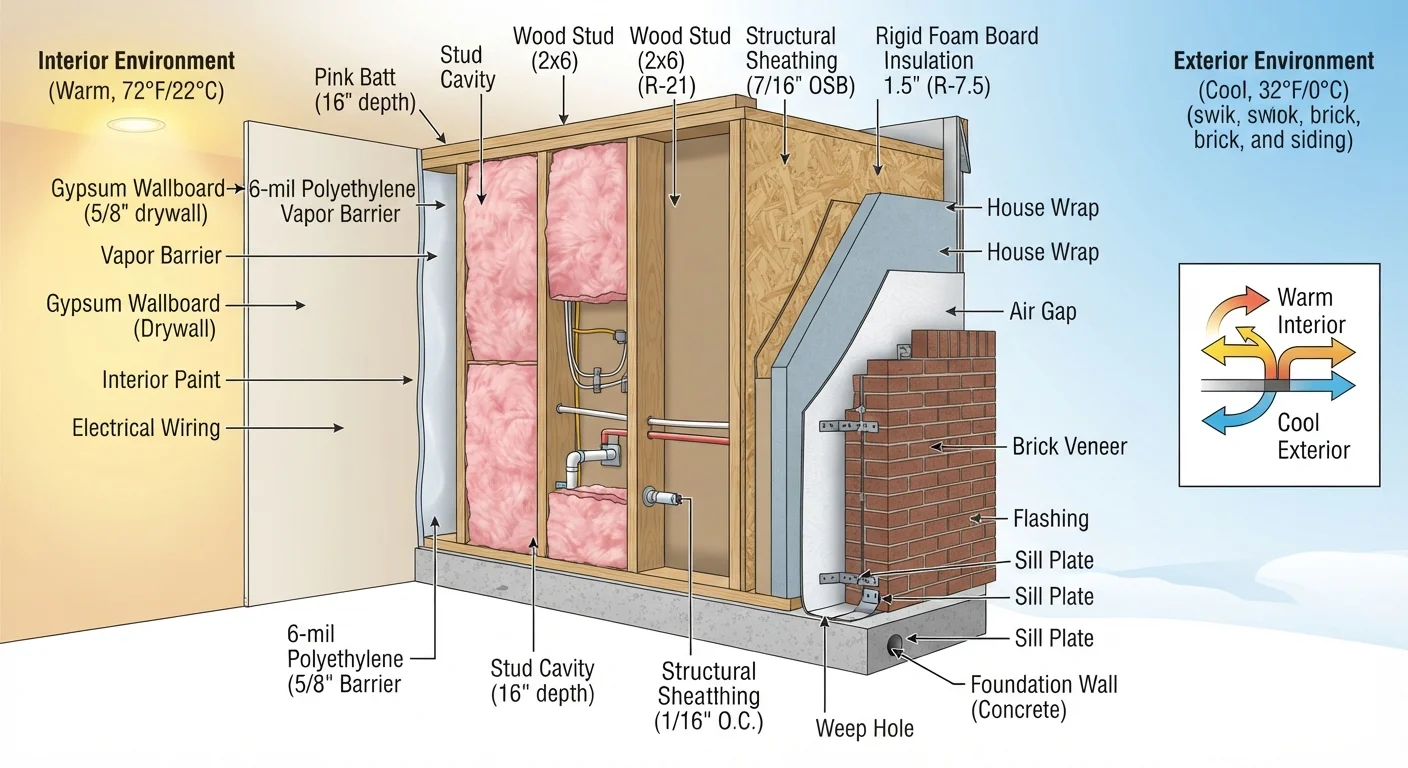
Batt insulation - usually fiberglass, but also available in mineral wool (rock wool) and cotton - comes in pre-cut panels sized to fit between standard 16" or 24" on-center studs and joists. It is the most DIY-accessible option and widely used in:
- Exterior wall cavities in new construction or gut renovations
- Floors above unheated crawl spaces
- Attic floor joists (unfaced batts laid between rafters)
Limitation: Batts must fit snugly to perform properly. Gaps, compression, or moisture contact reduce their effectiveness significantly. They do little to stop air movement on their own, so pairing them with a proper air barrier is important. Mineral wool batts are denser and more fire- and moisture-resistant than fiberglass, making them a solid choice for garages, basement walls, and fire-separation assemblies.
Blown-In and Spray Foam: When Access Is Limited
Blown-in (loose-fill) insulation - typically cellulose or fiberglass - is pneumatically blown into closed cavities, existing attic floors, and hard-to-reach spaces. It's frequently the go-to for:
- Existing finished walls (via small drilled holes)
- Attic floors where depth is unlimited
- Irregularly shaped spaces where batts won't fit cleanly
Cellulose is made from recycled paper and is treated for fire resistance. It conforms well to obstructions and settles slightly over time, so installers typically account for this by over-filling.
Spray polyurethane foam (SPF) comes in two forms. Open-cell foam is softer, vapor-permeable, and less expensive - useful for interior walls and cathedral ceilings where some drying potential is desirable. Closed-cell foam is dense, rigid, and doubles as a vapor retarder, making it appropriate for:
- Rim joists and band joists
- Roof decking underside (unvented attic assemblies)
- Below-grade and exterior applications
Spray foam installation requires professional equipment and appropriate respiratory protection. DIY canned foam is available for small gaps and penetrations, but full-area SPF is contractor work. Always confirm that your installer uses low-GWP (global warming potential) blowing agents, as older formulations carry environmental concerns.
Spray Foam and Permits: Check First
Some jurisdictions require a permit for spray foam insulation in certain assemblies, particularly unvented roof decks and below-grade applications. Installation in those locations also affects moisture dynamics in ways that vary significantly by climate. Always consult a licensed insulation contractor or building official before specifying spray foam in a complex assembly.
Rigid Foam Board: Thin Layers With Serious Performance
Rigid foam board comes in three varieties - EPS, XPS, and polyisocyanurate (polyiso) - each with different R-values per inch and moisture behaviors. Common applications include:
- Exterior continuous insulation over sheathing (reduces thermal bridging through studs)
- Basement walls (interior or exterior)
- Under slab-on-grade concrete floors
- Behind furring strips in unvented attic assemblies
Polyiso has the highest R-value per inch (roughly R-6 to R-6.5), making it efficient where thickness is constrained. XPS performs well in below-grade and wet conditions due to low water absorption. EPS is generally the most affordable and performs predictably in a range of temperatures.
Critical note: Most rigid foam boards are combustible and require a thermal barrier (typically ½" drywall) when installed on interior surfaces. Verify local building code requirements before leaving foam exposed. See our common insulation mistakes guide for more on code compliance pitfalls.
For a broader look at protecting your home before cold weather sets in, the pre-winter home checklist covers insulation alongside other key seasonal tasks. And if you're addressing drafts, pairing insulation work with the right sealing strategy matters - see caulking vs. weatherstripping to understand which seal goes where.
R-Value
A measure of an insulation material's resistance to heat flow. Higher R-values indicate greater thermal resistance. Target R-values vary by climate zone and building assembly type.
Thermal bridging
Heat transfer through a more conductive material - such as a wood or metal stud - that bypasses insulation in the cavity. Continuous exterior insulation is one way to reduce it.
Vapor retarder
A material that slows the movement of water vapor through walls or ceilings. Closed-cell spray foam acts as a vapor retarder; the appropriate placement depends on climate and assembly design.
Air barrier
A continuous layer of material that resists air movement into or out of the building envelope. Insulation alone does not stop air infiltration - an air barrier must be installed separately or chosen for that dual purpose.
Open-cell foam
A softer, less dense spray foam with a lower R-value per inch (roughly R-3.5-3.8) that allows some vapor transmission. Used in interior applications where drying potential is desired.
Closed-cell foam
A dense, rigid spray foam with a higher R-value per inch (roughly R-6-7) that resists moisture and acts as a vapor retarder. Commonly used in below-grade and exterior applications.