

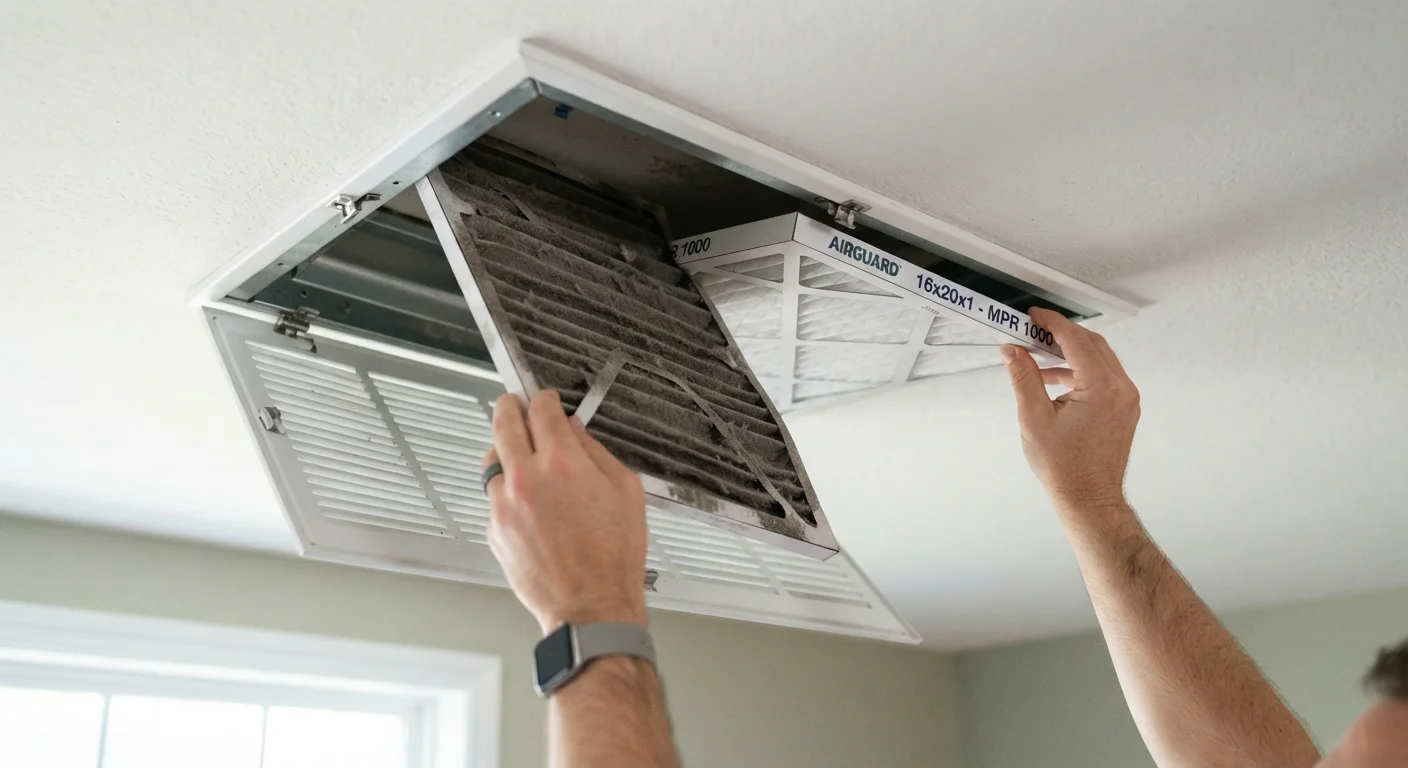
Key Takeaways
Why HVAC Filter Myths Persist
HVAC filters are one of the easiest maintenance items in any home - a simple swap that takes under five minutes. Yet misinformation about how they work, how often to replace them, and which type to use remains surprisingly widespread. These myths don't just lead to wasted money; they can quietly degrade indoor air quality and shorten the life of an expensive system.
Part of the problem is that filter packaging and marketing language can be misleading. Terms like "ultra-allergen" or "maximum filtration" suggest that higher is always better, when the reality depends heavily on your specific HVAC equipment. Understanding what filters actually do - and what they don't - helps you make smarter, cost-effective decisions. For a broader look at how home systems interact, see our guide on what a smart thermostat actually does.
Common HVAC Filter Myths - Corrected
The following myth-and-fact pairs address the most consequential misconceptions homeowners encounter. Each one has real consequences for comfort, air quality, and your wallet.
Myth
A thicker, higher-MERV filter always means better air quality and a healthier home.
Fact
A filter with a MERV rating too high for your system restricts airflow, causing strain that can lead to overheating and breakdowns.
MERV (Minimum Efficiency Reporting Value) measures how effectively a filter captures particles - but higher ratings also mean denser filter media that air must push through. If your HVAC blower motor isn't rated for the added resistance, it works harder to maintain airflow. Over time, this can cause the heat exchanger to overheat or the evaporator coil to freeze. Always check your system's documentation or consult an HVAC technician before upgrading to a significantly higher MERV rating.
Myth
You only need to replace your filter every three months, no matter what.
Fact
Replacement frequency depends on filter type, household size, pets, and air quality conditions - not a fixed calendar interval.
A one-inch fiberglass filter in a home with two shedding dogs may need replacement every 30 days. The same filter in a lightly occupied, pet-free home might last 60-90 days. Thicker pleated filters (3-5 inches) can genuinely last longer, but even those aren't immune to accelerated loading. The most reliable approach: visually check your filter monthly and replace it when it's visibly grey and loaded with debris, regardless of how much time has passed.
Myth
Running your HVAC without a filter briefly is harmless - it just cleans itself out.
Fact
Even short unfiltered operation allows dust and debris to accumulate on coils, fans, and ductwork, causing lasting damage.
The filter protects not just the air you breathe, but the internal components of your system. Dust that bypasses the filter coats the evaporator coil, reducing its ability to transfer heat. It also accumulates on the blower wheel, throwing it out of balance over time. There is no safe window for operating without a filter - even a single run cycle can deposit debris that requires professional cleaning to address fully.
Myth
A clean-looking filter is a good filter - you don't need to replace it until it's visibly dirty.
Fact
Some filter types - including certain electrostatic filters - degrade in efficiency over time even without appearing clogged.
Electrostatic filters lose their charge-based particle attraction gradually, meaning they may look clean while performing far below their rated efficiency. Fiberglass filters, conversely, can become so densely loaded with fine particles that airflow drops significantly before they look dramatically grey. Using a simple pressure gauge across the filter slot - available at most hardware stores - gives a more objective read on when replacement is actually needed. When in doubt, follow the manufacturer's stated service interval.
Myth
More expensive filters mean your HVAC system will run more efficiently and use less energy.
Fact
High-efficiency filters can actually increase energy use if they restrict airflow beyond your system's design tolerance.
It's counterintuitive, but a premium filter with a MERV rating your system can't support may cause your equipment to run longer cycles or consume more electricity trying to push air through the resistance. Efficiency gains come from matching the filter to the system, keeping it replaced on schedule, and ensuring overall system maintenance - not from simply buying the most expensive option on the shelf.
Never Skip the Filter When Restarting Your System
If your filter is unavailable during a replacement cycle, do not run your HVAC without one in place. Even a single heating or cooling cycle without a filter can pull enough debris onto the evaporator coil or blower wheel to require professional servicing. Keep one spare filter on hand so you're never caught without a replacement. This single habit prevents some of the most avoidable HVAC repair costs homeowners face.
Choosing the Right Filter for Your System
Once you've cleared up the myths, the practical question is: what filter should you actually use? The answer begins with your HVAC system's manual or the manufacturer's specifications. Most residential systems are designed around filters in the MERV 8-11 range. Using a filter outside that range - either too low or too high - compromises performance.
Household conditions matter as much as equipment specs. Homes with multiple pets, occupants with allergies, or recent renovation work may benefit from more frequent changes or a slightly higher MERV rating - provided the system can handle it. Single-occupant homes with no pets may be able to stretch replacement intervals safely.
Don't Assume One Filter Type Fits All Systems
HVAC equipment varies significantly - a filter that works well in one home may be the wrong choice for a different system, even in a similar house. Before switching to a thicker filter or a significantly higher MERV rating, verify compatibility with your equipment manual or speak with a licensed HVAC technician. Installing an incompatible filter can void manufacturer warranties and cause damage that's not covered under a standard home warranty policy.
5-15%
Energy waste from a clogged filter
The U.S. Department of Energy estimates that a dirty or clogged HVAC filter can increase energy consumption by 5-15% compared to a clean, properly matched filter.
MERV 8-11
Recommended range for most homes
Most residential HVAC systems are engineered to operate optimally with filters in the MERV 8-11 range, balancing particle capture with adequate airflow.
Home maintenance decisions ripple in unexpected directions. Just as insulation errors can silently inflate energy bills, filter neglect compounds costs over time. Our article on what homeowners get wrong about insulation covers similar hidden-cost territory worth reviewing.