

Key Takeaways
Start here
How Your Home's Plumbing System Works
Next
Key Components You Should Be Able to Locate
Then
Routine Maintenance Any Homeowner Can Do
When you're ready
When to Call a Licensed Plumber
Take it further
Preventing the Most Common Plumbing Problems
How Your Home's Plumbing System Works
Residential plumbing is actually two systems operating in parallel. The supply system delivers pressurized fresh water from a municipal main or private well to every faucet, appliance, and fixture in your home. The drain-waste-vent (DWV) system uses gravity to carry used water and waste away to a sewer line or septic tank.
These systems never mix. Supply pipes carry water under pressure - typically 40-80 psi - while drain pipes rely on slope and venting to move waste efficiently. Vent pipes, which usually exit through your roof, allow air into the drain system so water flows freely and sewer gases don't back up into living spaces.
Water also splits into two lines inside your home: a cold-water line that feeds directly to fixtures, and a hot-water line that routes through your water heater first. Understanding this layout helps you trace problems back to their source before deciding whether to act yourself or call a professional.
Supply system
The network of pressurized pipes that brings clean, fresh water from a municipal main or well into your home and delivers it to every fixture and appliance.
Drain-waste-vent (DWV) system
The set of pipes that carries used water and waste away from fixtures using gravity, while vent pipes allow air in to keep the flow moving and prevent sewer gases from entering the home.
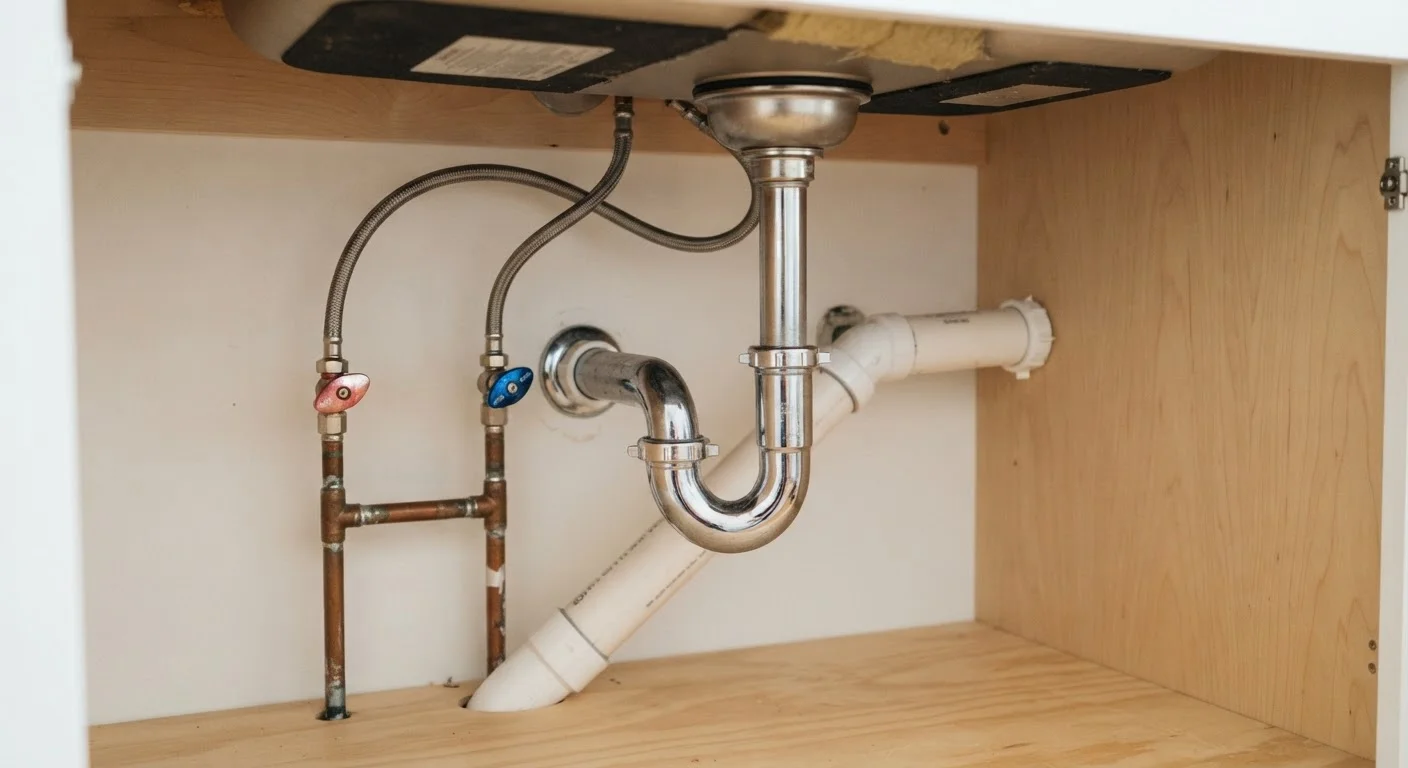
P-trap
The curved section of pipe directly under a sink or fixture that holds a small amount of water to block sewer gases from rising up through the drain opening.
Pressure-reducing valve (PRV)
A device installed on the main water supply line that lowers incoming municipal water pressure to a safe, consistent level for household use.
Shut-off valve
A valve that stops water flow to either the entire house (main shut-off) or a single fixture, used during repairs or emergencies to prevent further water damage.
Cleanout access
A capped opening in the main drain line that allows plumbers to insert tools or a camera directly into the pipe to clear blockages or inspect the line.
Key Components You Should Be Able to Locate
You don't need to know every inch of your plumbing, but a few components are worth finding before you ever have an emergency.
- Main shut-off valve: Closes the water supply to the entire house. In a burst pipe or major leak scenario, reaching this valve within seconds matters.
- Individual fixture shut-offs: Small valves behind toilets and under sinks let you isolate one fixture without cutting water to the whole house.
- Water heater: Note its age (usually on the label), its shut-off valve, and whether it's a tank or tankless model. Most tank heaters have a lifespan of 8-12 years.
- Cleanout access: A capped pipe near your foundation or in the yard that gives plumbers direct access to the main drain line for clearing blockages.
- Pressure-reducing valve (PRV): Found on the main line in homes connected to municipal water. It keeps household pressure at a safe level and typically lasts 10-15 years.
If a repair ever escalates, knowing these locations helps a plumber work faster - and helps you limit damage in the minutes before they arrive. See our seasonal maintenance checklist for a structured way to inspect these components each year.
Routine Maintenance Any Homeowner Can Do
Most plumbing failures don't happen without warning - they develop slowly from neglected maintenance. These tasks are genuinely DIY-friendly and require only basic tools.
- Check under sinks monthly. Look for moisture, discoloration on the cabinet floor, or corrosion around supply lines. Catching a slow drip early prevents floor damage and mold.
- Clean aerators and showerheads. Unscrew them, soak in white vinegar for an hour, and rinse. Mineral buildup is the most common cause of reduced water flow from a single fixture.
- Test every shut-off valve once a year. Turn them off and back on. Valves that haven't moved in years can seize, leaving you unable to isolate a leak quickly.
- Flush your water heater's drain valve annually. This removes sediment that reduces efficiency and shortens the heater's life. Consult your heater's manual for the correct procedure.
- Pour water into infrequently used drains. P-traps - the curved pipe sections under fixtures - dry out and let sewer gas in. Running water periodically keeps them sealed.
A Small Leak Is Never 'Just a Small Leak'
A faucet dripping once per second wastes roughly 3,000 gallons of water per year, according to EPA estimates. Beyond the water bill impact, even minor leaks under sinks can saturate cabinet flooring and lead to mold growth within days. Address drips promptly - most faucet washers and O-rings cost only a few dollars to replace.
For a broader look at how plumbing fits into your overall home upkeep, the DIY home repairs guide helps you assess which tasks to take on yourself and which to leave to professionals.
When to Call a Licensed Plumber
Knowing your limits is as important as knowing how to maintain your system. Some plumbing situations are not DIY territory - not because they're necessarily complex, but because doing them incorrectly can cause serious property damage, health hazards, or code violations.
Always hire a licensed plumber for:
- Any work on the main sewer line or septic system
- Water heater installation or replacement (many localities require a permit)
- Adding or relocating supply or drain lines
- Fixing a slab leak (a leak under your home's concrete foundation)
- Persistent low pressure or recurring drain backups that suggest a systemic problem
- Any work involving gas-fired water heating appliances
Gas-Adjacent Plumbing Requires Extra Caution
Water heaters and boilers that run on natural gas involve both plumbing and gas connections. Never attempt to connect, disconnect, or modify gas supply lines yourself. Gas work requires a licensed professional in virtually every U.S. jurisdiction, and improper connections carry serious risks including fire and carbon monoxide exposure. If you smell gas near any appliance, leave the area and call your gas utility's emergency line immediately.
It's also worth knowing the permit landscape in your area. Most structural plumbing changes require a permit and inspection. Unpermitted work can complicate home sales and insurance claims. When in doubt, contact your local building department. If you're weighing how to fund a significant repair or upgrade, our overview of home improvement financing options explains how different loan types work without pushing any particular product.
Preventing the Most Common Plumbing Problems
The most expensive plumbing repairs are almost always preventable. These habits make a meaningful difference over time.
- Don't use drain cleaners as a first resort.
- Liquid chemical drain cleaners can corrode older pipes with repeated use. A plunger or a manual drain snake handles most clogs without the risk.
- Keep grease out of kitchen drains.
- Grease solidifies as it cools, coating pipe walls and eventually blocking them. Collect it in a container and dispose of it in the trash.
- Install mesh drain covers in showers and tubs.
- Hair is the leading cause of bathroom drain clogs. A simple screen catches it before it reaches the trap.
- Insulate pipes in unheated spaces.
- Pipes in garages, crawl spaces, or exterior walls are vulnerable to freezing. Foam pipe insulation is inexpensive and straightforward to install.
- Know the signs of hidden water damage.
- Stains on ceilings, warped floors, and musty smells often appear before a leak becomes visible. Our guide on spotting water damage before it spreads covers what to look for and what to do next.
EPA WaterSense Program
The U.S. Environmental Protection Agency's WaterSense program provides free guidance on water-efficient fixtures, leak detection, and household water conservation - useful context for understanding how your plumbing choices affect water use.
Local Building Department
Your county or municipal building department is the authoritative source for local plumbing permit requirements, code standards, and licensed contractor verification - all free to access and essential before starting any plumbing project beyond basic maintenance.
Home Maintenance Seasonal Checklist
A structured quarter-by-quarter checklist to keep plumbing and other home systems in good condition year-round, helping you catch small problems before they become expensive repairs.
This article is for general informational and educational purposes only. Plumbing codes, permit requirements, and safety regulations vary by locality. Always verify requirements with your local building department and consult a licensed plumber for work beyond basic maintenance.