

Key Takeaways
Option A
Collision Coverage
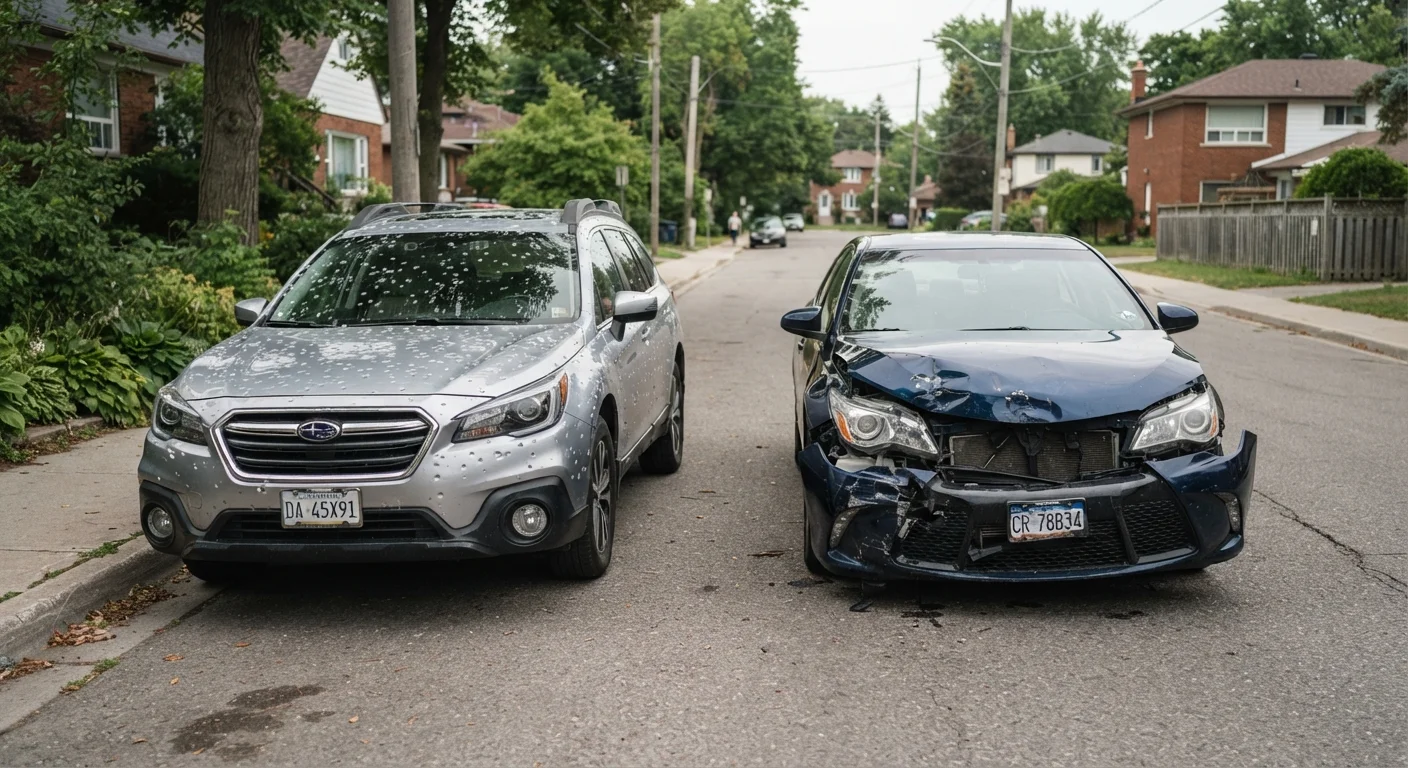
The coverage that steps in when your car hits something - or something hits it.
Best for: Drivers who want protection for damage caused by accidents involving another vehicle or a stationary object.
Option B
Comprehensive Coverage
The coverage that handles almost everything else - weather, theft, and beyond.
Best for: Drivers who want protection against non-collision losses like theft, fire, flooding, or animal strikes.
If you drive a financed or leased vehicle
Both Collision and Comprehensive Coverage
Most lenders and lease agreements contractually require both coverages. Dropping either typically violates your financing terms.
If you own an older car outright with low market value
Neither - liability only may suffice
When a vehicle's actual cash value is low, the payout from either coverage may not justify the combined premium and deductible cost.
If you live in an area prone to severe weather, flooding, or high vehicle theft
Comprehensive Coverage
Comprehensive is the only coverage that addresses losses from hail, floods, wildfires, and theft - risks collision coverage ignores entirely.
If you frequently drive in heavy traffic or have a long daily commute
Collision Coverage
Higher exposure to traffic increases accident risk, making collision protection more likely to pay off over time.
If you want the broadest protection for a newer or high-value vehicle
Both Collision and Comprehensive Coverage
A newer vehicle has significant cash value to protect, and the cost of either coverage relative to potential loss is generally more favorable.
What Each Coverage Actually Protects
Collision coverage pays for damage to your vehicle resulting from a collision - meaning your car hits another vehicle, a car hits yours, or you strike a stationary object like a guardrail, telephone pole, or parking structure. It applies regardless of who is at fault. If you're in an accident and your car sustains $5,000 in damage, collision coverage pays the repair bill minus your deductible.
Comprehensive coverage handles physical damage caused by events that aren't collisions. Common triggers include theft, vandalism, hailstorms, floods, fire, falling objects (such as tree branches), and striking an animal - most famously, deer. The coverage name can be misleading: it's comprehensive only in the sense that it covers a wide range of non-collision perils, not that it covers everything.
One way to think about the distinction: collision coverage is about what happens when your car is moving and makes contact with something. Comprehensive is about what the world does to your car while it's sitting in a lot or being driven under normal conditions.
For a broader look at how these coverages fit within a full auto policy, see our plain-language policy breakdown.
| Criterion | Collision Coverage | Comprehensive Coverage |
|---|---|---|
| What triggers a claim | Crash with vehicle or object | Theft, weather, fire, animals, vandalism |
| Fault requirement | Pays regardless of fault | Fault not applicable - event-based |
| Legally required | No (lenders may require) | No (lenders may require) |
| Deductible applies | Yes, per claim | Yes, per claim |
| Maximum payout | Actual cash value of vehicle | Actual cash value of vehicle |
| Covers theft | No | Yes |
| Covers flood or hail | No | Yes |
| Covers hitting a deer | No | Yes |
| Typical deductible range | $250-$1,500 | $100-$1,500 |
Deductibles, Payouts, and the Actual Cash Value Limit
Both collision and comprehensive policies operate on a deductible - the amount you pay out of pocket before your insurer covers the rest. Deductibles are set per claim, not annually, and you typically choose your deductible amount when you purchase the policy. Common deductible levels range from $250 to $1,500. A higher deductible lowers your premium but increases your out-of-pocket exposure after a loss.
One critical limit applies to both coverages: neither pays more than your vehicle's actual cash value (ACV) - essentially its fair market value at the time of the loss, accounting for depreciation. If your car is worth $9,000 and sustains $12,000 in damage, your insurer will likely total the vehicle and pay you the ACV minus your deductible, not the full repair cost.
This is where gap insurance becomes relevant for drivers who owe more on their loan than the car is currently worth. For more on that scenario, see how gap insurance works and who needs it.
~6%
Share of insured vehicles with comprehensive-only (no collision)
Industry data from the Insurance Information Institute indicates a small share of drivers carry comprehensive without collision, often on older vehicles.
$3,900+
Average collision claim cost
The Insurance Research Council has tracked average collision claim severity rising steadily due to vehicle repair complexity and parts costs.
1 in 88
Odds of a vehicle theft claim in a year
The Insurance Information Institute estimates roughly one in 88 insured vehicles files a theft-related comprehensive claim annually.
When Lenders Require Both - and When You Can Drop One
State laws don't mandate collision or comprehensive coverage - only liability coverage is legally required to register and drive a vehicle in most states. However, if you're financing or leasing a vehicle, your lender or lessor almost certainly requires both. That requirement exists because the lender has a financial interest in the vehicle until the loan is paid off.
Once you own a vehicle outright, the decision is yours. The practical question becomes whether the coverage cost is proportionate to the vehicle's value. A rough rule of thumb used by many financial educators: if your annual premium for both coverages combined exceeds 10% of your vehicle's market value, the math may not favor keeping them. That said, this is a general heuristic, not a personal recommendation - your risk tolerance, savings, and driving situation all factor in.
Dropping coverage to reduce costs is one of the more consequential decisions a driver can make. Some common auto insurance cost-cutting choices tend to backfire when drivers need coverage most - it's worth reviewing what's actually at stake before adjusting your policy.
If you're weighing how collision and comprehensive fit into the broader liability-versus-full-coverage question, this overview of liability vs. full coverage explains the full structure.
Comprehensive Doesn't Cover Everything
Despite its name, comprehensive coverage excludes certain losses. Mechanical breakdown, normal wear and tear, and damage to personal belongings inside the vehicle are typically not covered. Some policies also exclude flood damage unless specifically listed - always check your policy's named perils and exclusions before assuming coverage applies.
Shopping for the Right Deductible and Coverage Combination
When setting up or reviewing your policy, it's worth noting that collision and comprehensive deductibles can often be set independently. Some drivers choose a higher collision deductible - because collision claims tend to involve driver decision-making - and a lower comprehensive deductible, since those losses (like hail or theft) are entirely outside the driver's control.
Premium costs vary based on your vehicle, location, driving history, and insurer. Before comparing quotes, it helps to know which factors carry the most weight and what coverage details to look beyond the premium price. A practical checklist for shopping auto insurance walks through what to evaluate when reviewing any policy.
This article is for general informational purposes only and does not constitute personalized insurance, financial, or legal advice. Coverage terms, exclusions, and costs vary by insurer, policy, and state. Always read your policy documents carefully and consult a licensed insurance agent or adviser for guidance specific to your situation.