

Key Takeaways
Gap Insurance
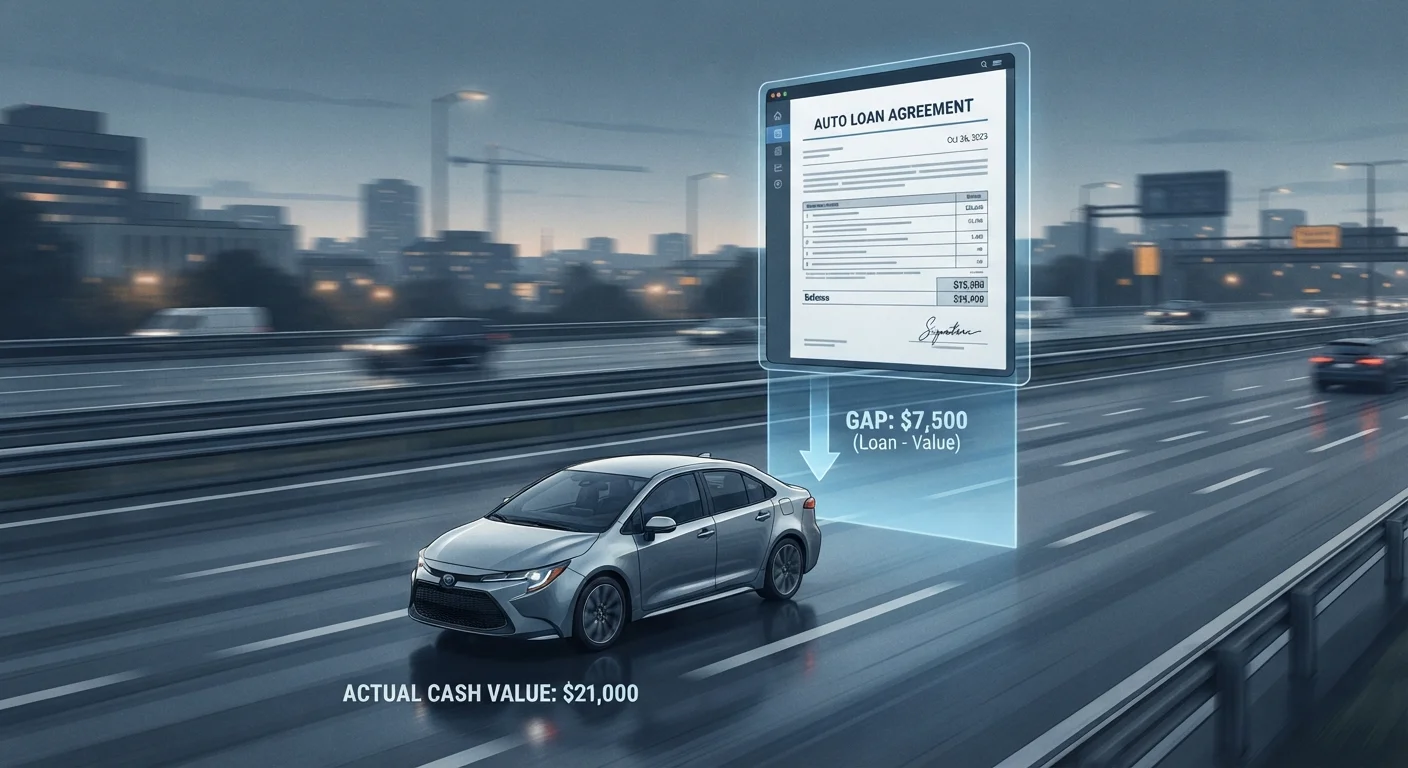
Gap insurance - short for Guaranteed Asset Protection - is an optional auto insurance add-on that pays the difference between what your car is worth at the time of a total loss and what you still owe on your loan or lease. Standard collision and comprehensive coverage only reimburse the vehicle's actual cash value, which may be significantly less than your remaining balance. Gap coverage bridges that financial shortfall so you're not left paying off a car you can no longer drive.
Actual cash value (ACV) is calculated by adjusting the vehicle's original price for depreciation, age, mileage, and condition - not what you paid or what you owe.
The Problem Gap Insurance Solves
The moment you drive a new vehicle off the lot, depreciation begins - fast. A new car can lose a significant portion of its value within the first year alone, while your loan balance decreases much more slowly, especially in the early months when most payments go toward interest.
If your vehicle is totaled in an accident or stolen and unrecovered, your standard auto insurance pays out its actual cash value (ACV) - a depreciated figure that may fall well short of what you still owe the lender. That remaining balance is your responsibility regardless of the payout. Gap insurance exists to cover exactly that shortfall.
To understand how gap coverage fits alongside your other protections, it helps to review the coverage types on your auto insurance declaration page.
~20%
Average first-year vehicle depreciation
Industry estimates consistently show new vehicles can lose around 20% of their value within the first 12 months of ownership.
~72 months
Average new car loan term in the US
Experian's State of the Automotive Finance Market reports have tracked average new vehicle loan terms extending well beyond 60 months, increasing the window of negative equity exposure.
Millions
US drivers currently upside-down on auto loans
Reports from automotive finance analysts have consistently found a substantial share of financed vehicle owners owe more than their car is currently worth.
How Gap Insurance Actually Works
Here's a straightforward scenario: You financed a $35,000 vehicle with a small down payment. A year later, the car is totaled. Your insurer determines the ACV is $27,000. Your loan payoff, however, is still $31,000. Without gap insurance, you owe your lender $4,000 out of pocket - for a car you no longer have. With gap coverage, that $4,000 difference is paid.
Gap insurance does not cover:
- Mechanical repairs or partial damage
- Past-due loan payments or fees rolled into your balance
- Extended warranties or add-ons included in your financed amount
- Your collision or comprehensive deductible (in most standard policies)
It functions only as a supplement to existing collision or comprehensive coverage - not as a replacement. For a deeper look at those foundational coverages, see collision vs. comprehensive coverage.
Check Your Loan Balance vs. Vehicle Value Periodically
Use publicly available vehicle valuation tools (such as those provided by major automotive research sites) to compare your car's current market value against your remaining loan payoff. When your balance drops below the vehicle's value, you've crossed out of gap territory and may be able to drop that coverage and reduce your premium.
Who Actually Needs It - and Who Probably Doesn't
Gap insurance matters most in situations where the risk of being "upside down" on a loan is high. Consider carrying it if you:
- Made a down payment of less than 20%
- Financed over 60 months or longer
- Purchased a vehicle model known for rapid depreciation
- Rolled negative equity from a previous vehicle into your new loan
- Are leasing (many lease agreements require gap coverage)
On the other hand, gap insurance is likely unnecessary if you paid cash for the vehicle, made a substantial down payment, or your loan balance is already close to or below the car's current market value.
As you evaluate your overall auto coverage structure, understanding liability vs. full coverage can help you see where gap fits into the bigger picture.
Where to Get It and What to Watch Out For
Gap insurance is available from three main sources: your auto insurer, the dealership at the time of purchase, or a standalone third-party provider. Dealership-sourced gap coverage is often the most expensive option - and when it's rolled into your loan, you pay interest on it over the life of the financing.
Your auto insurer may offer a comparable product - sometimes called loan/lease payoff coverage - at a lower standalone premium. Policies and terms vary, so compare what's covered, any payout caps, and whether your deductible is included before deciding.
Once your loan balance dips below the car's current market value, gap insurance is no longer serving its purpose and can be canceled. Regularly checking your loan payoff amount against current vehicle valuations is a straightforward way to track when that crossover happens.
This article is for general informational purposes only and is not personalized insurance or financial advice. Coverage terms, availability, and pricing vary by insurer, state, and individual circumstances. Consult a licensed insurance agent or financial professional before making decisions about your specific coverage needs.