

Key Takeaways
Personal Budget
A personal budget is a plan that maps out how much money you expect to receive and how you intend to spend or save it over a set period - usually a month. It isn't a punishment or a rigid set of rules; it's a tool that shows you, in concrete terms, where your money comes from and where it goes. Think of it as a financial snapshot that helps you make intentional choices rather than reactive ones.
In personal finance, a budget is sometimes called a "spending plan" to emphasize its forward-looking, intentional nature - as distinct from an after-the-fact record of transactions, which is more accurately called an expense log or cash-flow statement.
The Most Common Misunderstanding About Budgets
Ask most people what a budget is and they'll describe it as a constraint - a list of things they can't buy, a financial diet that strips out anything enjoyable. That framing is one of the main reasons so many Americans never start one. If a budget means deprivation, why bother?
But that definition is wrong in an important way. A personal budget isn't a ban on spending. It's a plan for spending - a deliberate decision about where your money goes before it quietly disappears on its own. The difference is significant. Without a budget, money tends to leave your account in ways you don't fully track or choose. With one, every dollar has a destination you've consciously picked.
This misconception is so widespread that it has its own consequences. Common budgeting myths - like the idea that budgets only work for people who earn more - actively discourage people from taking a step that could genuinely improve their financial situation.
Reframe Your Budget as a Spending Plan
If the word "budget" feels restrictive, try replacing it with "spending plan" in your own thinking. The mechanics are identical, but the framing shifts from what you can't do to what you're actively choosing to do with your money. Small language shifts can make a real difference in whether you stick with the habit.
What a Budget Actually Contains
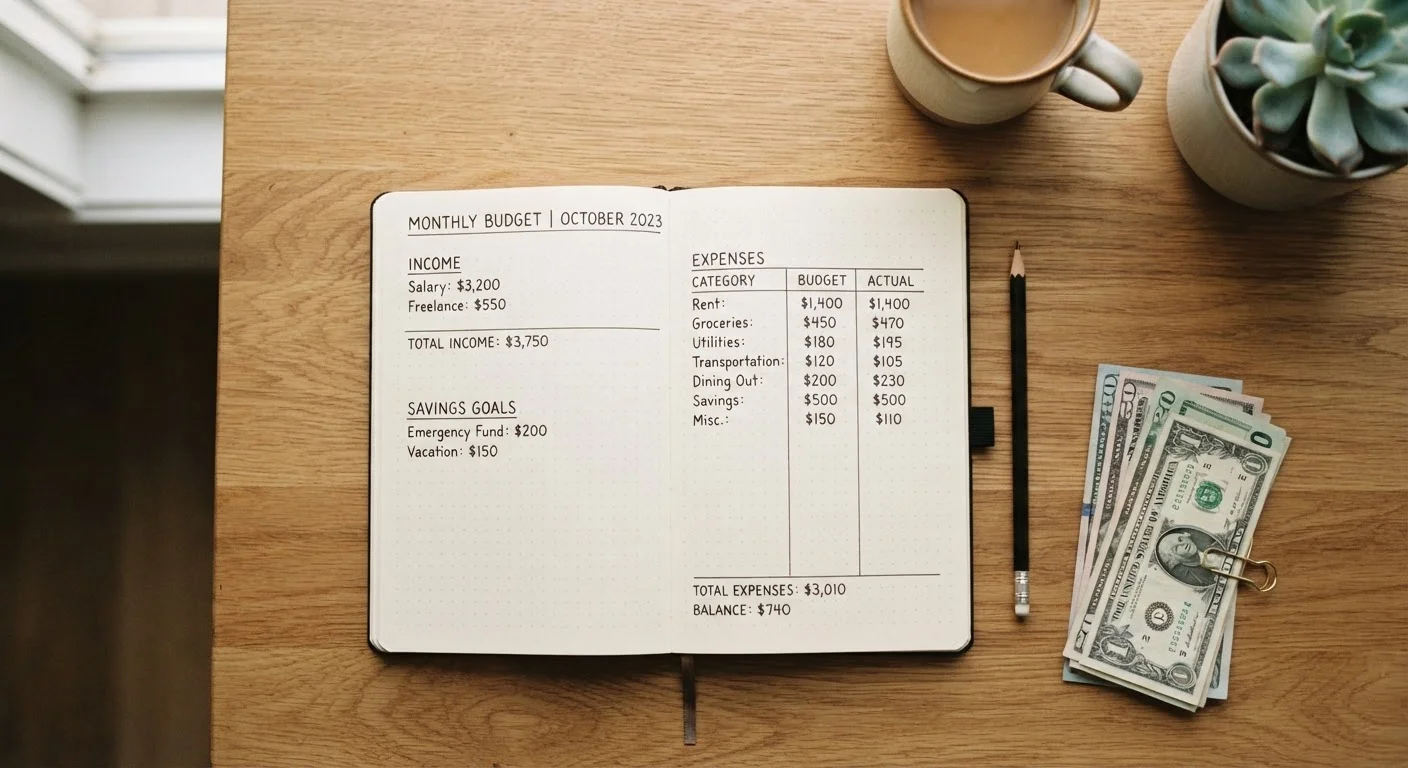
At its core, a personal budget is built from two things: income and expenses. Income is every source of money coming in - a paycheck, freelance work, a side gig, government benefits. Expenses are everything going out - rent, groceries, utilities, subscriptions, debt payments, and yes, coffee and takeout.
The gap between those two numbers is what you have available to save, invest, or pay down debt. A budget makes that gap visible, which is its primary function. Most people have a vague sense of whether they're spending more than they earn, but a budget makes it precise.
Expenses in a budget are typically divided into two categories:
- Fixed expenses - costs that stay the same each month, like rent or a car payment.
- Variable expenses - costs that fluctuate, like groceries, gas, or entertainment.
There's also a third category many budgets overlook: irregular expenses - things like annual insurance premiums, holiday gifts, or car repairs that don't show up monthly but are entirely predictable. Accounting for these is what separates a realistic budget from one that looks fine on paper but keeps falling short. For a plain explanation of these and other terms, see common budgeting terms defined simply.
~33%
Americans who keep a detailed household budget
Gallup polling has consistently found that fewer than one in three Americans report maintaining a detailed household budget.
$1,000
Emergency savings threshold many households can't meet
Multiple years of Federal Reserve surveys on household economics have found a significant share of U.S. adults would struggle to cover an unexpected $1,000 expense without borrowing.
Why Intention Is the Real Point
The most useful way to think about a budget isn't as a restriction but as a statement of priorities. When you write down how you plan to use your money, you're making an active choice about what matters to you. Someone who values travel can budget for it. Someone paying down debt can direct extra money there on purpose, rather than by accident.
This reframe matters because it changes the emotional relationship people have with budgeting. It shifts from "I can't afford that" - a feeling of scarcity - to "I'm choosing to spend here instead of there" - a feeling of control.
“A budget is telling your money where to go instead of wondering where it went.”
— John C. Maxwell, Author and leadership speaker widely cited in personal finance education
That sense of control is, according to most financial educators, the real benefit of budgeting. Not the spreadsheet. Not the math. The clarity that comes from knowing, at any given point in the month, roughly where you stand.
If you've never built one before, a plain-English walkthrough for first-time budgeters can take you through the process without the financial jargon. And once you have one in place, understanding why budgets fall apart in real life can help you make it last.
This article is for general informational and educational purposes only and does not constitute personalized financial advice. For guidance tailored to your specific situation, consult a qualified financial professional.