

Key Takeaways
The 50/30/20 Budget Rule
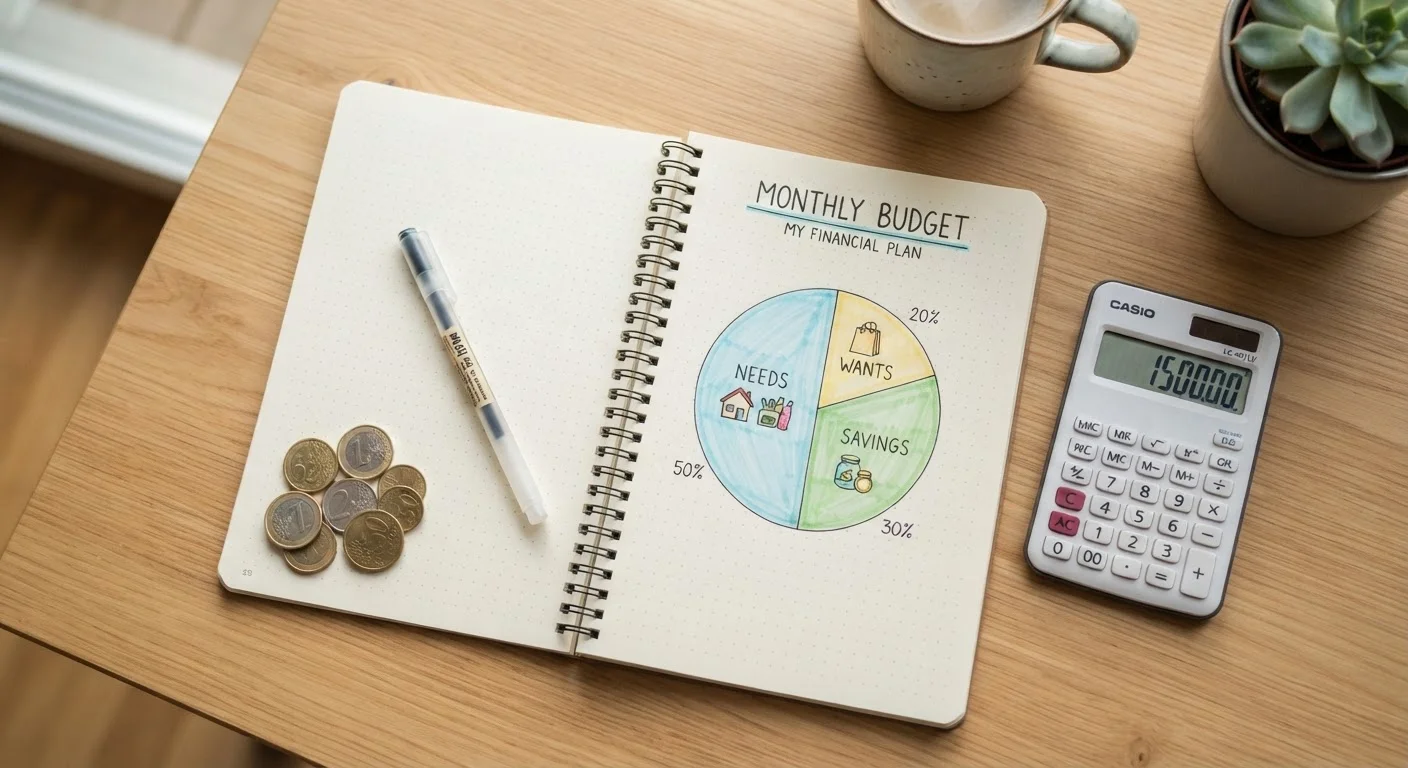
The 50/30/20 rule is a budgeting framework that divides your after-tax income into three buckets: 50% for needs (housing, groceries, utilities), 30% for wants (dining out, entertainment, hobbies), and 20% for financial goals. That final 20% is designed to cover both saving and debt repayment at the same time, making it one of the few popular budgeting methods that treats these two priorities as a single category rather than competing ones.
The framework was popularized by bankruptcy law professor Elizabeth Warren and her daughter Amelia Warren Tyagi in their 2005 book 'All Your Worth.' The percentages are guidelines, not rigid rules - your specific debt load or income level may warrant a different allocation.
How the Three Buckets Work
The 50/30/20 rule operates on after-tax (take-home) income, not your gross salary. That distinction matters because budgeting from your gross pay overstates what you actually have to work with. For a detailed breakdown of each category, see the 50/30/20 rule explained.
At a high level, the three buckets work as follows:
- 50% - Needs: Essential, non-negotiable expenses. Rent or mortgage, minimum debt payments, utilities, groceries, health insurance premiums, and basic transportation all belong here.
- 30% - Wants: Discretionary spending that improves quality of life but could be reduced if necessary. Subscriptions, restaurant meals, travel, and hobbies fall into this category.
- 20% - Financial goals: The portion dedicated to building your financial future. This includes emergency savings, retirement contributions, investment deposits, and any debt payments above the required minimum.
The key design choice in this framework is combining savings and extra debt repayment into one bucket. Rather than forcing you to decide whether to save or pay down debt first, the 20% category is flexible - you decide how to split it based on your situation.
After-Tax Income Is the Starting Point
The 50/30/20 rule applies to your take-home pay - the amount deposited into your bank account after income taxes and payroll deductions. If your employer automatically deducts 401(k) contributions before your paycheck is issued, those dollars are already removed from your take-home figure, so you won't double-count them in the 20% savings bucket. Always apply the percentages to the income you actually receive.
Where Debt Payments Actually Belong
One of the most common points of confusion with the 50/30/20 budget involves debt: exactly where do loan and credit card payments go?
The answer depends on whether a payment is mandatory or voluntary:
- Minimum required payments (the lowest amount a lender requires to keep your account in good standing) count as needs. Missing them triggers penalties and credit damage, so they are non-negotiable fixed costs.
- Extra payments above the minimum - anything you're paying voluntarily to accelerate debt payoff - count as part of your 20% financial goals.
This structure keeps your 20% bucket focused on progress rather than basic obligations. If you're carrying credit card balances, student loans, or a personal loan, you can direct more of that 20% toward repayment now and gradually shift it toward savings as balances shrink.
For a deeper look at how your total debt load relates to your income, learn how the debt-to-income ratio works - it's a useful companion metric to track alongside this budget.
77%
Americans who carry some form of debt
According to Experian's 2023 State of Credit report, the vast majority of U.S. consumers carry at least one form of debt, underscoring why any practical budget must address repayment alongside saving.
~$6,500
Average U.S. credit card balance per cardholder
Experian's 2023 consumer credit data shows average credit card balances at approximately $6,500, a figure that highlights the need to include meaningful debt repayment within a household budget.
Only 44%
Adults who could cover a $1,000 emergency from savings
A Bankrate survey found that fewer than half of U.S. adults could cover a $1,000 unexpected expense from savings, reinforcing why building even a small emergency buffer is a critical first step within the 20% bucket.
Balancing an Emergency Fund and Debt Repayment
The most practical challenge inside the 20% bucket is deciding how to split it between building savings and paying down debt. Both matter - and the right split depends on your interest rates and income stability.
A commonly used starting framework:
- Build a small emergency buffer first. Before aggressively paying off debt, many financial educators recommend setting aside enough to cover one or two unexpected expenses (often in the range of $500-$1,000). Without this cushion, an unexpected car repair or medical bill can land right back on a credit card, undoing repayment progress.
- Capture any employer retirement match. If your employer matches 401(k) contributions up to a certain percentage, contributing enough to receive that match is generally considered a high-priority step - since forgoing the match is effectively leaving compensation on the table.
- Direct remaining 20% toward high-interest debt. Once the buffer and match are covered, the remaining portion of the 20% can focus on accelerated repayment. Strategies like the debt avalanche (targeting highest-interest debt first) or debt snowball (targeting smallest balance first) can help structure this. See snowball vs. avalanche repayment methods for a comparison of both approaches.
The 50/30/20 rule doesn't mandate a single sequence - it provides a container. How you fill that container depends on your interest rates, job security, and risk tolerance. For a broader look at this trade-off, explore the case for saving while in debt.
Start With a Minimum Viable Emergency Fund
Before directing all of your 20% toward debt, consider parking at least $500-$1,000 in a separate savings account first. This small buffer prevents minor financial setbacks - a flat tire, a co-pay, an appliance repair - from requiring new debt. Once the buffer is in place, you can tilt the rest of the 20% aggressively toward repayment.
When to Adjust the Percentages
The 50/30/20 split is a useful starting point, not a law. Several situations call for a conscious adjustment:
- High-interest debt: If you're carrying credit card balances at 20%+ annual interest, temporarily trimming wants below 30% to redirect more into the 20% bucket can meaningfully reduce the total cost of that debt over time.
- High cost-of-living areas: In cities where rent alone can consume more than 50% of take-home pay, the needs bucket may realistically be 55-60%. Adjust by trimming wants rather than eliminating savings entirely.
- Variable income: Freelancers or gig workers may find it easier to apply the percentages to an average monthly income figure rather than fluctuating monthly amounts.
If you find the framework keeps breaking down in practice despite good intentions, it may point to a structural issue worth examining. Why your budget looks fine on paper but keeps falling apart covers the most common reasons plans unravel - and how to fix them.
Once you've stabilized the 20% bucket, it's also worth thinking about how to structure the savings portion itself. Different goals - a vacation fund versus a down payment - deserve different approaches. See how to structure savings for different timelines for a practical framework.
This article is for general informational and educational purposes only and does not constitute personalized financial, tax, or investment advice. Consult a qualified financial professional for guidance specific to your situation.
“The 50/30/20 rule isn't about achieving perfection in every category every month - it's about building a durable habit of directing money toward your future self, even when life gets expensive.”
— Money & Finance Editorial Team, Personal Finance Editors