

Key Takeaways
Start here
When to Schedule the First Appointment
Next
What to Bring and How to Prepare
Then
What the Veterinarian Will Assess
Also important
Vaccines, Parasites, and Preventive Care
Wrap up
Questions Worth Asking at This Visit
When to Schedule the First Appointment
Most veterinary professionals recommend bringing a new cat in for an examination within the first five to seven days of adoption. This window matters for several reasons: early visits allow detection of contagious conditions before they spread to other pets, establish a medical baseline, and give you expert guidance before small uncertainties become bigger problems.
If you adopted from a shelter, the cat may already have received some care - but shelter environments are stressful, and animals can carry pathogens without obvious symptoms. Kittens under 16 weeks are especially vulnerable and should be prioritized. Even adult cats with a reported health history benefit from a fresh, independent assessment by your chosen veterinarian.
Core vaccines
Vaccines recommended for all cats regardless of lifestyle, because the diseases they prevent are widespread, serious, or transmissible to humans.
Body condition score
A standardized scale vets use to assess whether an animal is underweight, at an ideal weight, or overweight, based on visible and palpable physical markers.
Intestinal parasites
Worms or single-celled organisms that live in a cat's digestive tract, often causing no obvious symptoms but detectable through a stool sample test.
Microchip
A small radio-frequency identification device implanted under the skin that carries a unique ID number, helping reunite lost pets with their owners.
FVRCP vaccine
A combination vaccine that protects cats against three common and potentially serious viral diseases: feline viral rhinotracheitis, calicivirus, and panleukopenia.
What to Bring and How to Prepare
Gather whatever health documentation came with your cat - vaccination records, adoption papers, or a shelter health certificate. A small stool sample collected within 12 hours of the appointment is helpful for intestinal parasite screening; ask your clinic whether they want it refrigerated or at room temperature.
Spend a few days before the appointment getting your cat comfortable with the carrier. Leave it open in a quiet room with a soft blanket inside. A relaxed cat is easier to examine and gives the veterinarian a more accurate read on temperament and baseline stress levels.
It's also worth thinking through the financial side of pet ownership before your first visit. Our guide on pet care costs that catch first-time owners off guard covers recurring and unexpected expenses that new owners frequently underestimate.
Make the Carrier a Comfortable Space
Place the carrier in a room your cat frequents at least a week before the appointment. Add a worn t-shirt or blanket that carries your scent. Cats that associate the carrier with safety and familiarity are noticeably calmer during travel and easier for vets to examine.
What the Veterinarian Will Assess
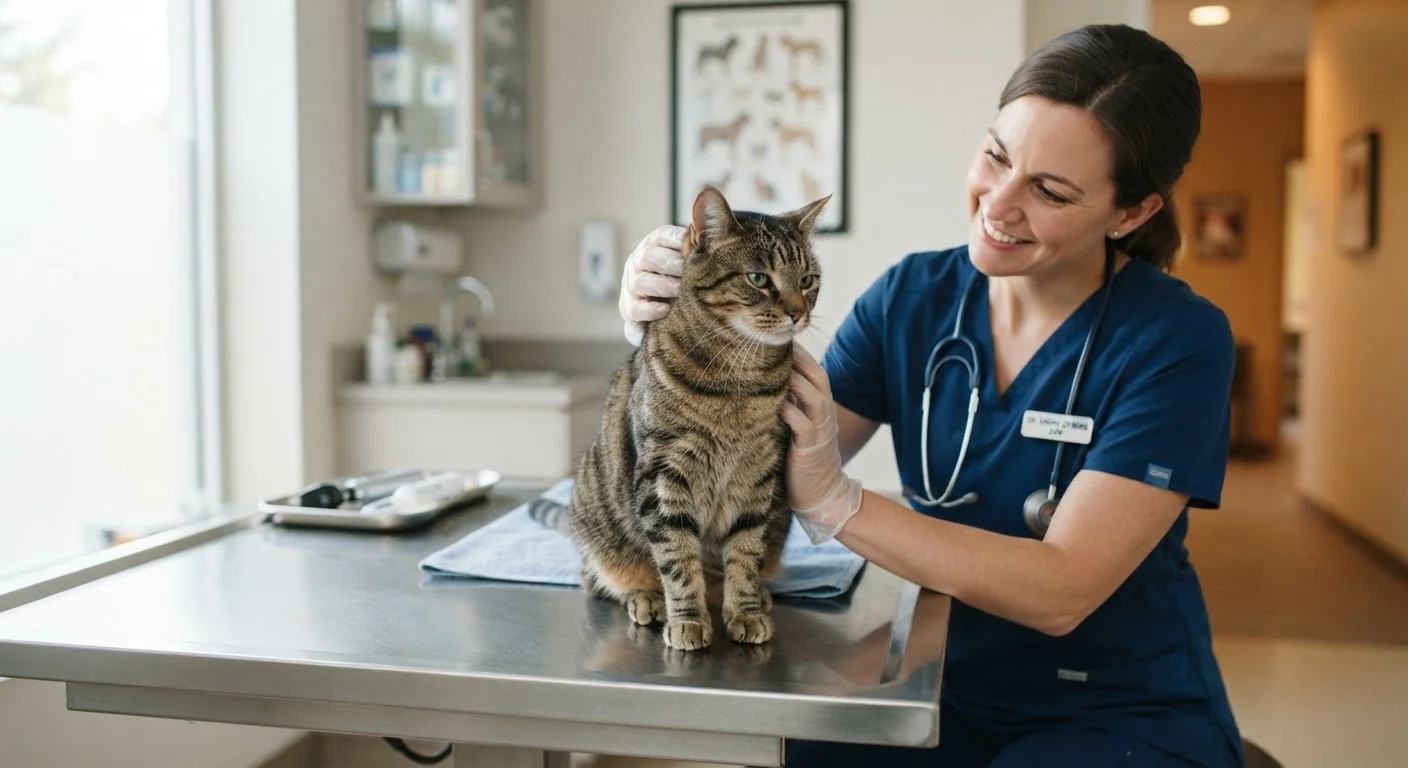
A first-visit physical examination is comprehensive. The veterinarian will evaluate your cat from nose to tail: checking eyes, ears, mouth, teeth, coat, skin, lymph nodes, heart, lungs, and abdomen. They will also assess body condition score - a standardized measure of whether your cat is at a healthy weight.
Behavioral observations begin the moment you walk in. How the cat responds to handling, new smells, and sounds tells the vet a great deal about temperament and any underlying anxiety. Be honest about behaviors you've noticed at home, even if they seem minor - litter box habits, appetite changes, sneezing, or excessive grooming are all clinically relevant details.
Our article on what a routine wellness exam covers offers a deeper look at how this process continues throughout your cat's life.
Never Use Dog Parasite Products on Cats
Some antiparasitic ingredients that are safe for dogs - particularly permethrin - are acutely toxic to cats. Always confirm with your veterinarian before applying any flea, tick, or worm treatment, even products labeled as 'pet-safe.'
Vaccines, Parasites, and Preventive Care
Core vaccines for cats include the FVRCP combination (feline viral rhinotracheitis, calicivirus, and panleukopenia) and rabies. The American Veterinary Medical Association (AVMA) supports these as standard preventive care for virtually all cats regardless of lifestyle. Non-core vaccines - such as those for feline leukemia virus - are recommended based on individual risk factors your vet will discuss with you.
Parasite prevention covers both internal parasites (roundworms, hookworms, tapeworms, Giardia) and external ones (fleas, ticks, ear mites). Your vet will recommend appropriate preventive products based on your cat's age, health status, and whether it goes outdoors. Never use products formulated for dogs on cats - certain ingredients toxic to cats are safe for dogs.
This first visit is also the right moment to discuss microchipping if it hasn't been done, dental care routines, and the timing of spaying or neutering if your cat hasn't been altered.
Vaccine Schedules Vary by Age and History
Kittens typically need a series of boosters spaced three to four weeks apart, while adult cats with an unknown history may start their schedule from scratch. Your veterinarian will tailor the timeline based on your cat's individual circumstances rather than applying a one-size-fits-all protocol.
Questions Worth Asking at This Visit
Appointments move quickly. Writing down your questions beforehand ensures nothing gets forgotten. Consider asking about the recommended vaccine schedule, which parasite preventives are appropriate, ideal nutrition for your cat's age and size, and signs that should prompt an unscheduled call to the clinic.
Ask about dental care early - periodontal disease is among the most common health issues in adult cats, and prevention starts at home with regular tooth brushing or veterinarian-approved alternatives. Your vet can show you technique during the visit.
Between visits, consistent daily habits make a significant difference in long-term health. Our guide on keeping your pet healthy between vet appointments covers nutrition, weight monitoring, dental care, and behavioral observation in practical detail.
This article provides general educational information about cat care and veterinary visits. It is not a substitute for professional veterinary advice, diagnosis, or treatment. Always consult a licensed veterinarian for guidance specific to your pet's health needs.