

Key Takeaways
Feline Self-Grooming
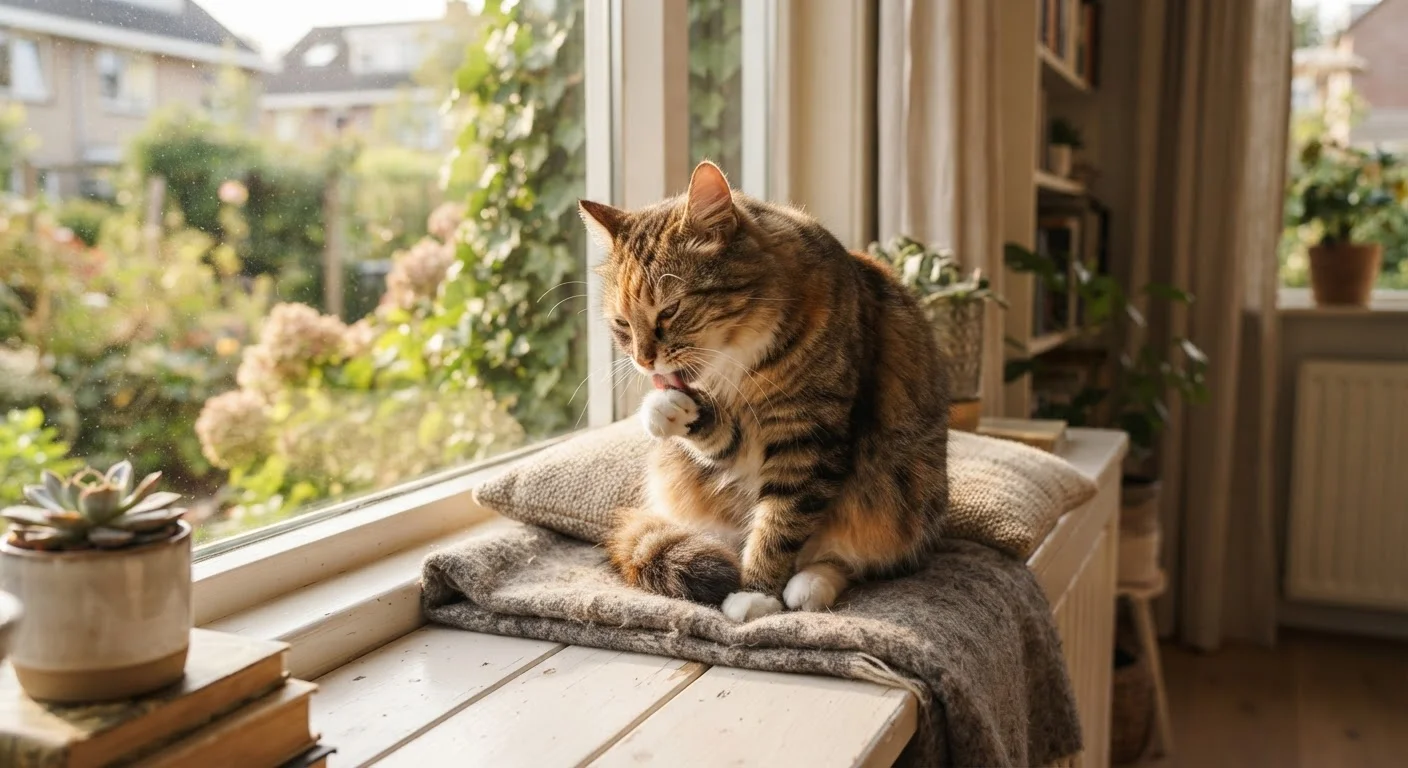
Self-grooming is the instinctive behavior cats use to clean their coat, regulate body temperature, and maintain skin health. Cats spend a significant portion of their waking hours grooming, using their barbed tongues and front paws to reach nearly every part of their body. This behavior is deeply wired into feline biology and serves social, physical, and emotional functions.
In veterinary contexts, excessive or compulsive grooming that leads to hair loss or skin lesions is classified as psychogenic alopecia - a condition that requires professional evaluation to distinguish from dermatological causes.
Why Cats Are Wired to Groom
Grooming is one of the most fundamental behaviors in a cat's daily life - and for good reason. Cats evolved as both predators and prey, meaning scent control was critical to survival. Regular grooming removes odors that could alert other animals to their presence. Beyond that, a cat's barbed tongue acts as a natural comb, distributing skin oils, removing loose fur, and dislodging dirt or parasites.
Grooming also plays a thermoregulatory role. By spreading saliva across the coat, cats cool themselves through evaporation - a mechanism similar in effect to sweating. Social grooming, or allogrooming, is another dimension: cats in bonded pairs often groom one another around the head and neck, reinforcing social bonds.
For most healthy adult cats, grooming takes up roughly 30-50% of their waking hours. This may seem excessive to owners, but it reflects a highly functional, evolved system rather than idle behavior. Several common misconceptions about cat behavior stem from misreading this normal self-sufficiency as a sign that cats require little monitoring.
30-50%
Waking hours cats spend grooming
Veterinary behavioral references consistently cite this range as the norm for healthy adult domestic cats.
~2/3
Of a cat's coat reached by tongue alone
Cats supplement tongue-grooming with moistened paws to reach the face and head, compensating for flexibility limits.
What Normal Grooming Looks Like
A healthy grooming routine typically involves a cat licking its paws and using them to clean its face, working down through the neck, shoulders, flanks, belly, and hindquarters. Cats are remarkably flexible, but some areas - such as the upper back and back of the head - are reached primarily through paw-washing.
The coat of a well-groomed cat should appear smooth and clean with no significant tangles, mats, or bald patches. Minor seasonal shedding is normal. Post-meal grooming sessions and grooming after handling by humans are both typical behaviors.
Build a Grooming Baseline for Your Cat
Track roughly how often and how long your cat grooms in a typical day during a relaxed period at home. This gives you a personal reference point that's more useful than general averages. Deviations from your cat's own normal are what matter most when spotting early signs of stress or illness.
Part of keeping your cat well between vet visits is developing a baseline sense of what normal looks like for your individual animal. Grooming frequency varies by breed - long-haired cats tend to groom more, and flat-faced breeds may struggle to reach certain areas - so knowing your cat's typical pattern is the most useful reference point you have.
When Grooming Becomes a Problem
Grooming crosses into problematic territory when it is excessive, compulsive, or absent. Both extremes can signal underlying issues that merit veterinary attention.
Overgrooming
Overgrooming - also called psychogenic alopecia when driven by stress - manifests as repetitive licking that causes hair thinning, bald patches, or skin abrasions. Common locations include the belly, inner thighs, and base of the tail. Physical causes that must be ruled out first include flea allergy dermatitis, environmental or food allergies, fungal infections, and pain from conditions such as bladder disease or arthritis that prompts a cat to lick the overlying skin.
Stress-related overgrooming is a diagnosis of exclusion - a veterinarian will typically investigate and address physical causes before concluding that anxiety is the primary driver. Household changes, the addition of new pets, or lack of environmental enrichment are among the most frequently identified stressors.
Undergrooming
A cat that grooms significantly less than usual, resulting in a dull, matted, or unkempt coat, is often experiencing pain, illness, or mobility limitations. Obesity can prevent cats from reaching much of their body - one more reason that recognizing weight changes early matters for overall feline health. Dental pain, arthritis, and systemic illness also frequently reduce grooming motivation.
Grooming Changes in Senior Cats
Cats aged 10 and older are more likely to experience mobility-related grooming decline, which can be easily mistaken for laziness or personality shift. Arthritis is common in senior cats and often goes unrecognized. If an older cat's coat condition deteriorates, a mobility and pain assessment by a veterinarian is an important first step.
If you notice a meaningful change in your cat's grooming habits - in either direction - treating it as a signal rather than a quirk is the prudent approach. A prompt veterinary evaluation can identify or rule out treatable causes before they progress.
Supporting Healthy Grooming at Home
While cats handle most of their grooming independently, owners can meaningfully support this behavior. Regular brushing reduces the volume of ingested fur and the risk of hairballs, especially in long-haired breeds. It also gives you routine, hands-on time to scan for lumps, skin changes, external parasites, or areas of tenderness.
At-home grooming sessions - covering brushing and basic coat maintenance - are safe and beneficial for most cats when introduced gradually and kept stress-free. Minimizing environmental stressors, providing adequate enrichment (climbing opportunities, play, and predictable routines), and maintaining up-to-date parasite prevention are all practical steps that reduce the risk of stress- or parasite-driven overgrooming.
When something looks or feels off - whether it's a new bald patch, a suddenly dull coat, or a cat that seems to groom obsessively - consulting a veterinarian is always the right starting point. General observation is valuable, but professional evaluation is the only way to accurately identify what's driving a change in behavior.
This article is for general informational purposes only and does not constitute veterinary advice. Always consult a licensed veterinarian for concerns about your cat's health or behavior.