

Key Takeaways
Start here
Why a Simple Routine Beats a Complicated One
Build the foundation
The Core Three: Cleanser, Moisturizer, SPF
Get it right
What Order to Apply Your Products
Personalize
Knowing Your Skin Type
Level up
When to Add More Steps
Why a Simple Routine Beats a Complicated One
Walk into any beauty aisle and you'll find an overwhelming wall of serums, toners, essences, and exfoliants all promising transformation. It's a lot - especially if you're starting from zero. Here's the good news: effective skincare doesn't require a 12-step system. In fact, a streamlined routine is easier to stick with, gentler on your skin barrier, and far less expensive.
Think of skincare the way you might think about building a minimal personal care kit - start with what genuinely matters, add only when you have a real reason to. Complexity doesn't equal effectiveness. The most important factor in any skincare routine isn't how many products you use - it's whether you use them consistently.
Start with one week, just three products
If you're tempted to overhaul everything at once, resist it. Commit to cleanser, moisturizer, and SPF for one week before adding anything new. This gives your skin a stable baseline and makes it far easier to identify what's helping or causing a reaction.
The Core Three: Cleanser, Moisturizer, SPF
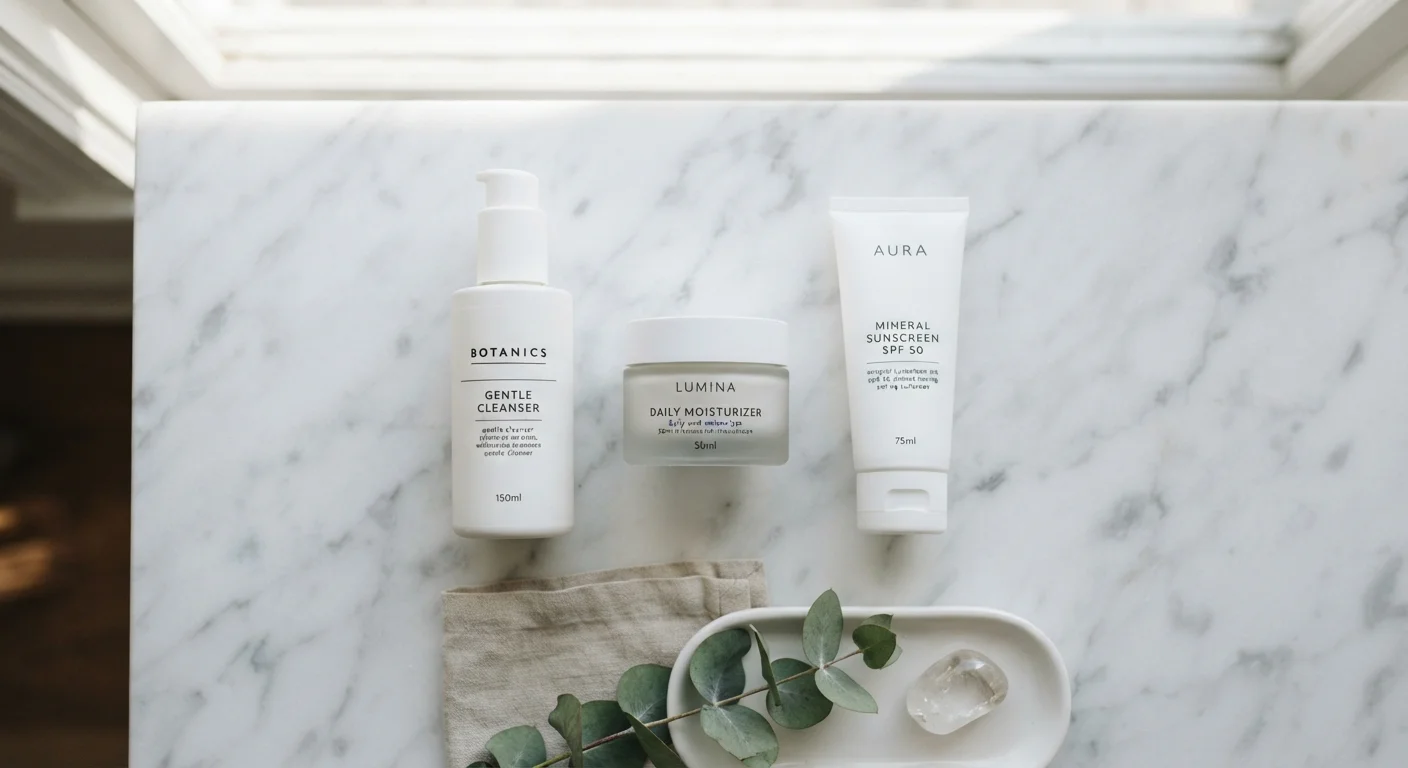
These three steps form the backbone of nearly every evidence-informed skincare approach.
Cleanser
A gentle cleanser removes dirt, excess oil, and environmental pollutants that accumulate on skin throughout the day. Look for formulas described as gentle, non-stripping, or pH-balanced - these cleanse without compromising your skin's natural moisture barrier. Over-cleansing or using harsh soaps can leave skin feeling tight and reactive.
Moisturizer
Moisturizer helps skin retain water and supports the barrier that keeps irritants out. Even oily skin types generally benefit from lightweight hydration. Ingredients like hyaluronic acid (a humectant that draws moisture in) and ceramides (which reinforce the skin barrier) appear frequently in well-regarded formulas.
SPF
Broad-spectrum sunscreen is widely considered the most impactful protective step in any daytime routine. UV exposure is a major contributor to premature skin aging, uneven tone, and more serious skin concerns. Dermatologists commonly recommend SPF 30 or higher applied every morning - rain or shine. SPF is not optional if you're investing effort in the rest of your routine.
Skin barrier
The outermost layer of skin that acts as a protective shield, keeping moisture in and irritants out. A healthy barrier is the foundation of calm, hydrated skin.
Humectant
An ingredient that attracts water molecules and draws moisture into the skin. Hyaluronic acid and glycerin are common examples found in serums and moisturizers.
Broad-spectrum SPF
A sunscreen that protects against both UVA rays (which contribute to aging) and UVB rays (which cause burning). 'Broad-spectrum' on the label confirms both types are covered.
Ceramides
Naturally occurring lipids (fats) in the skin that help hold the skin barrier together. Moisturizers with ceramides can help restore and reinforce a weakened barrier.
pH-balanced cleanser
A cleanser formulated to match the skin's natural slightly acidic pH level. Using a pH-balanced formula helps preserve the skin barrier rather than disrupting it.
What Order to Apply Your Products
Product order matters more than most beginners realize. The general rule: apply thinnest to thickest. Start with your cleanser (always first), then move to any water-based serums, then moisturizer, and finish with sunscreen in the morning.
Why does this order work? Lighter products need direct contact with skin to penetrate effectively. Layering a thick cream before a thin serum creates a physical barrier that can prevent the serum from doing its job.
- Morning: Cleanser → serum (optional) → moisturizer → SPF
- Evening: Cleanser → treatment (optional) → moisturizer
For a complete breakdown of how AM and PM routines differ in both steps and goals, our guide to morning and evening skin routines walks through the logic in detail.
SPF goes on last - and stays on
A common mistake is applying sunscreen and then layering other products on top, which can dilute or disrupt its effectiveness. In the morning, SPF is your final step before makeup. Reapplication every two hours matters if you're spending significant time outdoors, though most indoor routines don't require it.
Knowing Your Skin Type
Choosing the right formulas starts with understanding what kind of skin you're working with. The four commonly recognized skin types are:
- Dry
- Skin feels tight, may flake or look dull. Benefits from richer, cream-based moisturizers and gentle, non-foaming cleansers.
- Oily
- Skin looks shiny, especially by midday, and pores may appear enlarged. Lightweight, gel-based or oil-free formulas tend to work well.
- Combination
- Oily in the T-zone (forehead, nose, chin), drier on the cheeks. Often benefits from a balanced approach - lighter products overall.
- Sensitive
- Easily irritated by fragrances, active ingredients, or environmental changes. Fragrance-free, minimal-ingredient formulas are generally better tolerated.
Skin type isn't fixed forever - it can shift with age, climate, hormones, and diet. If you experience significant skin concerns like persistent redness, cystic acne, or rosacea, it's worth consulting a dermatologist rather than relying on general guidance alone.
When to Add More Steps
Once your core routine feels natural and your skin is responding well - think four to six weeks of consistency - you may want to introduce additional steps. Common additions include:
- Exfoliants: Help remove dead skin cells and can improve texture and tone. Chemical and physical approaches work differently; our guide to chemical exfoliants vs. physical scrubs explains how to weigh each option.
- Targeted serums: Vitamin C for brightness, niacinamide for pore appearance and tone - these address specific concerns rather than baseline skin health.
- Eye cream: Optional for most beginners; the skin around the eyes is thinner and sometimes benefits from a dedicated, gentler formula.
When introducing anything new, add one product at a time and allow at least two weeks before evaluating. If you notice unexpected breakouts, check our explainer on why skin sometimes gets worse before a new product helps - it's often a temporary adjustment rather than a sign to stop.
Building consistency is ultimately what makes any routine work. Keeping a skincare routine consistent over time is its own skill - and well worth developing once you have your basics locked in.
This article is for general informational and educational purposes only and is not a substitute for professional medical or dermatological advice. If you have specific skin concerns or conditions, consult a qualified healthcare provider.
Don't skip patch testing new products
Before applying any new product all over your face, test a small amount on the inside of your wrist or behind your ear for 24 hours. This simple step can save you from a full-face reaction - especially if your skin tends to be sensitive or reactive.