

Key Takeaways
Capsule Wardrobe
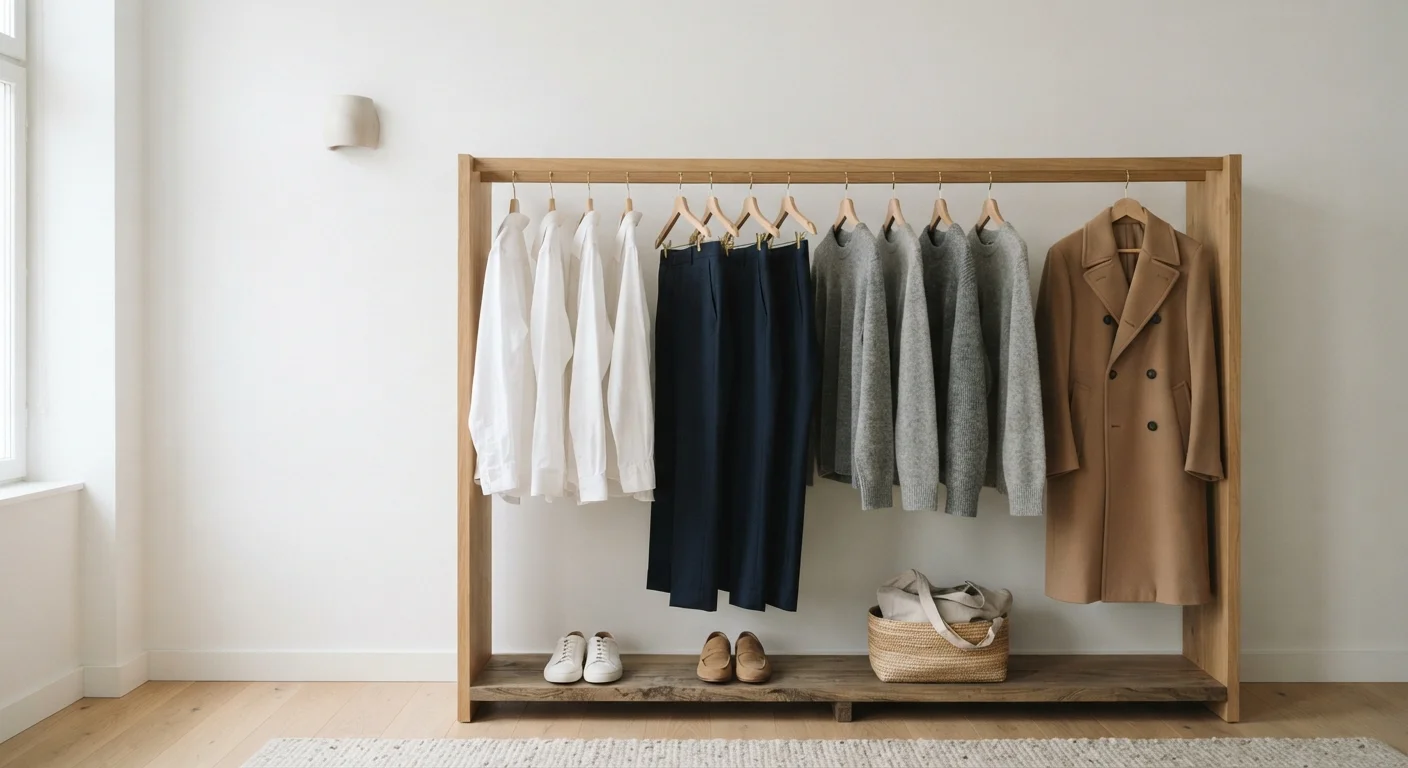
A capsule wardrobe is a small, intentional collection of clothing - typically 25 to 50 pieces - where every item works well with the others. The goal is to own less but get dressed more easily, eliminating the daily frustration of a full closet with nothing to wear. Items are chosen for versatility, quality, and personal relevance rather than trend appeal.
The term was coined by London boutique owner Susie Faux in the 1970s and later popularized by designer Donna Karan's 1985 'Seven Easy Pieces' collection, which translated the concept into mainstream fashion consciousness.
Where the Idea Comes From
The capsule wardrobe concept has a specific origin. London boutique owner Susie Faux introduced the term in the 1970s to describe a core collection of timeless, high-quality pieces that wouldn't go out of style season to season. The idea gained broader cultural traction when designer Donna Karan released her celebrated 'Seven Easy Pieces' collection in 1985 - a ready-to-wear line built around interchangeable workwear staples for women.
From there, the concept evolved steadily. It appeared in fashion journalism throughout the '90s and early 2000s before exploding in popularity during the rise of minimalism-focused lifestyle content in the 2010s. Today it's referenced everywhere from personal finance blogs to sustainability forums, often meaning slightly different things depending on the context.
What's stayed consistent across all those iterations is the core premise: own fewer things, but make each thing count.
“Style is knowing who you are, what you want to say, and not giving a damn. The capsule idea is really just a practical extension of that - you stop collecting clothes and start building a wardrobe.”
— Susie Faux, London boutique owner and originator of the capsule wardrobe concept
What a Capsule Wardrobe Actually Includes
Despite what some style guides suggest, there's no official item list. A capsule wardrobe is defined by its function - versatility and cohesion - not by a checklist of specific garments. That said, most approaches share common structural features.
- A neutral foundation: Pieces in white, black, navy, grey, camel, or similar shades that serve as the backbone of outfits.
- Layering options: Cardigans, blazers, light jackets - items that work over or under other pieces.
- Bottoms that multitask: Trousers or jeans that transition between casual and smart-casual settings without effort.
- Footwear that covers key occasions: A comfortable everyday shoe, something slightly more polished, and a casual option.
- A few statement pieces: Not every item needs to be neutral - one or two expressive pieces add personality without creating chaos.
The unifying principle is that almost every item pairs naturally with almost every other item. If you're pulling pieces at random and they consistently work together, the capsule is functioning as intended.
For foundational guidance on what items tend to earn their place across lifestyles, see our wardrobe basics guide - it covers the core staples worth having before anything else.
Start with a Closet Audit, Not a Shopping List
Before buying a single new thing, spend an hour pulling out everything you own and setting aside only what you genuinely wear and feel good in. Most people discover they already have the bones of a capsule - they just need to identify and build on them. Shopping to fill specific gaps beats shopping to build from scratch every time.
Does the Capsule Wardrobe Actually Work?
The honest answer: it depends on who's using it and how realistically it's built.
For people who struggle with decision fatigue, impulse buying, or closets packed with unworn clothes, the capsule framework delivers real benefits. Research in behavioral psychology supports the idea that fewer, better choices reduce cognitive load - what's sometimes called 'decision fatigue.' A wardrobe designed around interchangeable pieces makes getting dressed faster and less stressful.
85%
Of purchased clothing rarely or never worn
Industry estimates suggest a significant majority of garments in the average American closet go unworn regularly, pointing to a mismatch between buying habits and actual use.
30+
Outfit combinations from 10 capsule pieces
Fashion educators commonly illustrate that a well-chosen 10-piece capsule can generate more than 30 distinct outfits through layering and pairing - demonstrating the math behind the method.
$1,700+
Average annual American clothing spend
According to Bureau of Labor Statistics consumer expenditure data, the average U.S. consumer spends over $1,700 per year on apparel - a figure capsule advocates argue can be substantially reduced through intentional buying.
Financially, a well-built capsule can reduce the total spent on clothing over time by discouraging low-quality impulse purchases. If you're curious about the practical side of that, our guide to building a versatile wardrobe on a budget walks through exactly how to approach it.
The approach runs into trouble when people build it aspirationally rather than practically. A capsule wardrobe filled with slim trousers and silk blouses doesn't serve someone whose actual days involve outdoor work, after-school pickups, or weekend hiking. The concept works when it reflects your life - not the life you might lead someday.
It's also worth noting that a capsule wardrobe isn't the same as a minimal wardrobe. You can have a tightly edited, versatile collection and still own 60 pieces. Owning fewer clothes has its own distinct set of trade-offs - our honest look at minimal wardrobes covers those in full.
How to Start Without Starting Over
The most practical entry point isn't buying anything - it's auditing what you already own. Pull everything out, identify what you actually reach for, and notice the patterns. Most people already have the beginnings of a capsule hiding in their closet.
From there, the process is about filling specific gaps rather than building from scratch. One well-chosen addition that works with five things you already own beats five new items that each work with nothing else you have.
A capsule wardrobe also doesn't have to be static. Seasons shift, and so do lifestyles. Some people maintain a year-round core and rotate a small number of season-specific pieces around it - a lighter approach than a full seasonal overhaul. If you want a structured way to manage those transitions, our seasonal wardrobe transition checklist offers a step-by-step process.
The capsule wardrobe isn't a destination you reach and then maintain perfectly. It's an ongoing practice of asking whether what you own is actually working for you - and making small, deliberate adjustments when it isn't. That, more than any specific item count or color palette, is what the concept is really about.
The 'Right' Number of Pieces Is Personal
Popular capsule guides often cite a specific item count - 33 pieces, 37 pieces, 50 pieces - as if the number itself is the point. It isn't. Someone working multiple jobs with varied dress codes needs more pieces than a freelancer with one consistent environment. Use any published number as a rough reference, not a target to hit precisely.